



















Content ITV PRO
This is Itvedant Content department
Learning Outcome
4
Differentiate On-Premises, Cloud, and Hybrid SIEM.
3
Understand how SIEM collects, processes, and analyzes events.
2
Describe SIEM functions and architecture.
1
Explain the purpose and importance of SIEM.
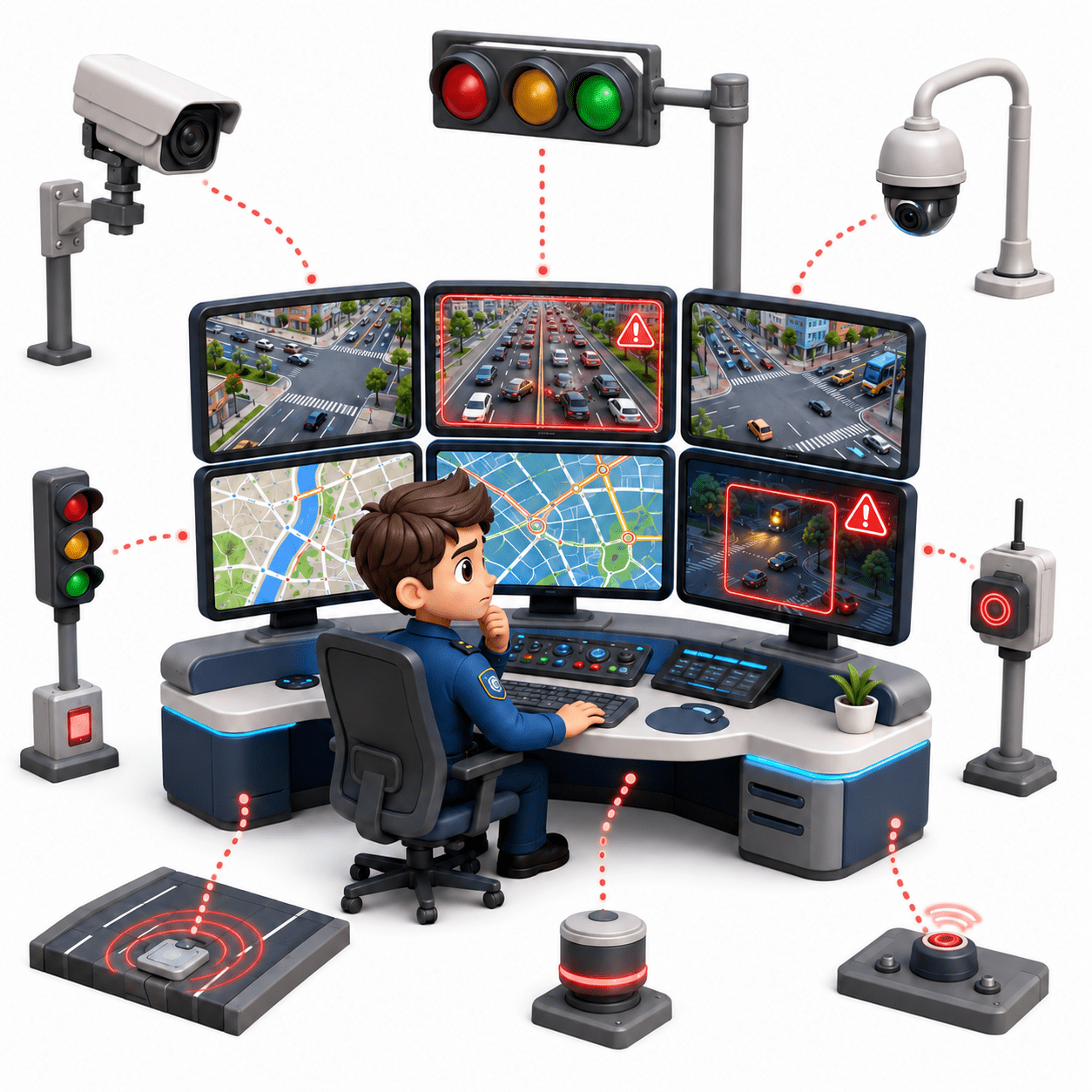
A city's traffic control center receives information from cameras, traffic signals, and sensors across different roads.
Different sources = Security Devices and Systems; Collected information = Logs and Events
The control center analyzes the information and detects traffic jams, accidents, or unusual activity.
Detecting unusual patterns = Event Analysis and Correlation
When a serious problem is detected, the system immediately alerts the traffic operators.
Alerting operators = Security Alerts
Operators investigate the situation and coordinate a quick response to reduce the impact.
Investigating and responding = Incident Response
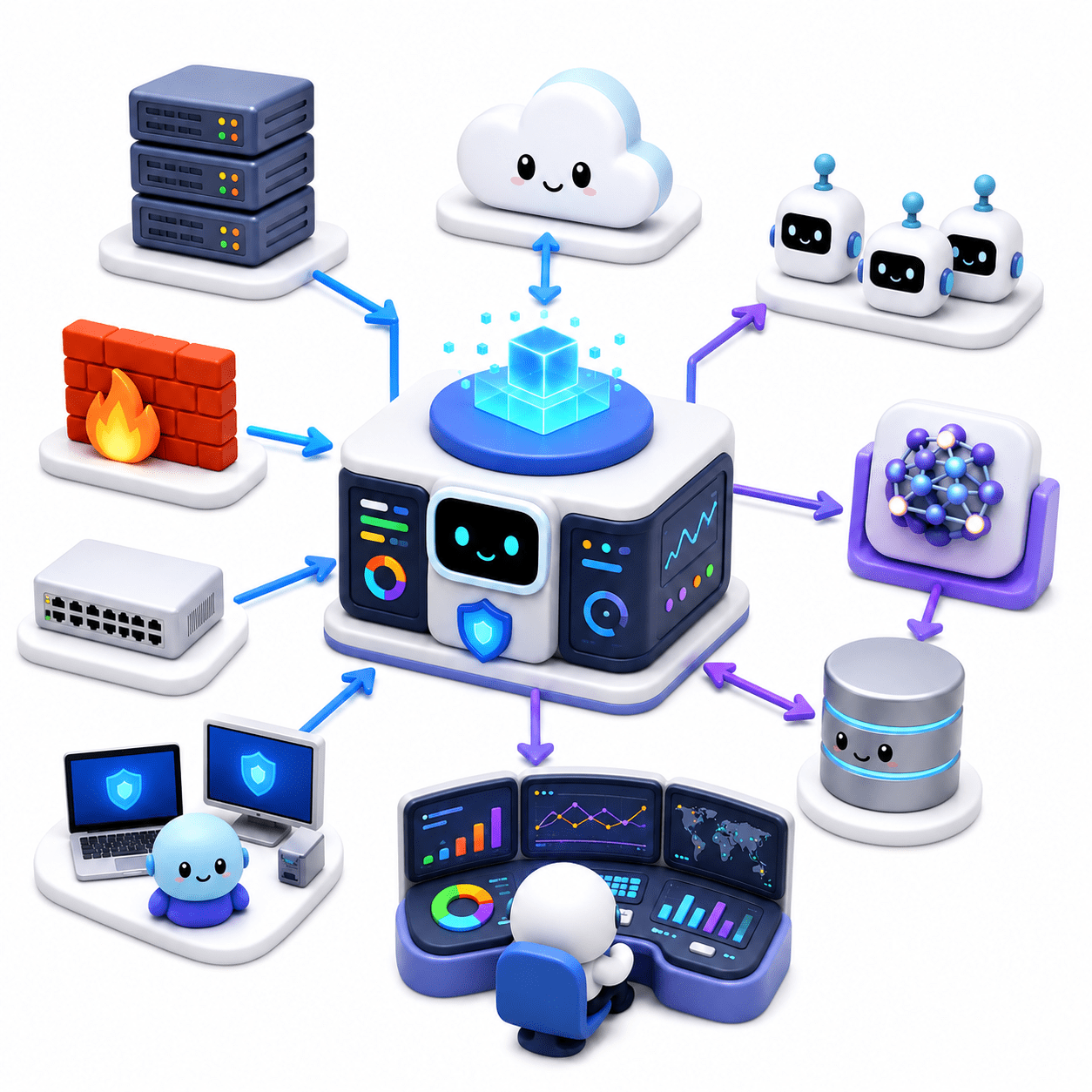
A SIEM (Security Information and Event Management) works in a similar way. It collects logs from computers, servers, firewalls, and applications, analyzes and correlates events to identify suspicious activity, alerts security analysts, and supports incident response.
What is SIEM?
Security Information and Event Management (SIEM) collects, stores, analyzes, and correlates security logs and events from multiple sources.
Importance of SIEM
SIEM helps organizations:
Centralize security monitoring
Detect threats quickly
Support incident investigation
It provides centralized visibility to help security teams detect, investigate, and respond to threats.
Improve security visibility
Enhance incident response
Simplify compliance reporting
Why Organizations Need SIEM
Organizations generate large amounts of security data from systems, applications, cloud services, and security devices.
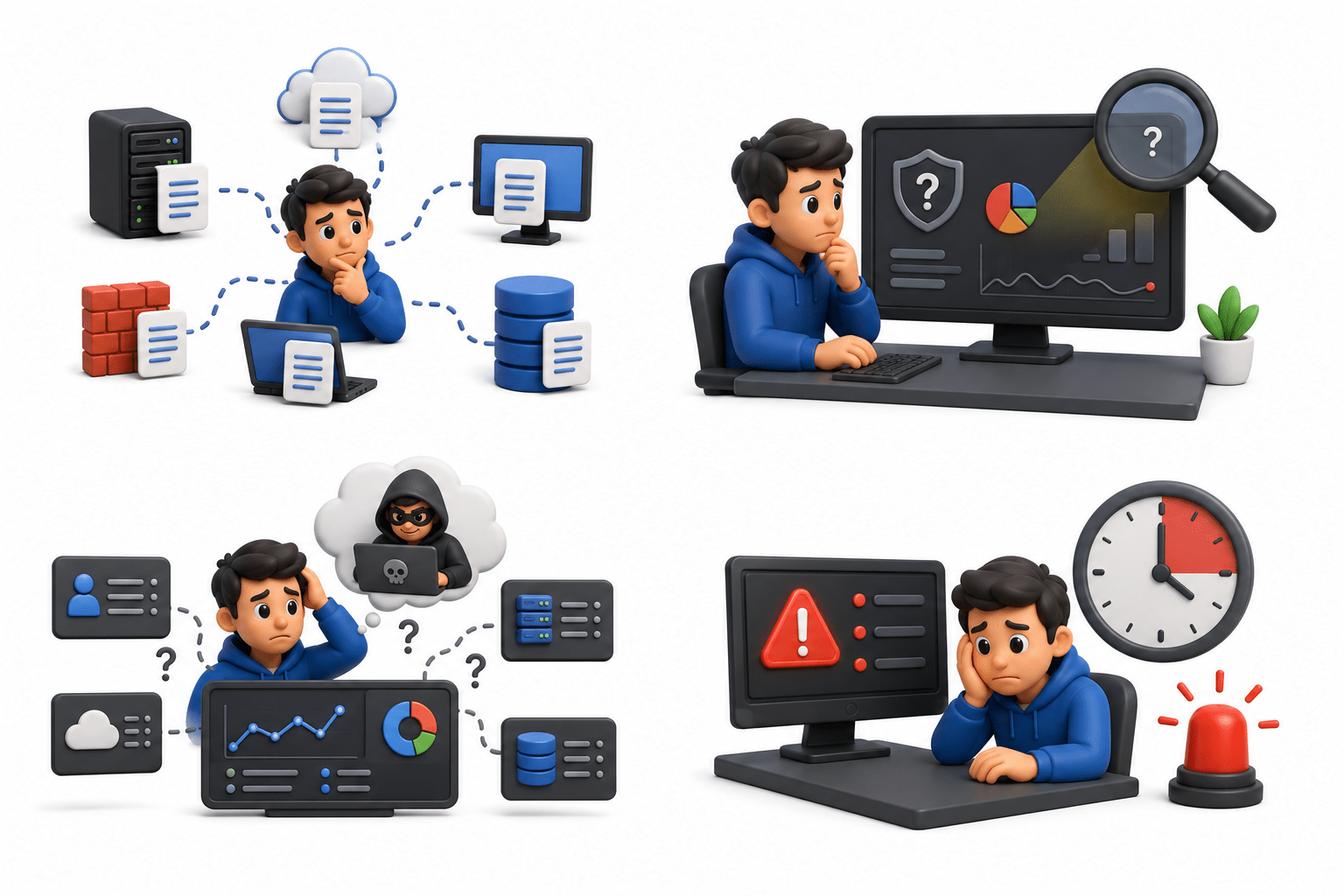
Without SIEM, teams may face:
Dispersed logs
Limited threat visibility
Difficulty identifying attack patterns
Delayed threat detection
SIEM provides a unified view of security events and enables faster detection and investigation.
Objectives of SIEM
Centralized Log Management – Collect and manage logs in one place.
Event Correlation – Connect related events to identify threats.
Threat Detection – Identify suspicious activities and IOCs.
Incident Support – Support investigation and response.
Compliance Support – Support log retention, reporting, and audits.
Core Functions of SIEM
Log Aggregation
Collects and stores logs from multiple sources in one platform.
Event Correlation
Connects events from different sources to identify attack patterns.
Alert Generation
Generates alerts when suspicious activities are detected.
Security Dashboards
Displays alerts, trends, threat statistics, and system status.
Reporting
Provides reports for security monitoring, investigations, management, and compliance.
SIEM Architecture
A typical SIEM architecture includes:
Data Sources
Generate security information.
Log Collectors
Collect and forward logs to the SIEM.
SIEM Server
Receives logs, processes events, applies rules, and generates alerts.
Correlation Engine
Identifies relationships between events to detect attack patterns and multi-stage attacks.
Storage Repository
Stores logs for historical analysis, investigations, and compliance.
Dashboards and Reports
Provides real-time dashboards, alerts, reports, and trend analysis.
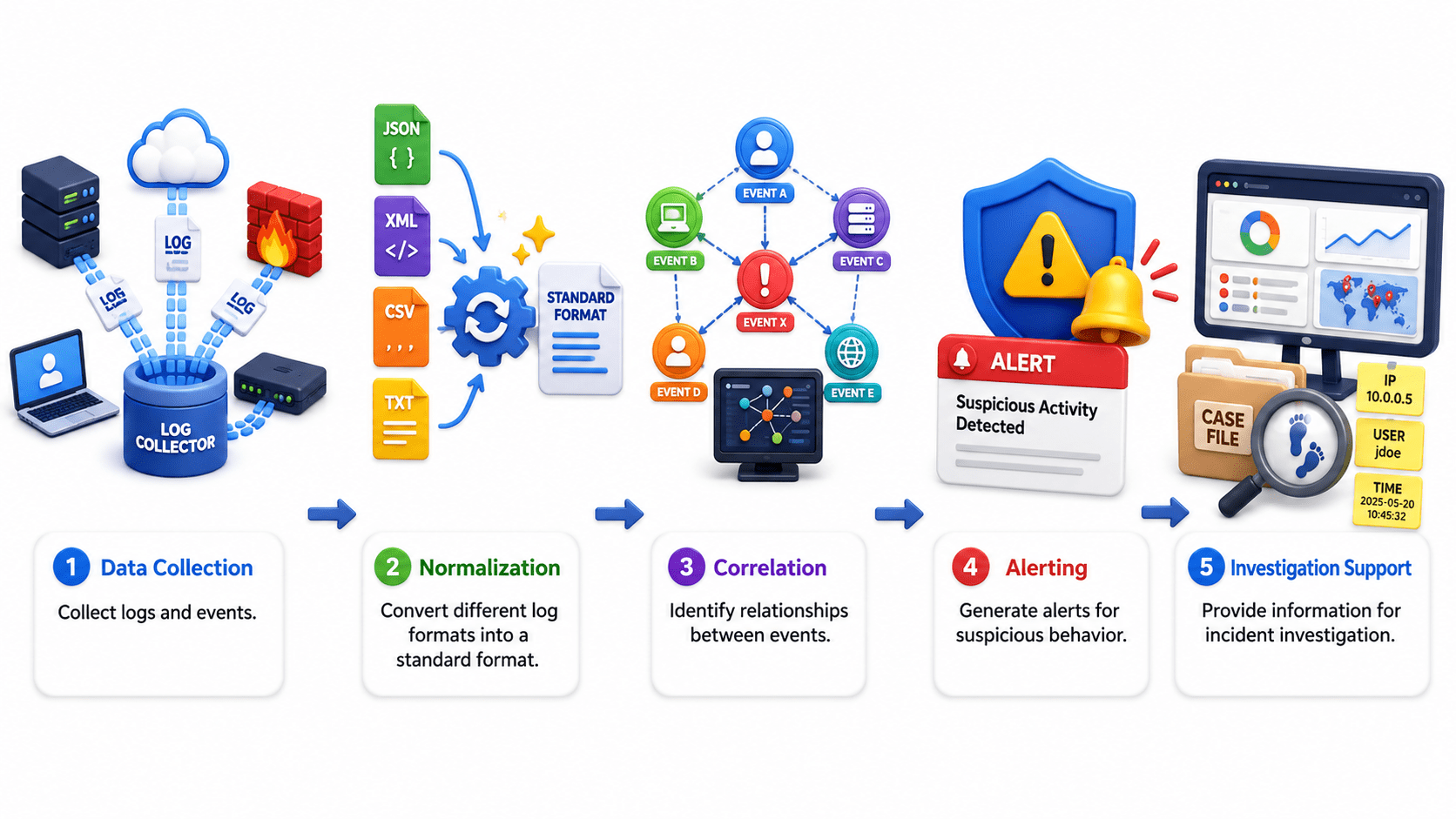
SIEM Data Processing Workflow
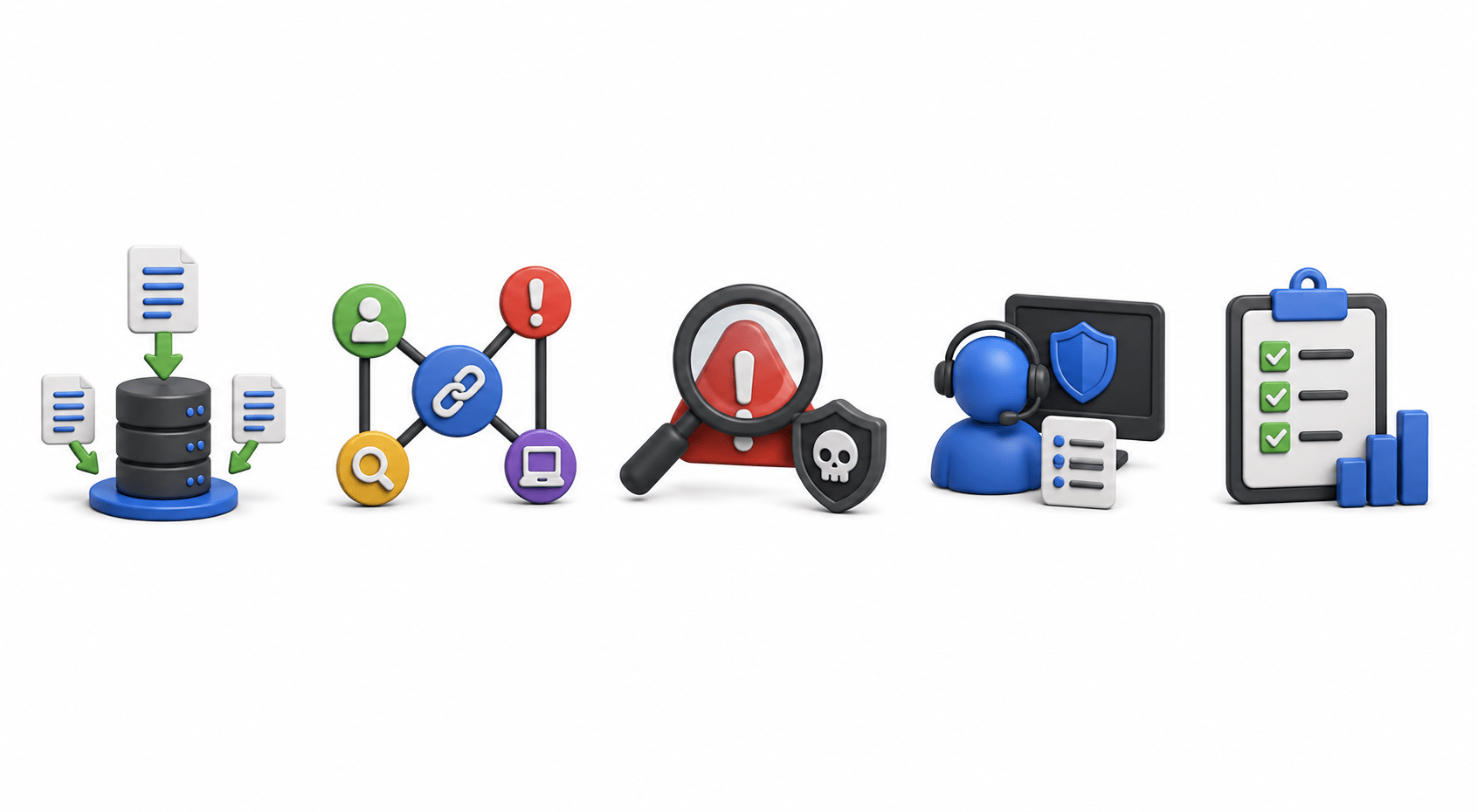
Data Collection
Normalization
Correlation
Alerting
Investigation Support
Collect logs and events.
Convert different log formats into a standard format.
Identify relationships between events.
Generate alerts for suspicious behavior.
Provide information for incident investigation.
Event Correlation in SIEM
Event correlation analyzes multiple events and identifies relationships that may indicate malicious activity.
Correlation Rules
Define conditions that trigger alerts.
Examples:
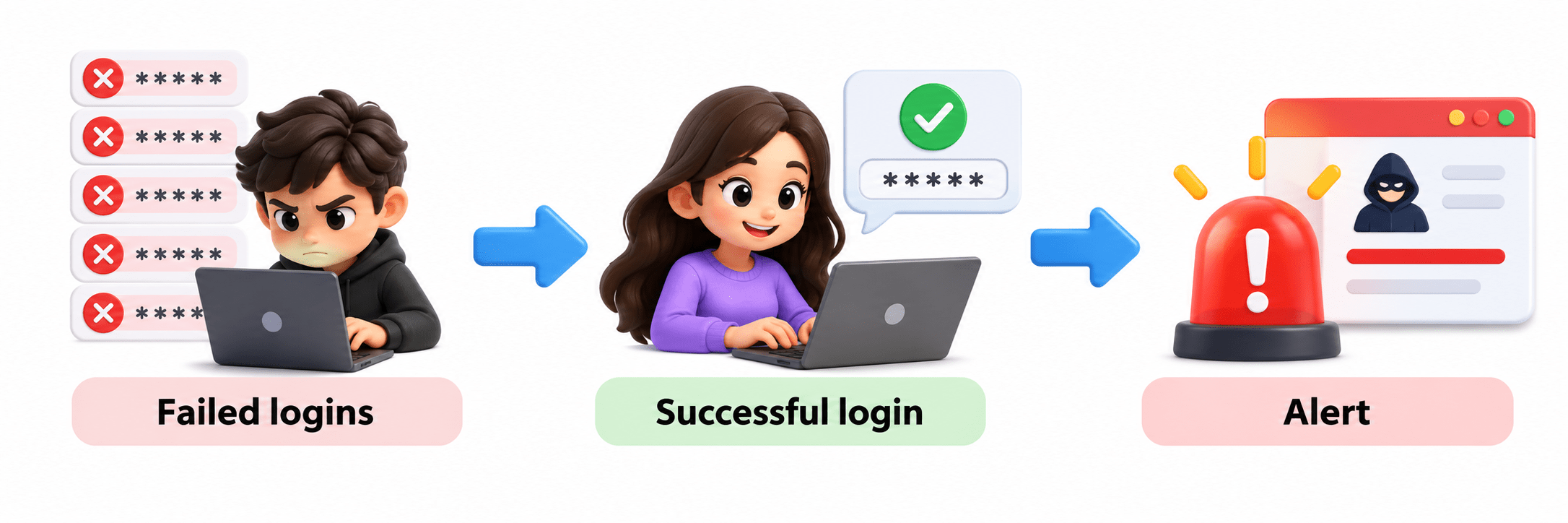
Multiple failed logins
Login from unusual locations
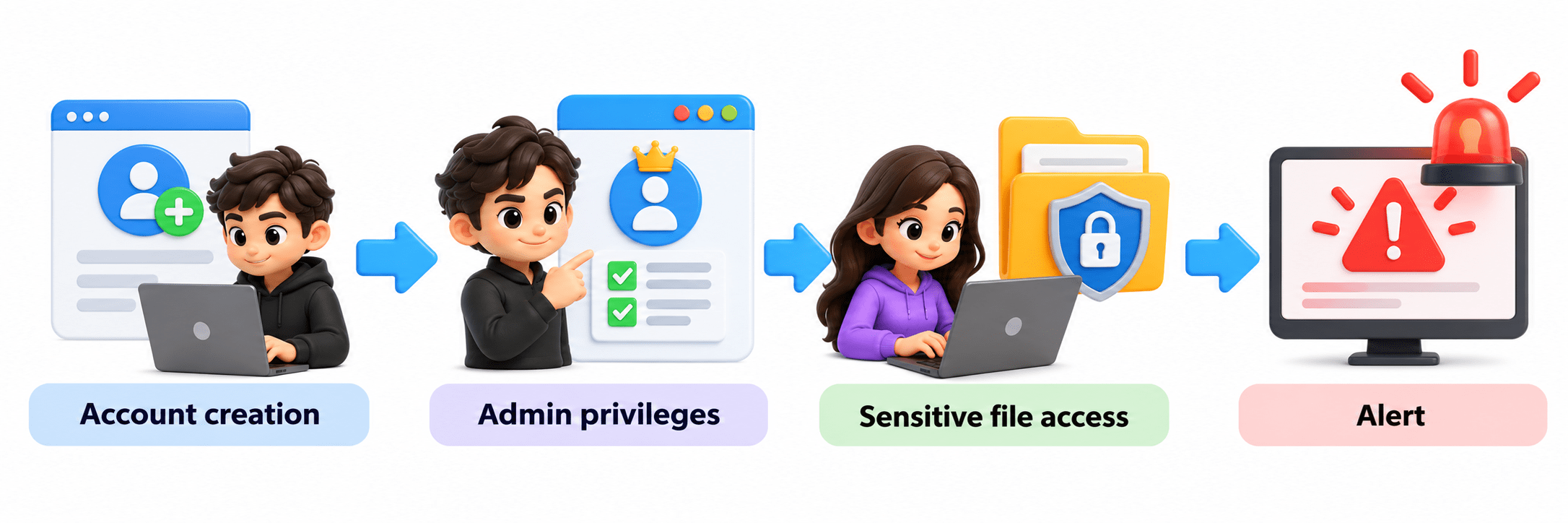
Privilege changes after authentication
Brute Force:
Privilege Escalation:
SIEM Deployment Models
On-Premises SIEM
Deployed within the organization's infrastructure.
Advantages
Greater control, customization
Disadvantages
Greater control, customization
Cloud SIEM
Hosted by a cloud provider.
Advantages
Scalable, less maintenance, faster deployment
Disadvantages
Internet dependency, data residency concerns
Hybrid SIEM
Combines on-premises and cloud services.
Advantages
Flexibility, scalability
Disadvantages
More complex management
SIEM Use Cases
Brute Force Detection
Detect repeated failed logins followed by successful authentication.
Smart Layouts
AI arranges content beautifully for better flow and impact
Privilege Escalation Detection
Detect unauthorized privilege changes.
Malware Detection
Identify malicious processes and network communications.
Insider Threat Detection
Identify suspicious activities by authorized users.
Benefits of SIEM
Centralized security visibility
Faster threat detection
Improved investigation
Better compliance management
Enhanced security monitoring
Improved operational efficiency
Support for threat hunting
Challenges of SIEM
Large Data Volumes – Processes massive amounts of security data.
False Positives – Some alerts are not actual threats.
Rule Tuning – Rules require continuous optimization.
Storage Requirements – Logs require significant storage.
Skilled Personnel – Requires trained security professionals.
SIEM in SOC Operations
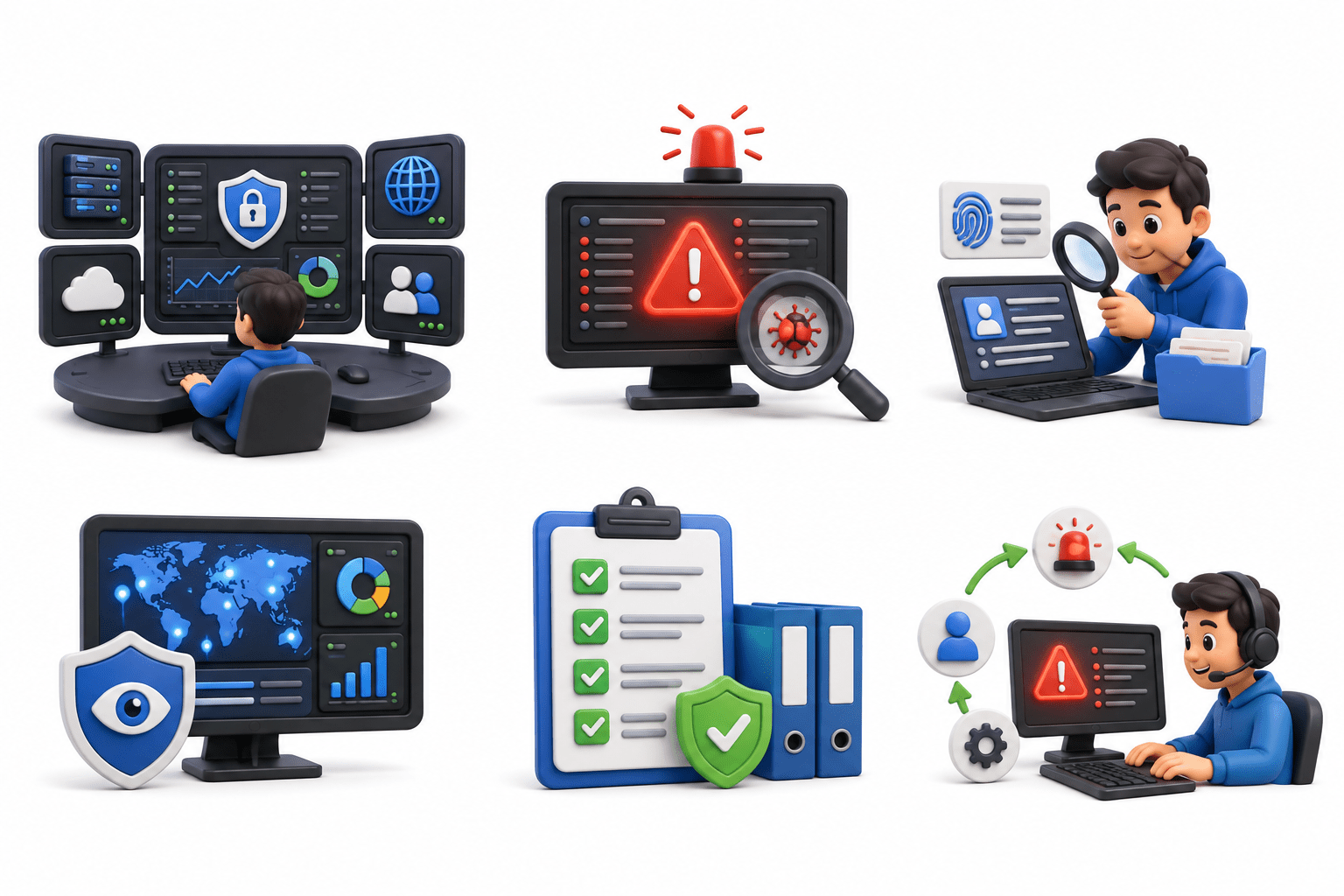
SIEM is a core SOC technology used to:
Monitor security events
Investigate alerts
Identify threats
Analyze incidents
Support incident response
Summary
5
Can be On-Premises, Cloud, or Hybrid.
4
Supports SOC detection, investigation, and response.
3
Uses event correlation and alerts to detect threats.
2
Provides centralized security monitoring.
1
SIEM collects and analyzes security logs.
Quiz
What is the primary purpose of a SIEM solution?
B. Replace antivirus software
C. Correlate security events from multiple sources
D. Block all network traffic
A. Encrypt all organizational data
Quiz-Answer
C. Correlate security events from multiple sources
What is the primary purpose of a SIEM solution?
A. Encrypt all organizational data
B. Replace antivirus software
D. Block all network traffic
By Content ITV