














Content ITV PRO
This is Itvedant Content department
Learning Outcome
5
Analyze the use of both markets in trading and global fundraising
4
Understand RBI and SEBI's roles
3
Understand RBI and SEBI's roles
2
Differentiate domestic and international markets.
1
Understand the concept of Onshore and Offshore markets
Onshore Market
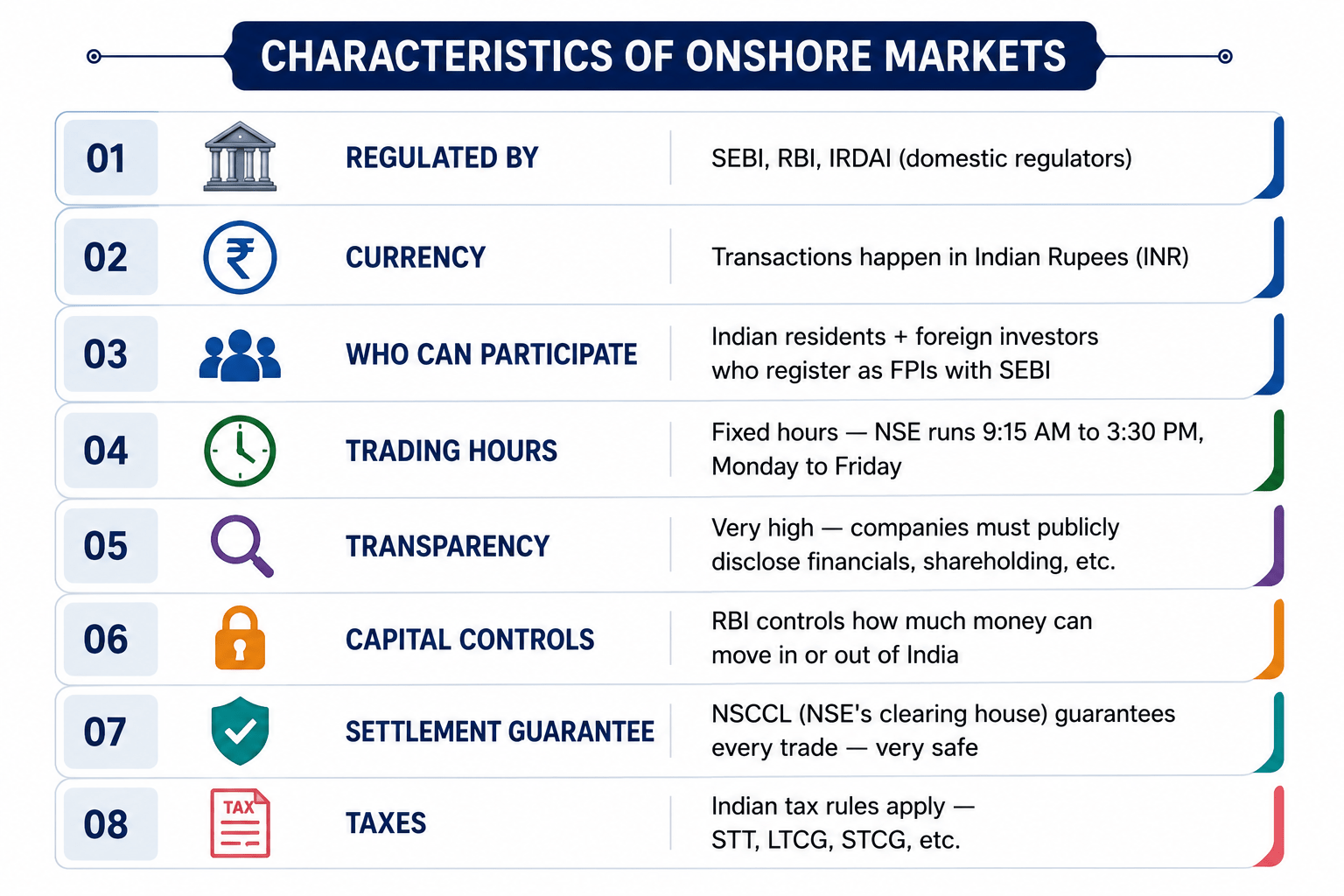
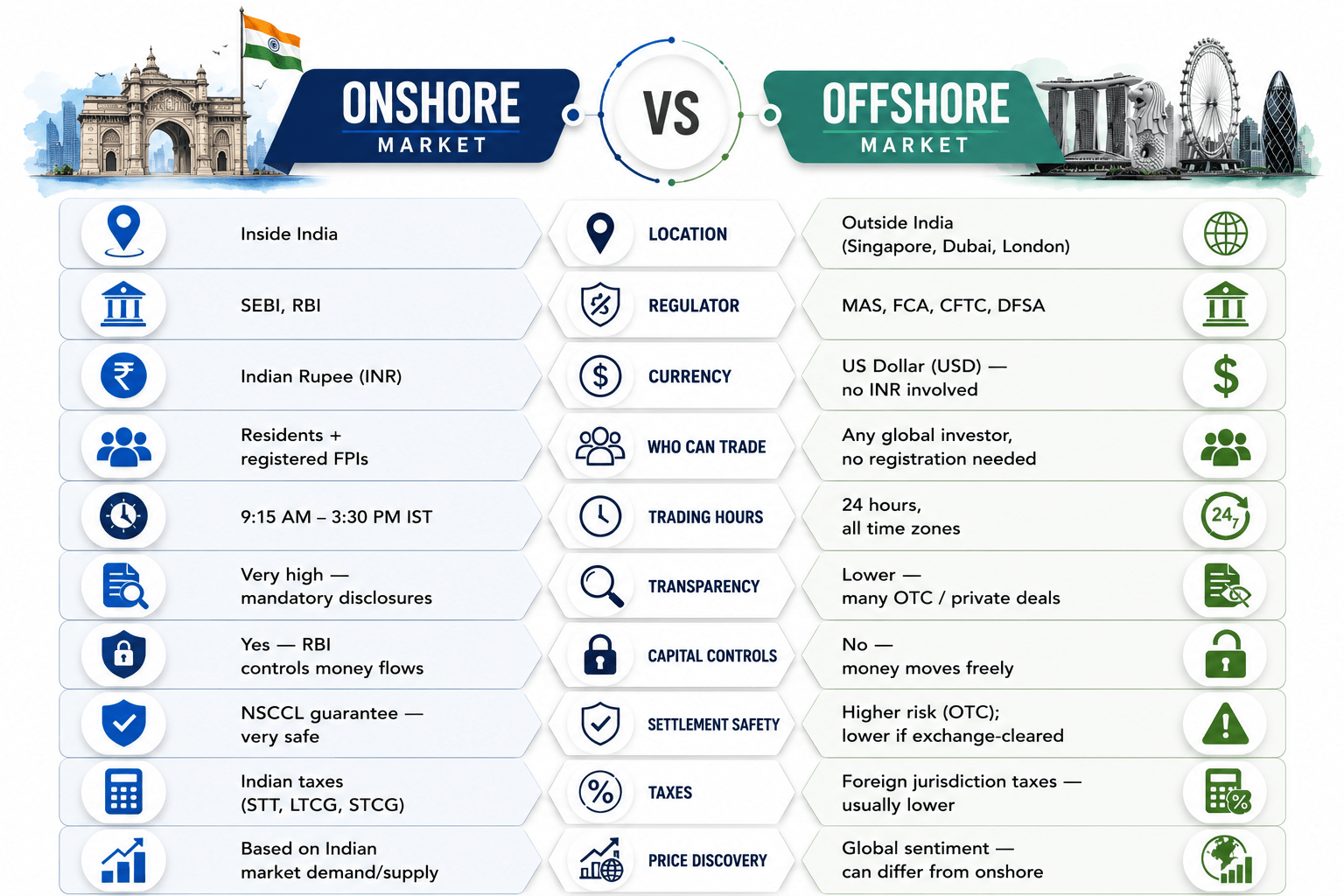
An onshore market is a financial market that works INSIDE a country. Everything — trading, settlement, and rules — happens within the country's borders and follows that country's laws
Inshort:
Onshore = Domestic Market
Example:
You buy Reliance shares on the NSE (National Stock Exchange). This is onshore — it happens in India, is regulated by SEBI, and is settled in Indian Rupees
Offshore Market
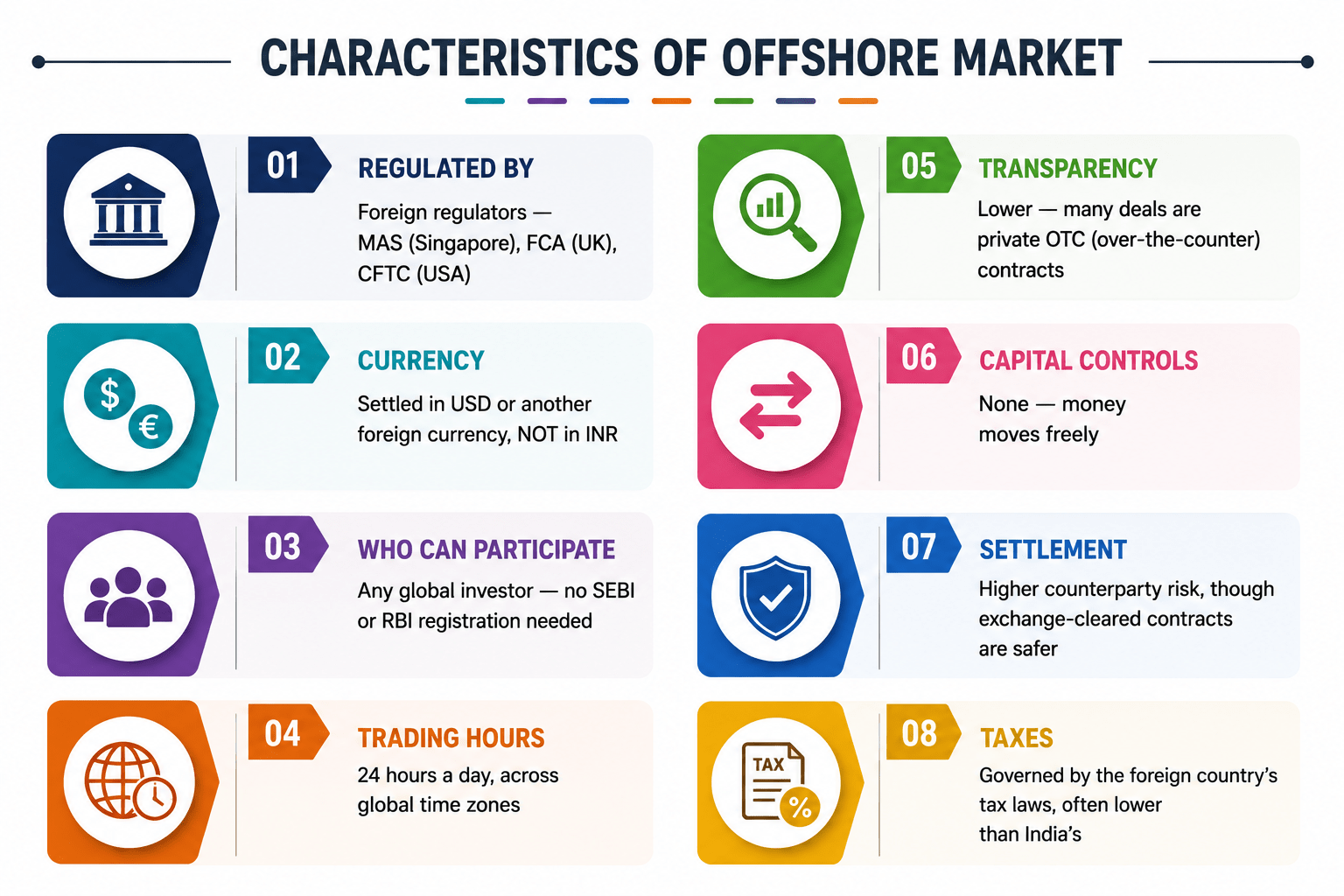
An offshore market is a financial market that works OUTSIDE a country. Foreign investors can trade that country's currency or assets without being inside that country or following its local rules.
Inshort:
Offshore = International Market
Example
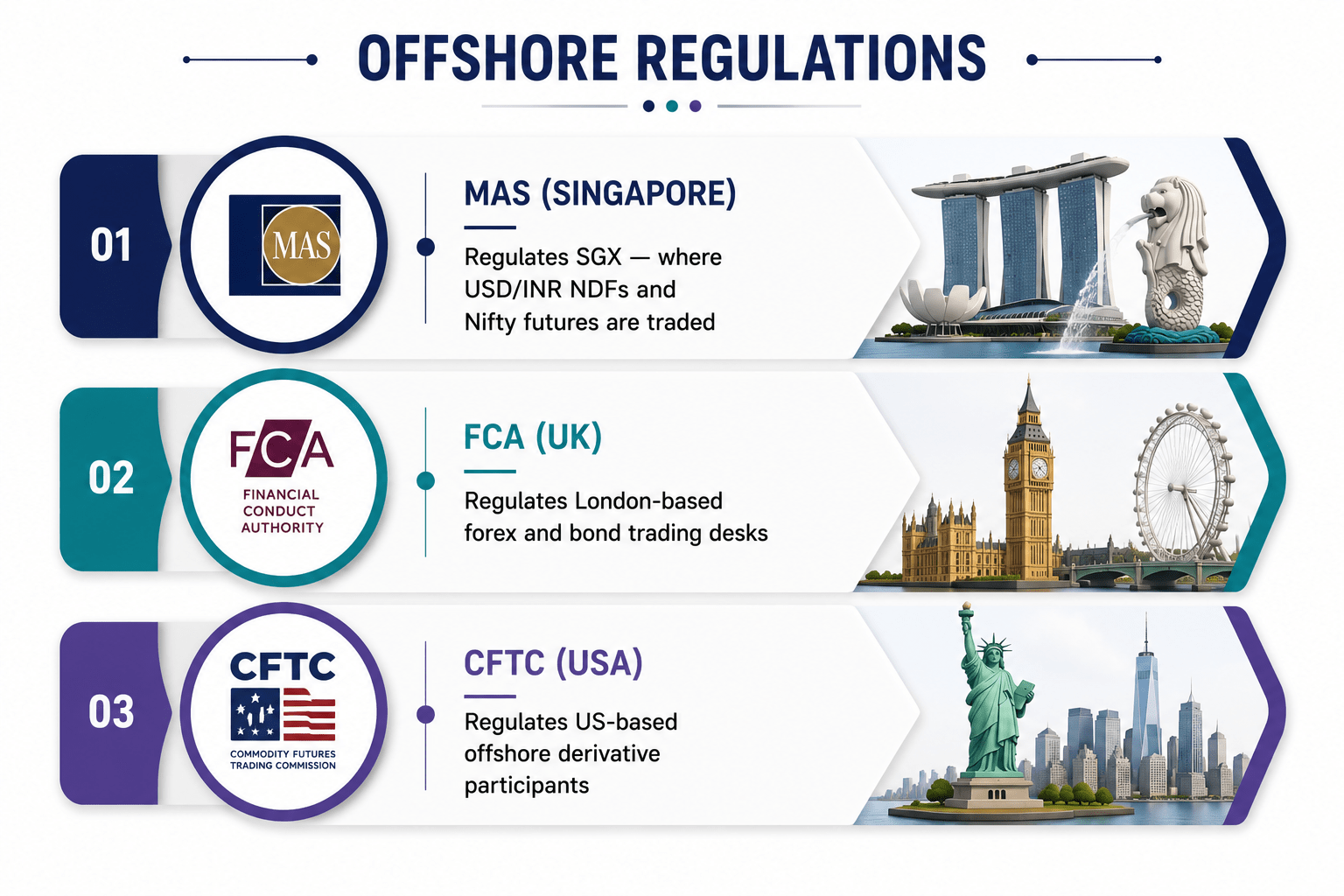
A US hedge fund trades USD/INR in Singapore (on SGX). India cannot control this. No SEBI registration needed. Settlement happens in US Dollars, not Rupees.
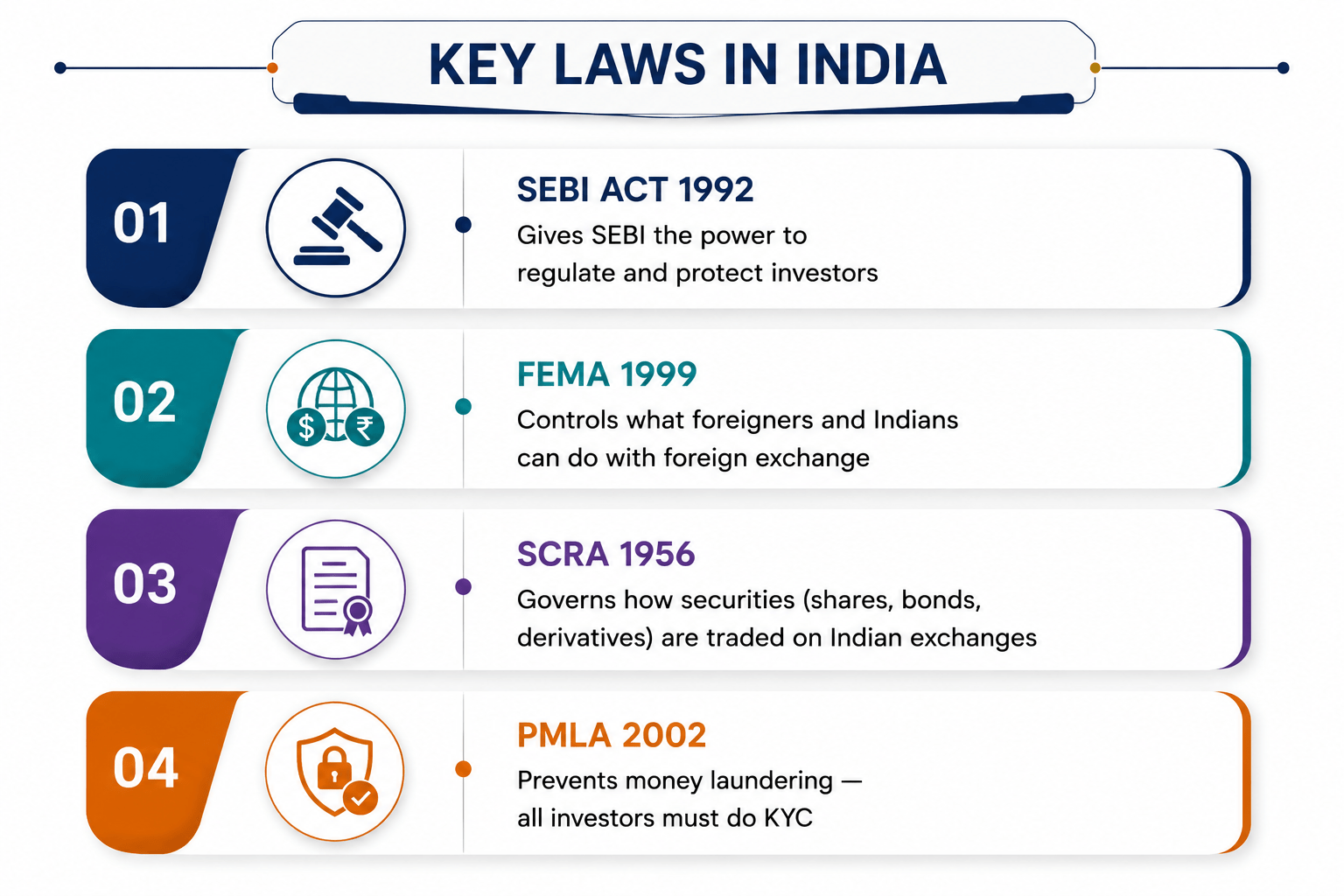
Onshore Regulations
SEBI
Regulates stock markets, mutual funds, FPIs, derivatives — the main markets regulator
RBI
Regulates forex (currency) markets and controls cross-border money flows under FEMA
IRDAI
Regulates insurance companies investing in capital markets
Practical Use Cases
Onshore use Case — Buying Shares on NSE
SBI Mutual Fund buys Reliance Industries shares on the NSE. The trade is settled in Indian Rupees (INR) within T+2 days, cleared by NSCCL, and regulated by SEBI. The fund pays Securities Transaction Tax (STT) and reports profits under Indian income tax laws. The entire transaction happens within India (onshore).
Offshore Use Case — Masala Bond by HDFC
HDFC raised funds by issuing Masala Bonds on the London Stock Exchange. These bonds are denominated in Indian Rupees (INR), but foreign investors buy them using their own currency. If the Rupee’s value changes, the currency risk is borne by the foreign investor, not HDFC. It’s a popular offshore method for Indian companies to raise money from global investors.
Summary
5
Offshore markets help companies access global capital and investors
4
Onshore: Domestic regulators | Offshore: Foreign regulators
3
Onshore uses INR; offshore uses foreign currencies
2
Offshore markets operate outside domestic borders
1
Onshore markets operate under domestic regulations
Quiz
Which regulator controls Indian stock market activities?
A. MAS
B. FCA
C. SEBI
D. CFTC
Quiz-Answer
Which regulator controls Indian stock market activities?
A. MAS
B. FCA
C. SEBI
D. CFTC
By Content ITV