JavaScript Runtime


Execution Context, Call Stack & Hoisting

Learning Outcome
5
Understand Hoisting and its behavior
4
Create and use variables to store and manipulate data
3
Describe how Call Stack manages execution
2
Explain Execution Context and its types
Explain what a Dockerfile is
1
Understand how JavaScript executes code internally
6
Debug basic JavaScript execution problems
Restaurant Kitchen Analogy
Orders come → like function calls
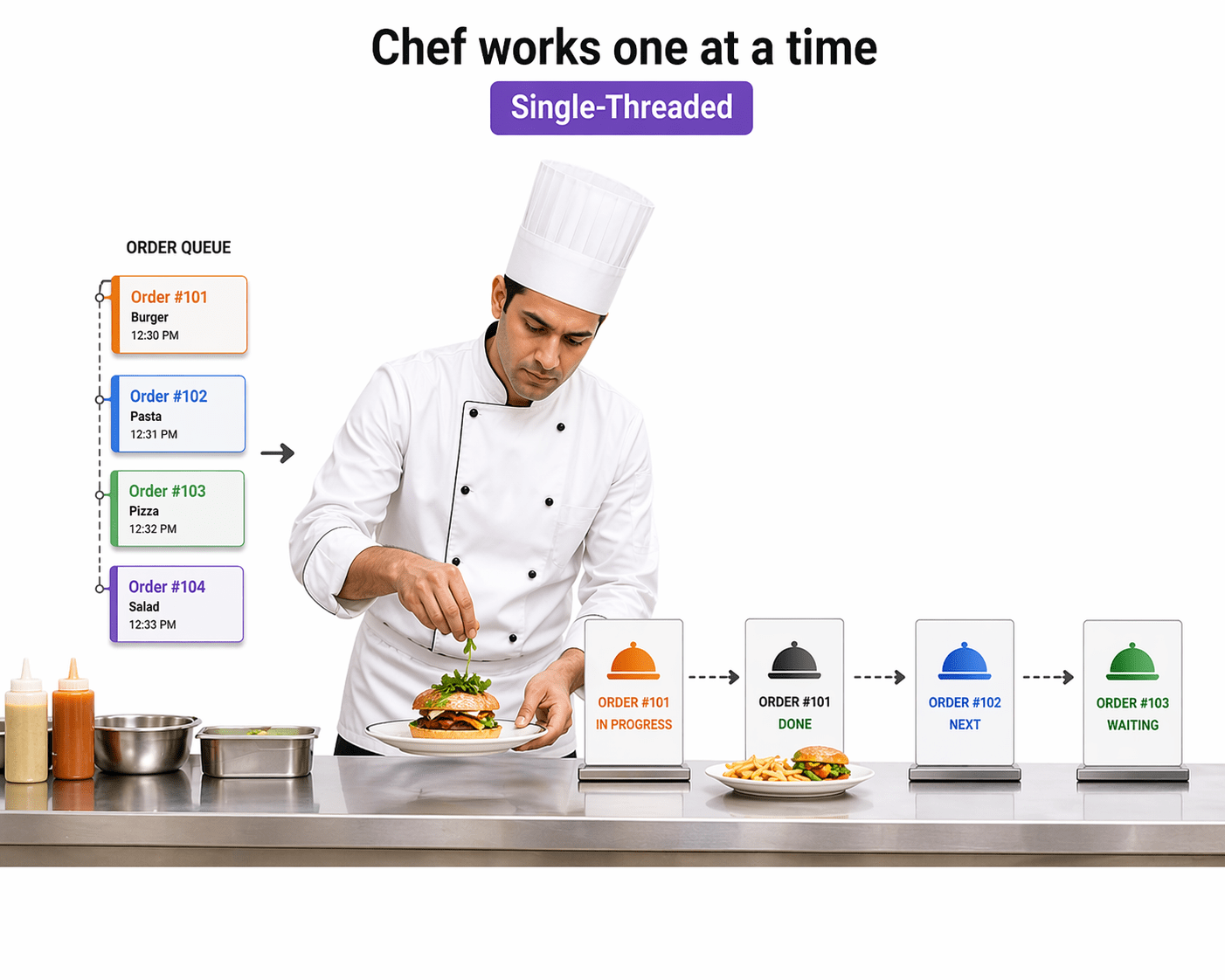
Chef works one at a time → single-threaded
Orders stacked → last comes first served

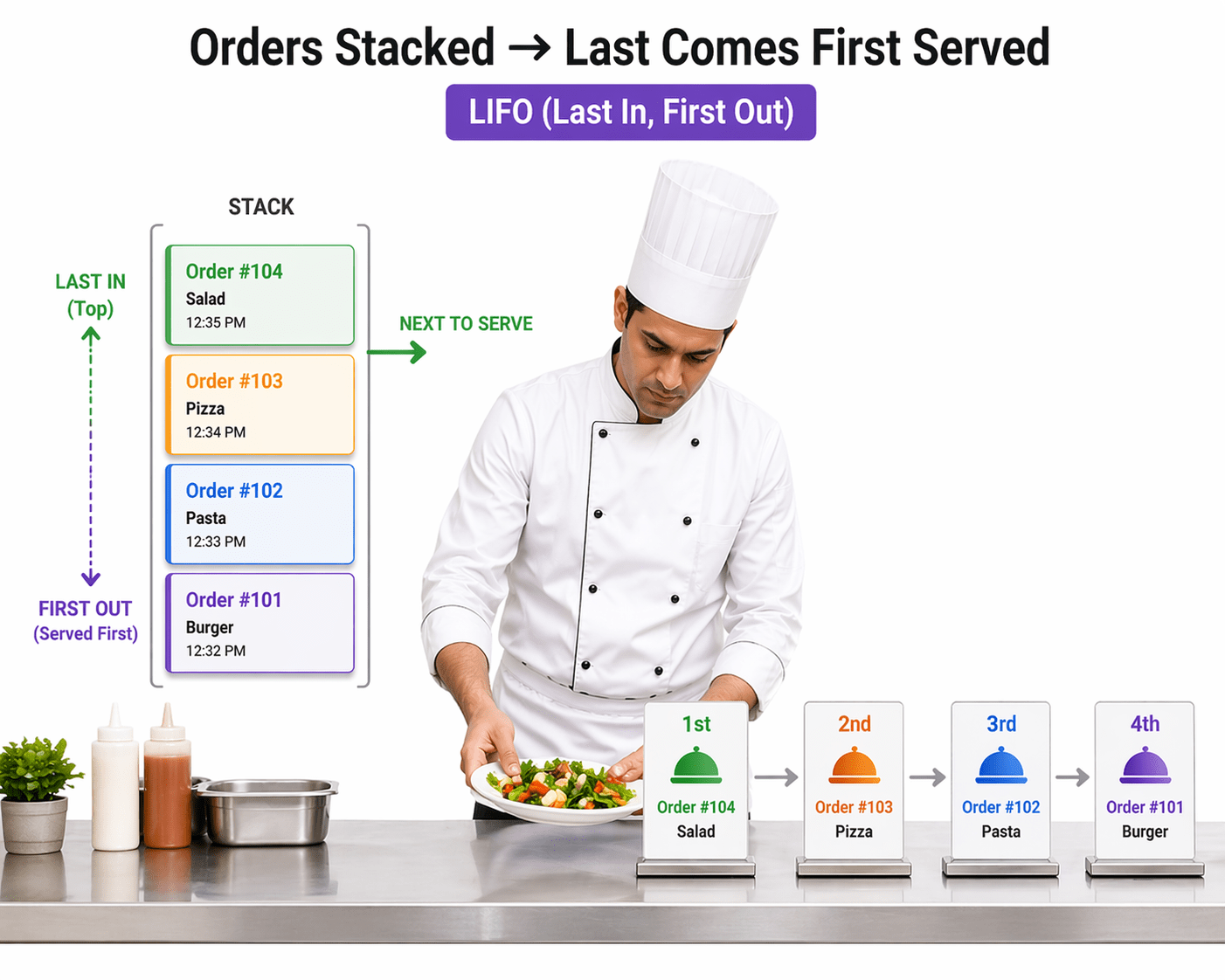
This is called LIFO (Last In First Out)
Environment For Execution
whenever browser encounters → JS code it bringsJavascript Runtime Engine into Action
now it has to execute the Js code but

How does it do that?

In JS engine there is Enviroment Called as Execution Context

What happens during code execution?
JavaScript allocates memory for variables and functions before execution starts
Every declaration gets stored in a dedicated environment
This environment, where memory allocation and execution happen, is called Execution Context

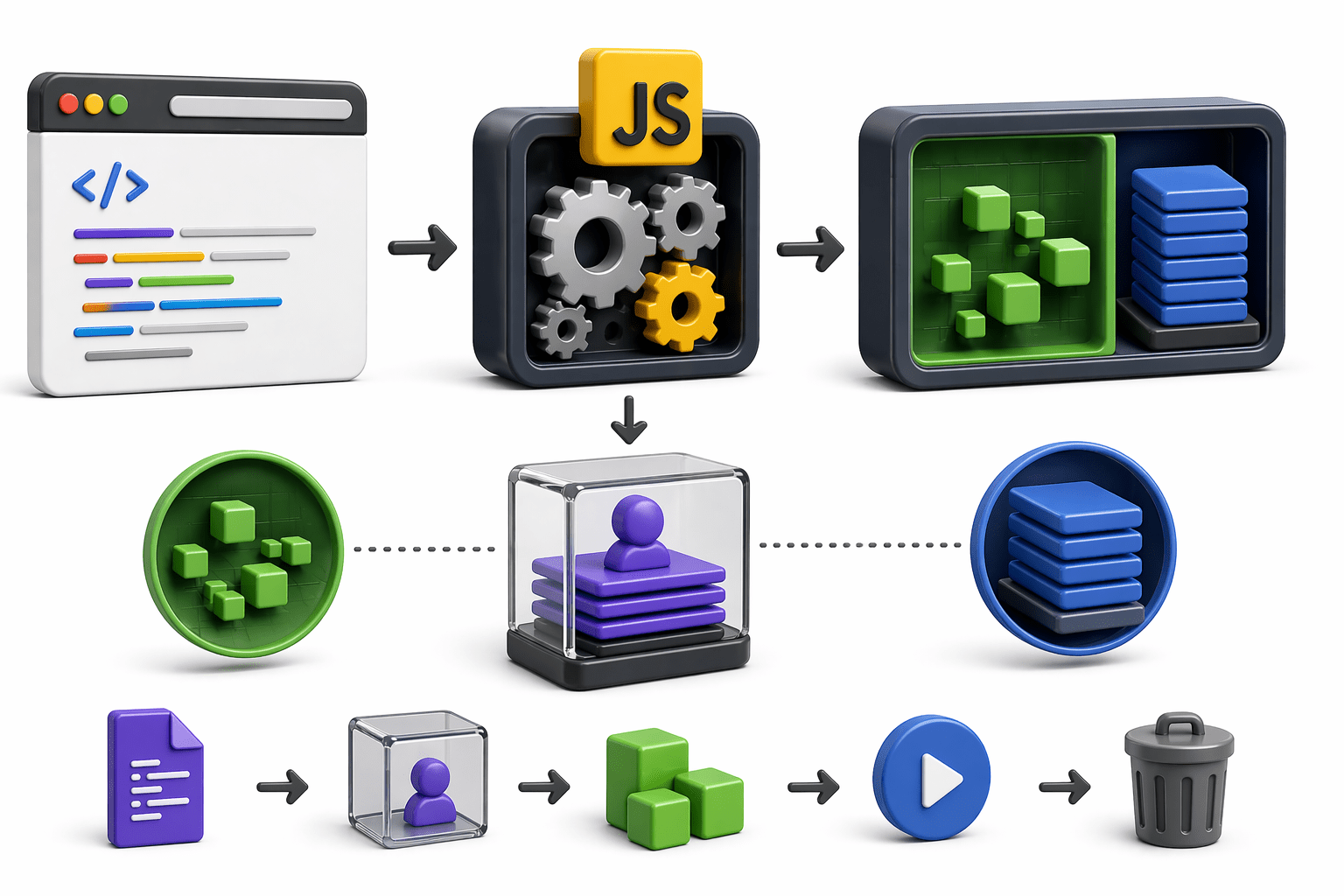
Now there are 2 types of EC
1 - Global Execution Context
When the JavaScript engine starts running a script file, it automatically creates a default environment called the Global Execution Context.

The Global Execution Context is the default environment where all code outside functions runs, and there is only one per JavaScript file.
How GEC encounters only one JS File ?
Frameworks like React and Angular use multiple JavaScript files
Managing many files directly can be complex
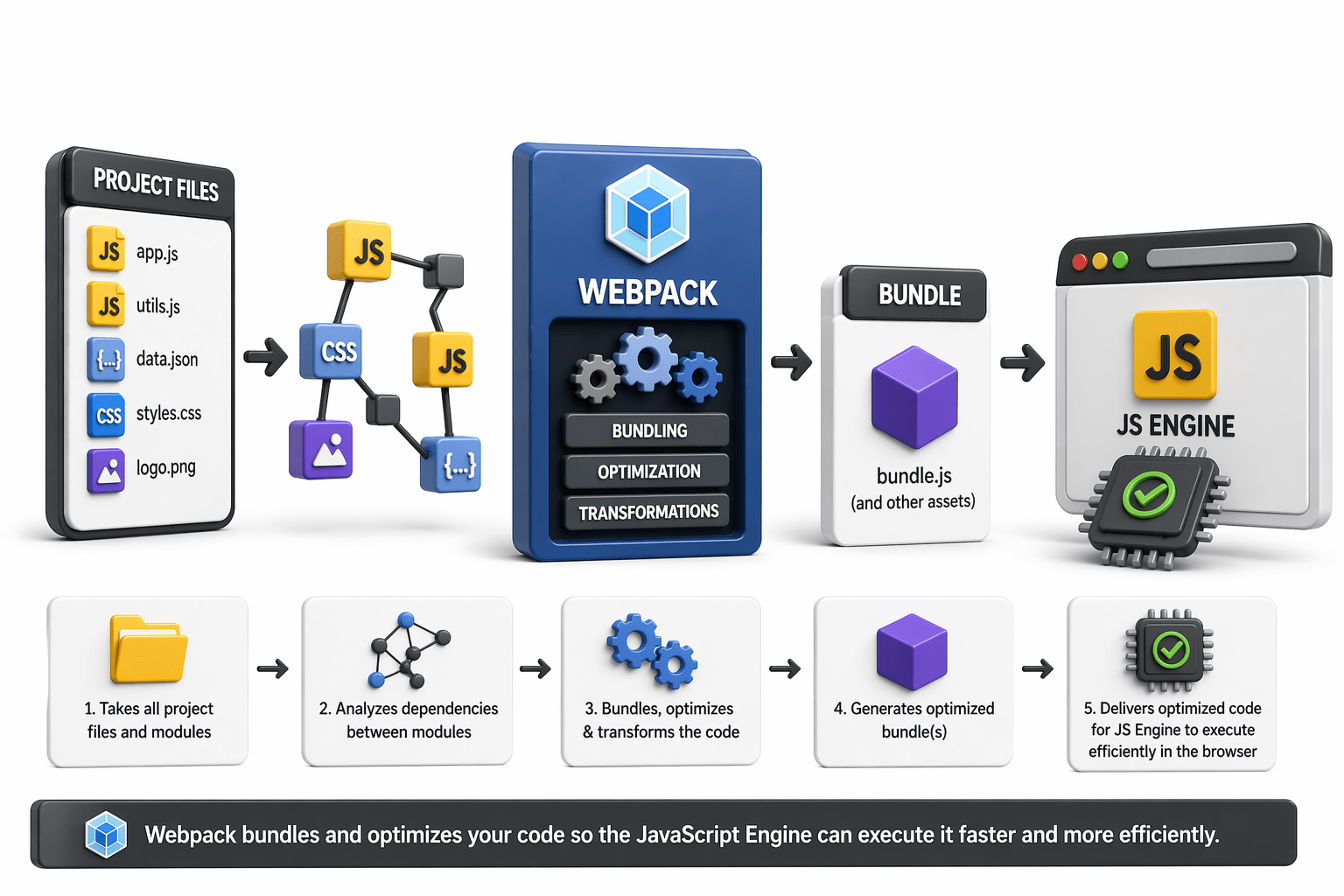
Tools like Webpack combine these files into bundles
This makes code execution more efficient and organized
what is WEBPACK?
Webpack is a popular JavaScript bundler used to manage and optimize the assets of modern web applications.
Webpack takes modules with dependencies (JavaScript, CSS, images, etc.)
It processes and combines them into one or more bundles
These bundles are optimized for faster delivery to the browser
This helps the JavaScript engine execute code more efficiently

2 - Functional execution Context
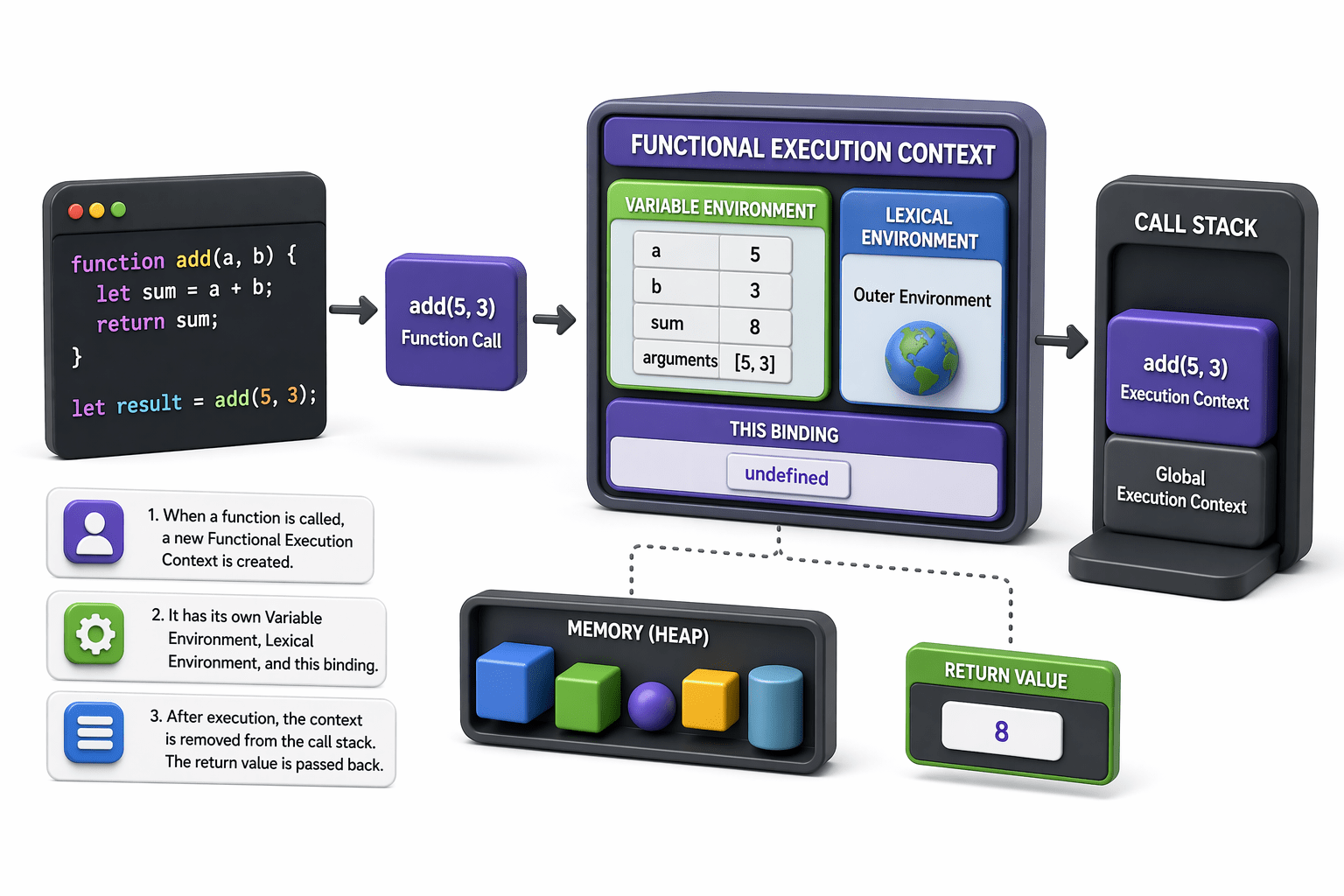
A Functional Execution Context (FEC) is created whenever a function is invoked, providing a separate environment to execute that function.
Key Characteristics of Functional Execution Context (FEC)
A new FEC is created for every function call
It manages local variables, arguments, and the value of this
Each FEC has its own scope, preventing conflicts with other functions
It is temporary and gets removed after the function execution completes
FEC enables concepts like closures and proper function isolation

Why are there different Execution Contexts (EC)?
JavaScript doesn’t run everything in one single environment.
Instead, it creates a new Execution Context for each function call to properly manage:
variables scope function behavior
This ensures isolation + proper execution flow
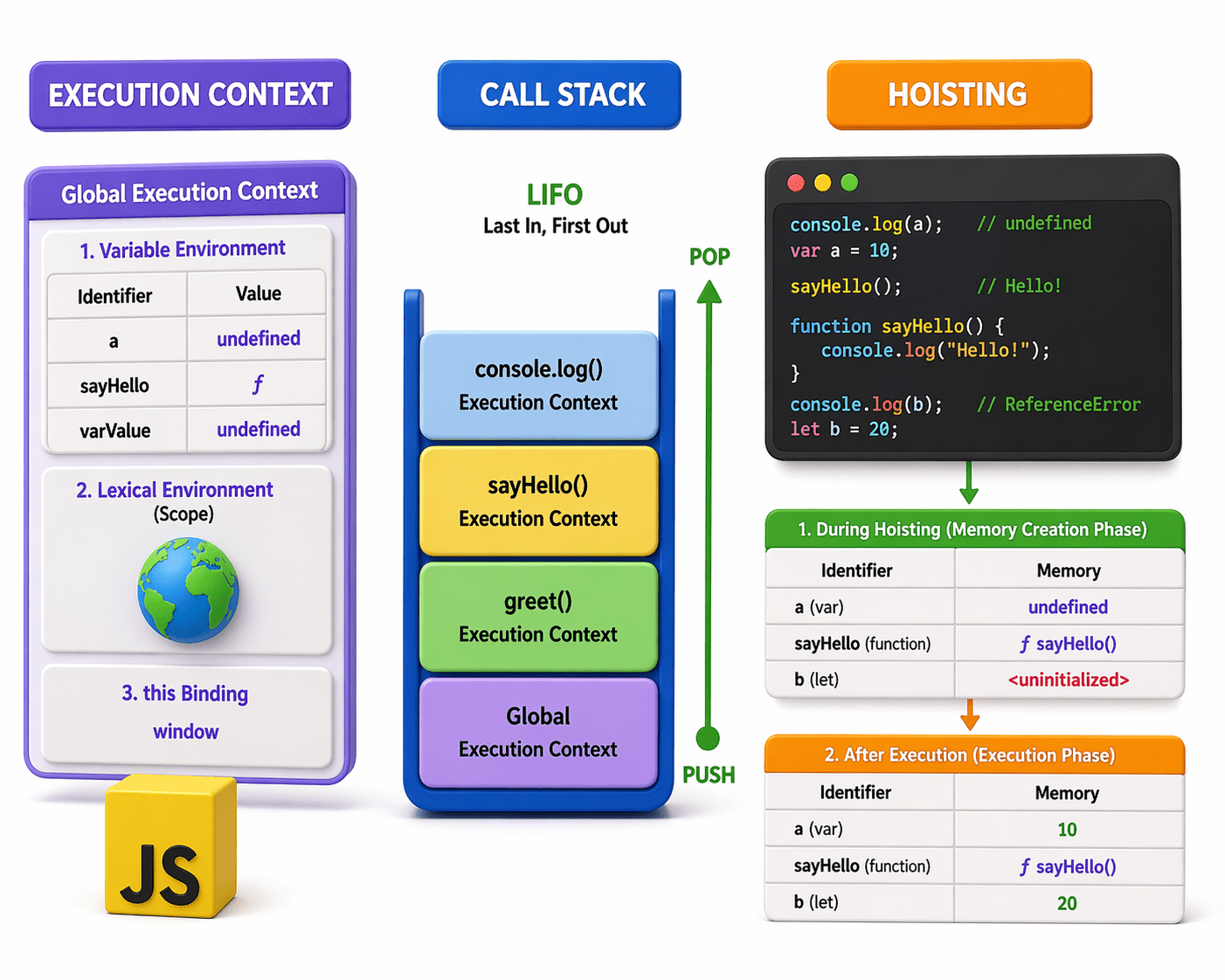
Every Execution Context has 3 Core Components
Variable Object / Arguments Object
Scope & Scope Chain (Lexical Environment)
this Binding
1) Variable Object / Arguments Object
What it contains:
Function parameters (arguments)
Variable declarations (var, let, const)
Function declarations
Example :
function add(a, b) {
  var sum = a + b;
}
Behavior:
Memory is allocated during the creation phase
- Initial values:
var→undefinedlet/const→ uninitialized (TDZ)- functions → full definition stored
Inside this function EC:
a,b→ arguments objectsum→ variable stored in memory
2) Scope & Scope Chain (Lexical Environment)
This defines where variables can be accessed from
Scope:
Determines visibility of variables
Each EC has its own local scope
Scope Chain:
If a variable is not found in current scope
JS looks in outer (parent) scope
continues until global scope
let x = 10;

function outer() {
  let y = 20;

  function inner() {
    console.log(x, y);
  }

  inner();
}
Inside inner() EC:
- JS looks for:
x→ not in inner → found in globaly→ found in outer
This chain = Scope Chain
3) this Binding
Hello World Program
The first program everyone writes:
print("Hello World")
Output:
Hello World


Steps:
Open Python/Colab
Type code
Run → see output

Insight:
This confirms your Python setup is working correctly

Summary
4
It is used in web development, AI, data science, and automation
3
Python is simple, powerful, and widely used across industries
2
Languages are categorized into low, medium, and high-level based on abstraction
1
Programming languages help humans communicate with computers effectively
Quiz
Who created Python?
A. Bill Gates
B. Elon Musk
C. Guido van Rossum
D. Mark Zuckerberg

Quiz-Answer
Who created Python?
A. Bill Gates
B. Elon Musk
C. Guido van Rossum
D. Mark Zuckerberg