Financial Systems & Markets


Risk vs Return


Learning Outcome
5
Apply risk return concepts for decisions
4
Evaluate risk versus expected return outcomes
3
Identify low and high risk investments
2
Understand risk and return relationship clearly
1
Define risk and return in investing
Analogy: The Lottery vs. The Savings Account
Let us bring the concept of Risk vs. Return to life with a simple, everyday analogy.
The Setup
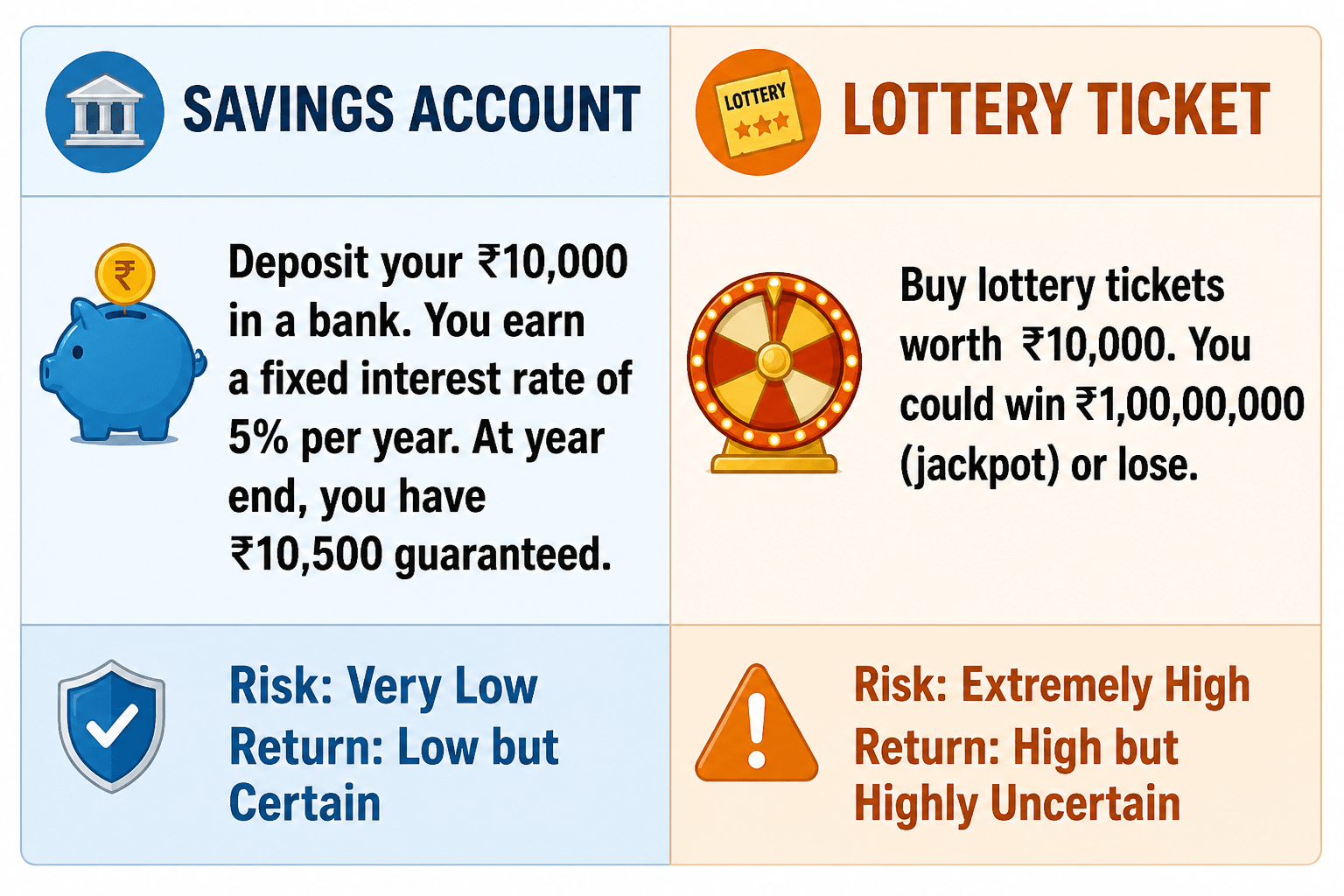
Imagine you have ₹10,000 and two choices:
-
The savings account is safe, predictable, and boring but it works every time.
-
The lottery is thrilling and offers enormous upside but the odds are stacked against you
-
Neither option is inherently 'wrong' but the choice depends on your goal, your timeline, and how much uncertainty you can tolerate
-
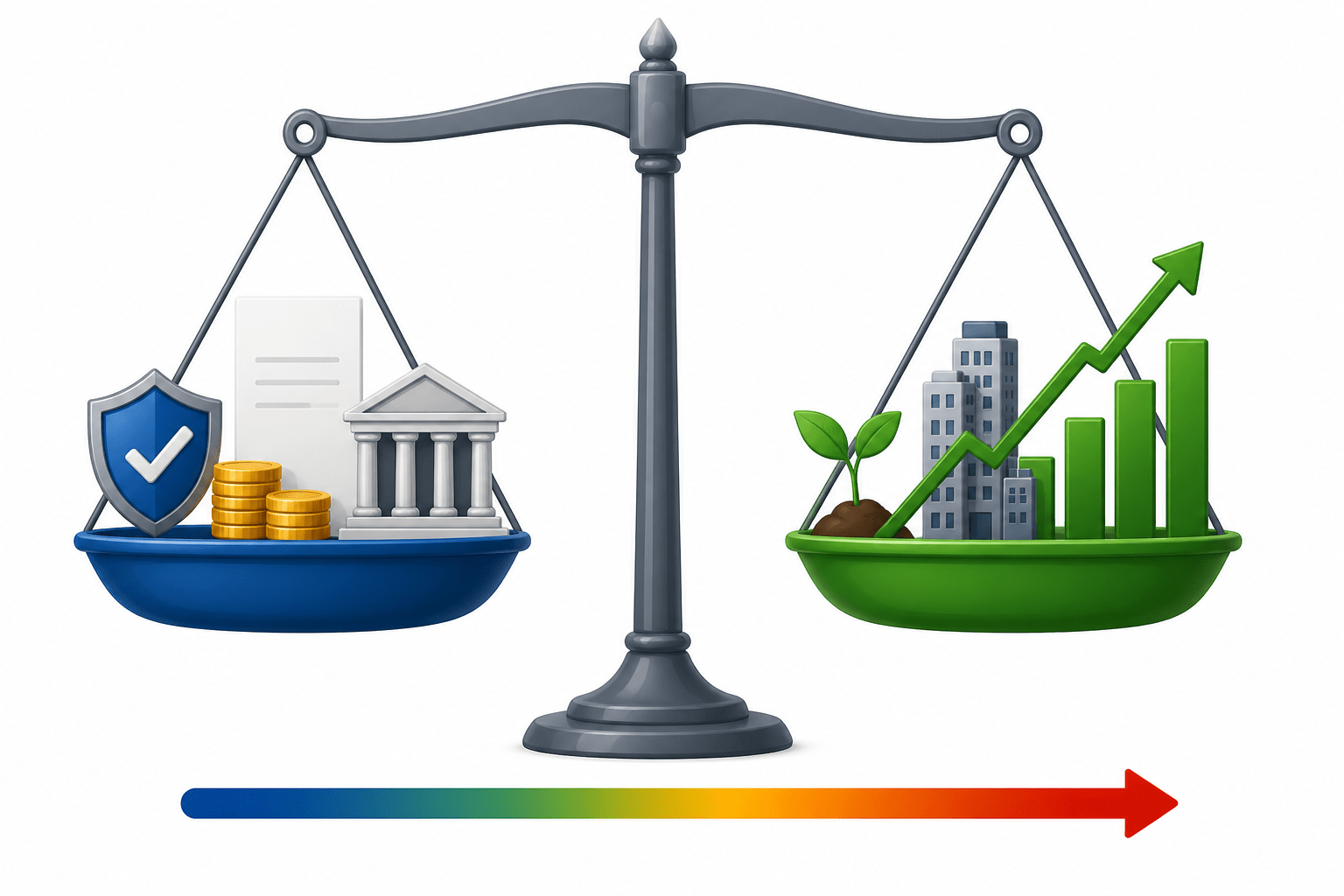
This is exactly how investing works. Every investment sits somewhere on a spectrum between the savings account and the lottery ticket
Insights:
choosing between a
depends on how much risk you are willing to take for a certain return, every investment decision involves balancing risk and return.
Higher returns usually come with higher uncertainty, while safer options offer lower but more predictable returns.
and

savings account
lottery
What is Risk?
Risk refers to the possibility that the actual return on an investment will differ from the expected return. This includes the possibility of losing part or all of the original investment.
Risk comes in many forms:
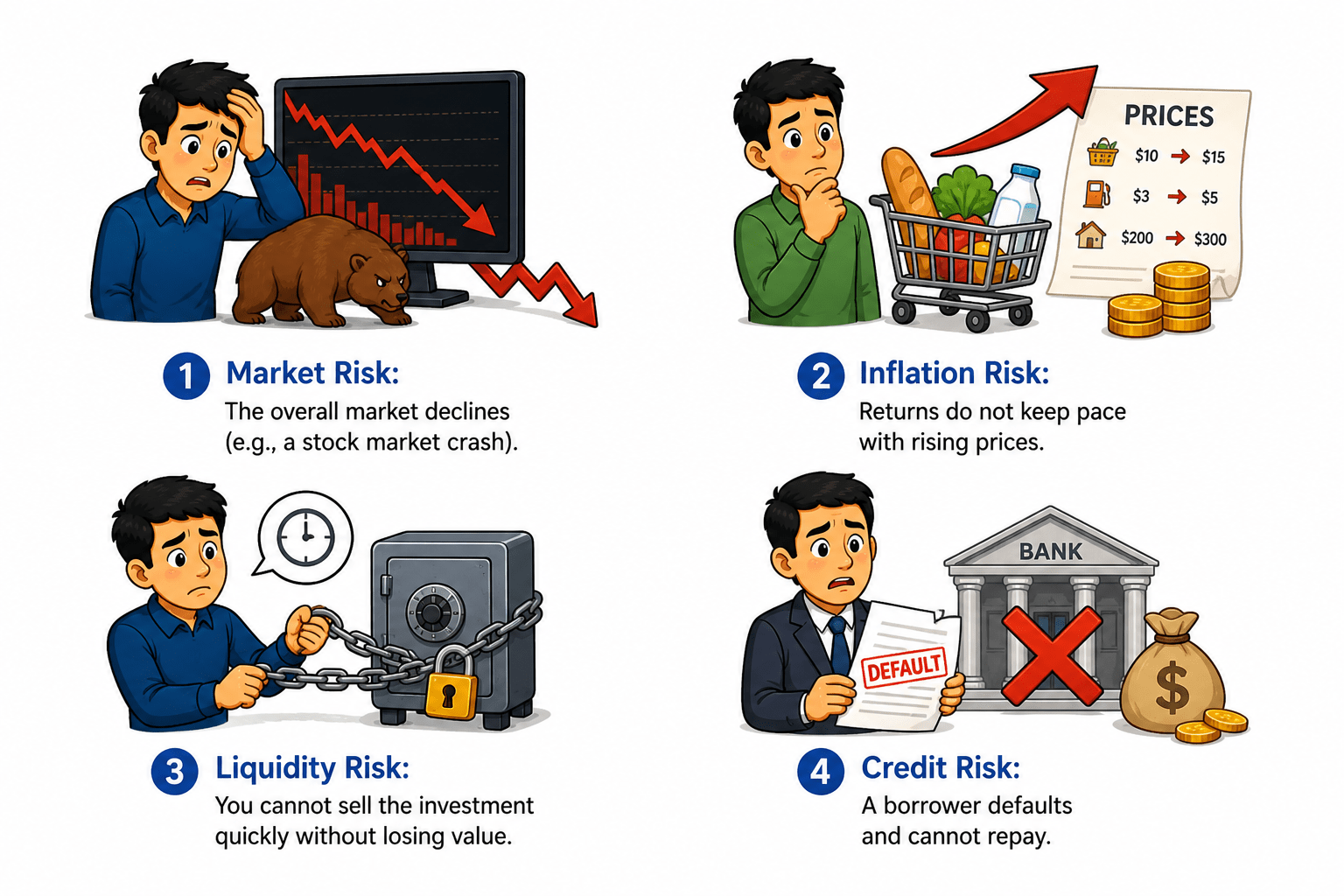
Market Risk: The overall market declines (e.g., a stock market crash).
Inflation Risk: Returns do not keep pace with rising prices.
Liquidity Risk: You cannot sell the investment quickly without losing value.
Credit Risk: A borrower defaults and cannot repay.
What is Return?
Return is the gain or loss made on an investment over a specific period. It is usually expressed as a percentage of the original investment.
The Risk-Return Trade-Off
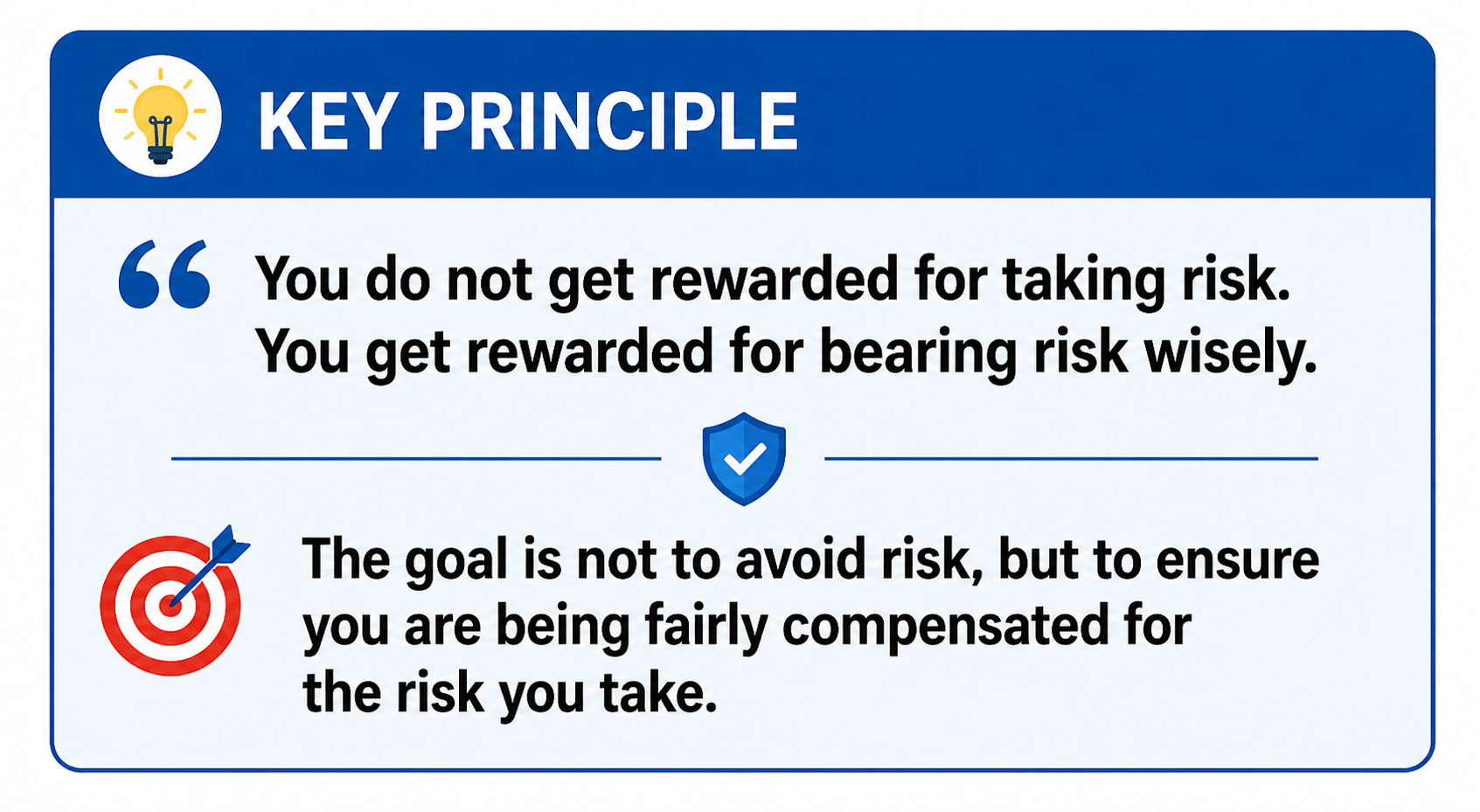
The risk-return trade-off is the principle that potential return rises with an increase in risk. Investors must balance the desire for the highest possible return against their ability to accept risk.
Formula :- Return (%) = [(Ending Value - Beginning Value) / Beginning Value] x 100
Example: If you invest ₹10,000 and it grows to ₹12,000, your return is 20%.
The Investment Spectrum
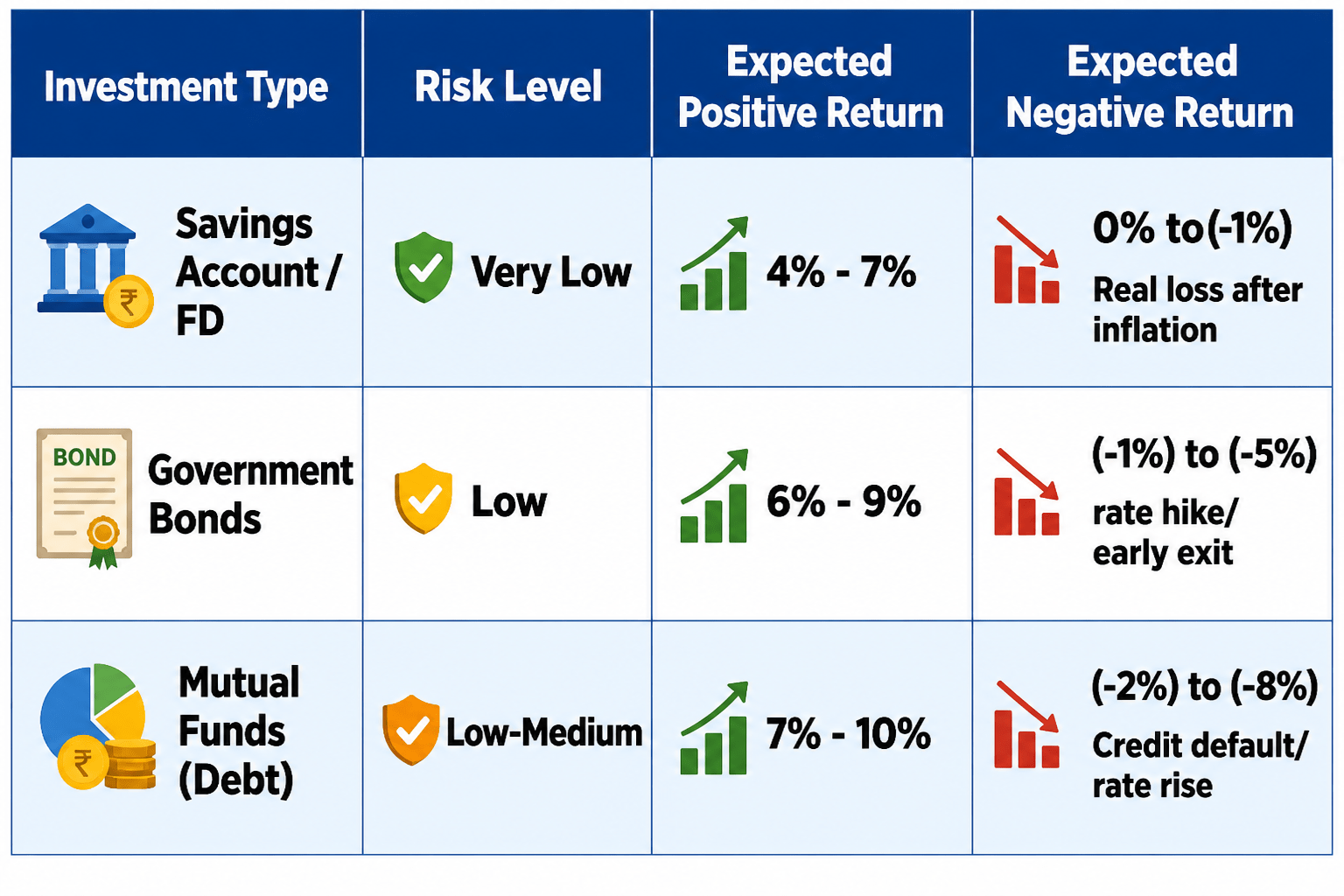
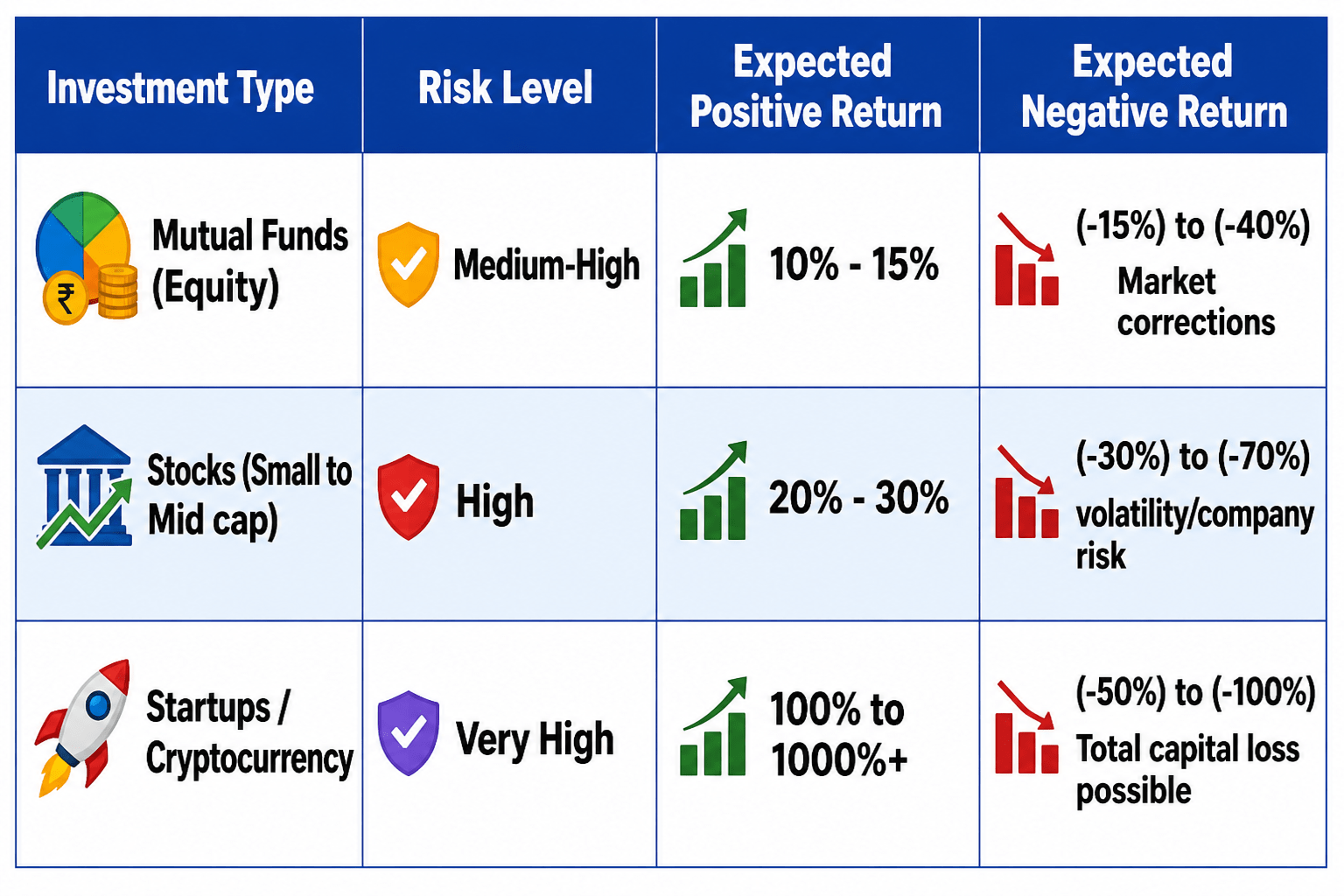
Summary
5
Balance risk and return for smart investing
4
Savings offer low risk predictable returns
3
Higher returns come with higher risk
2
Return is profit or loss percentage
1
Risk is uncertainty of investment returns
Quiz
Which of the following is an example of a low-risk, low-return investment?
A. Cryptocurrency
B. Penny stocks
C. Government bonds or savings account
D. Startup equity

Quiz-Answer
Which of the following is an example of a low-risk, low-return investment?
A. Cryptocurrency
B. Penny stocks
C. Government bonds or savings account
D. Startup equity
