Financial Systems & Markets


Financial Markets and Financial Institutions

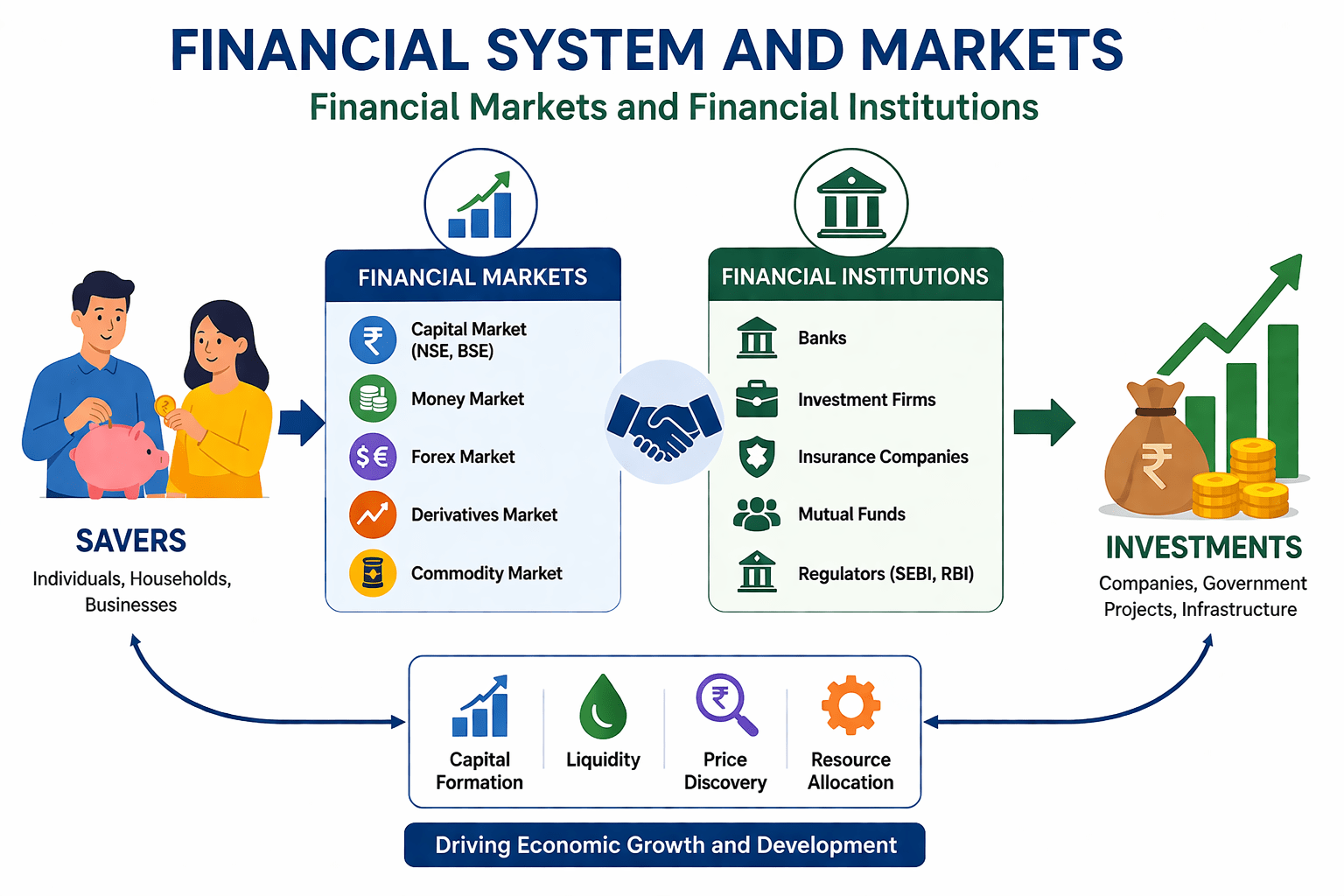

Learning Outcome
5
Understand savings converting into investments
4
Explain core market functions and roles
3
Differentiate financial institutions and key regulators
2
Identify major markets and their purposes
1
Understand markets vs institutions roles clearly
Analogy: The Sports Stadium
To understand how financial markets and financial institutions relate to each other, think about a professional cricket match at the Wankhede Stadium in Mumbai.
The Stadium and the Players
But without the players, coaches, umpires, and team management, it is just a beautifully built empty ground.
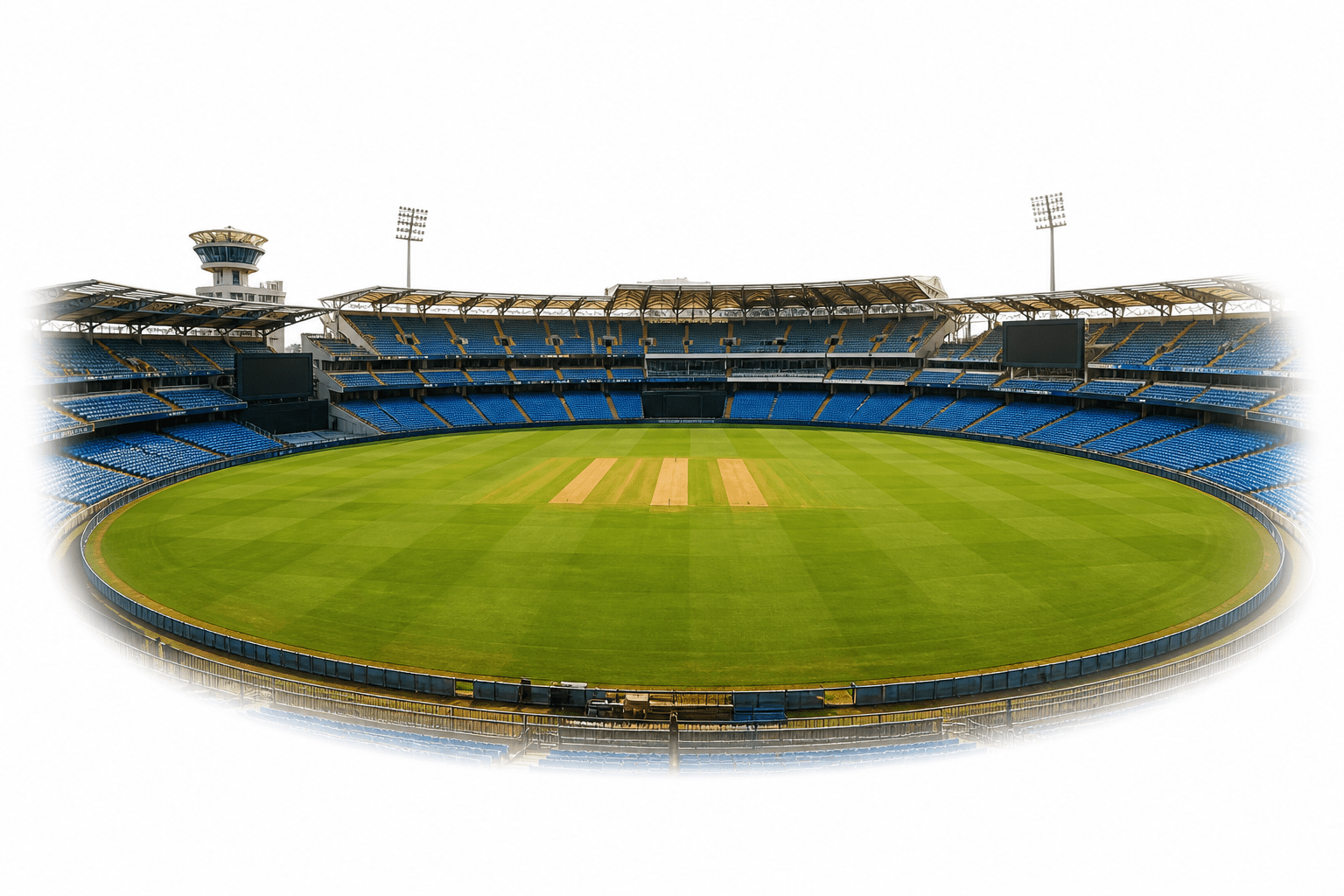
The Wankhede Stadium is a structured, regulated venue where a game takes place. The stadium has rules, boundaries, scoreboards, and facilities.
The magic happens only when the stadium and the players come together.

On the other hand, players and coaches without a stadium, without an organised venue, clear rules, and a scoring system cannot play a meaningful game that the world respects and invests in.
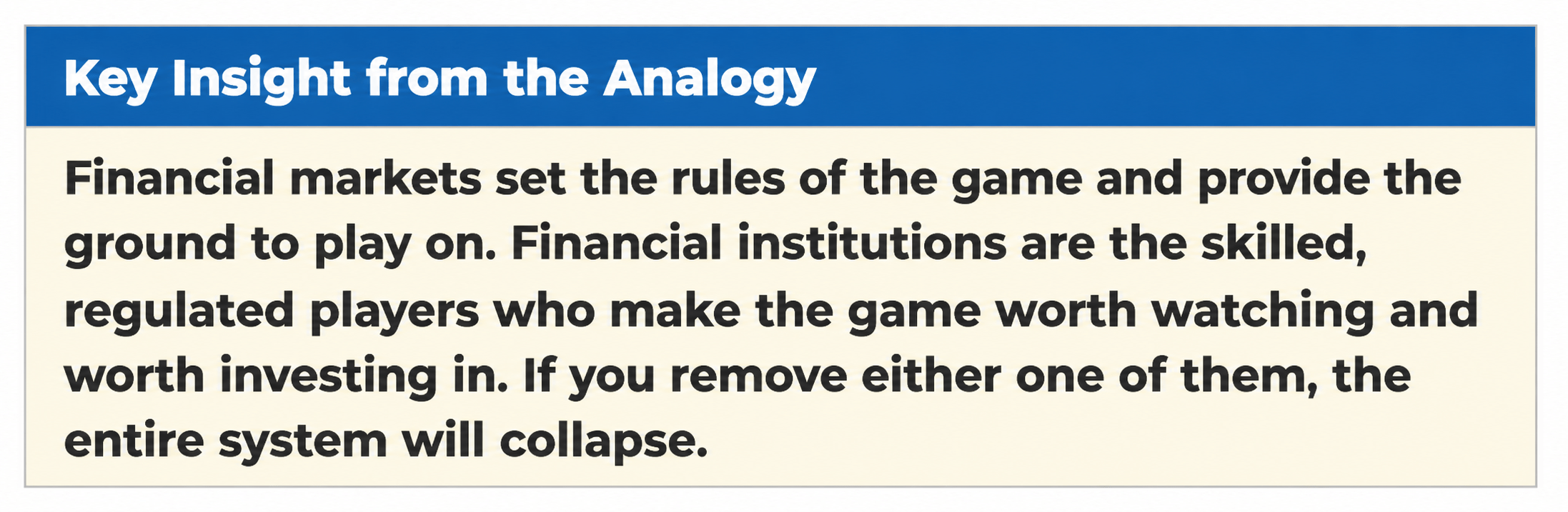
Just as a cricket match needs both a world-class stadium and skilled players operating under clear rules, the economy needs both well-functioning financial markets and capable, regulated financial institutions
Part A: Financial Markets
What is a Financial Market?

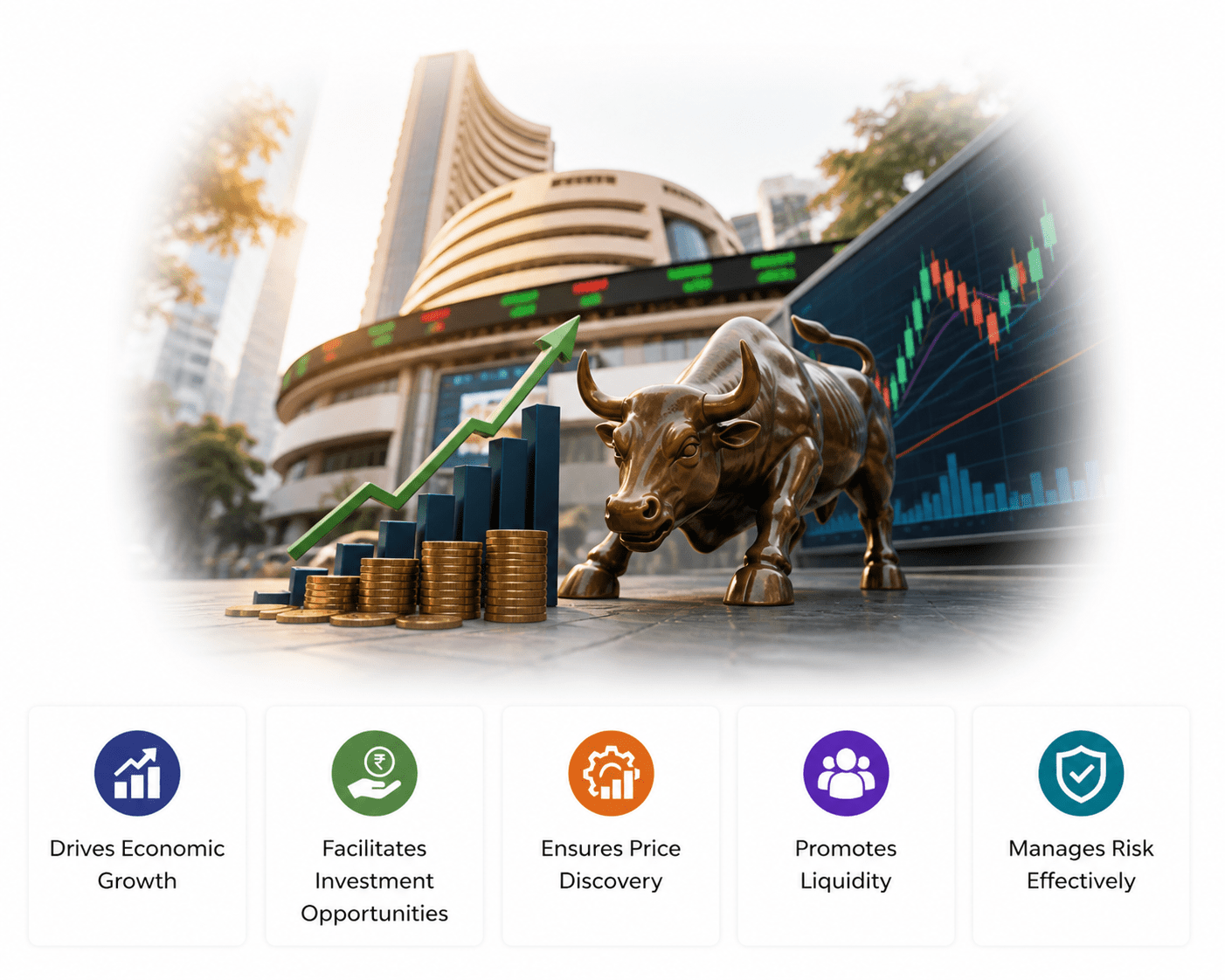
A financial market is any system, platform, or organised mechanism through which buyers and sellers trade financial instruments such as stocks, bonds, currencies, and derivatives. These markets enable the transfer of funds from those with surplus capital to those who need it, and they determine prices through the forces of supply and demand.
Types of Financial Markets
A. Capital Market (Long-Term, Maturity > 1 Year)
Capital markets deal with long-term financial instruments. They have two key segments:
- Primary Market:
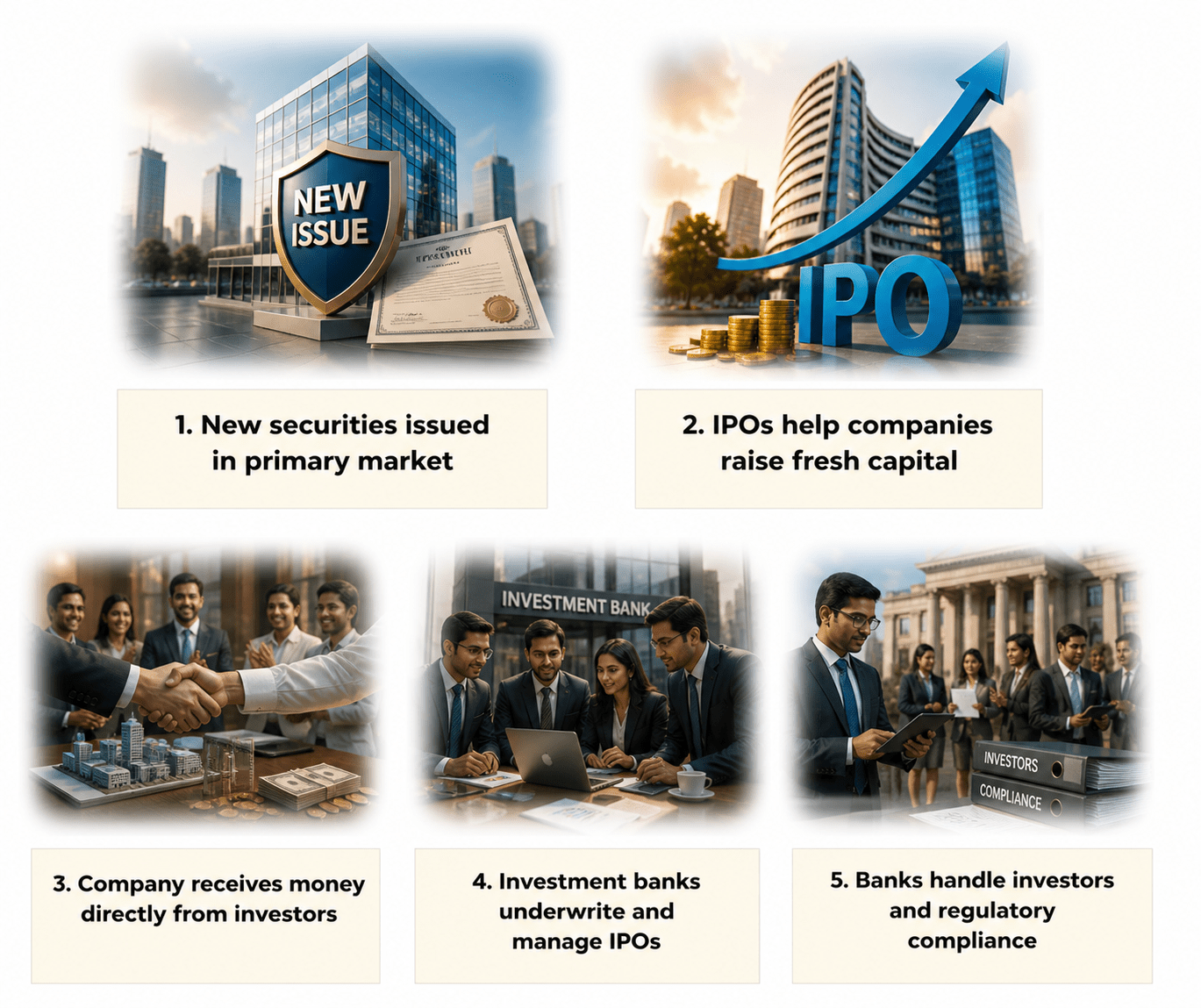
1.New securities issued in primary market
2.IPOs help companies raise fresh capital
3.Company receives money directly from investors
4.Investment banks underwrite and manage IPOs
5.Banks handle investors and regulatory compliance
Examples: LIC IPO (2022) and Zomato IPO (2021).
- Secondary Market:
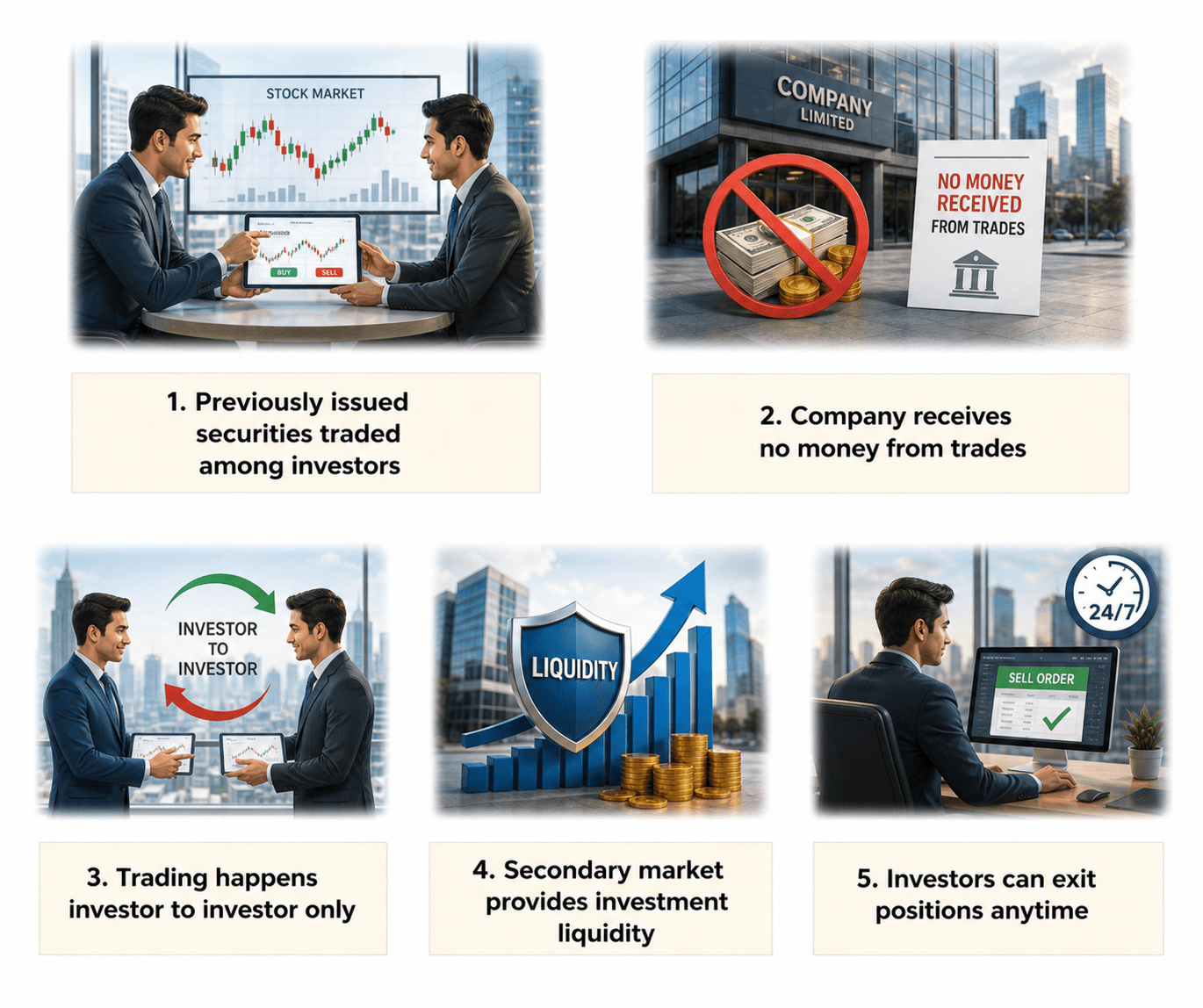
1. Previously issued securities traded among investors
2. Company receives no money from trades
3. Trading happens investor to investor only
4. Secondary market provides investment liquidity
5. Investors can exit positions anytime
Example: The NSE and BSE are India's two major secondary market exchanges.
B. Money Market (Short-Term, Maturity <= 1 Year)
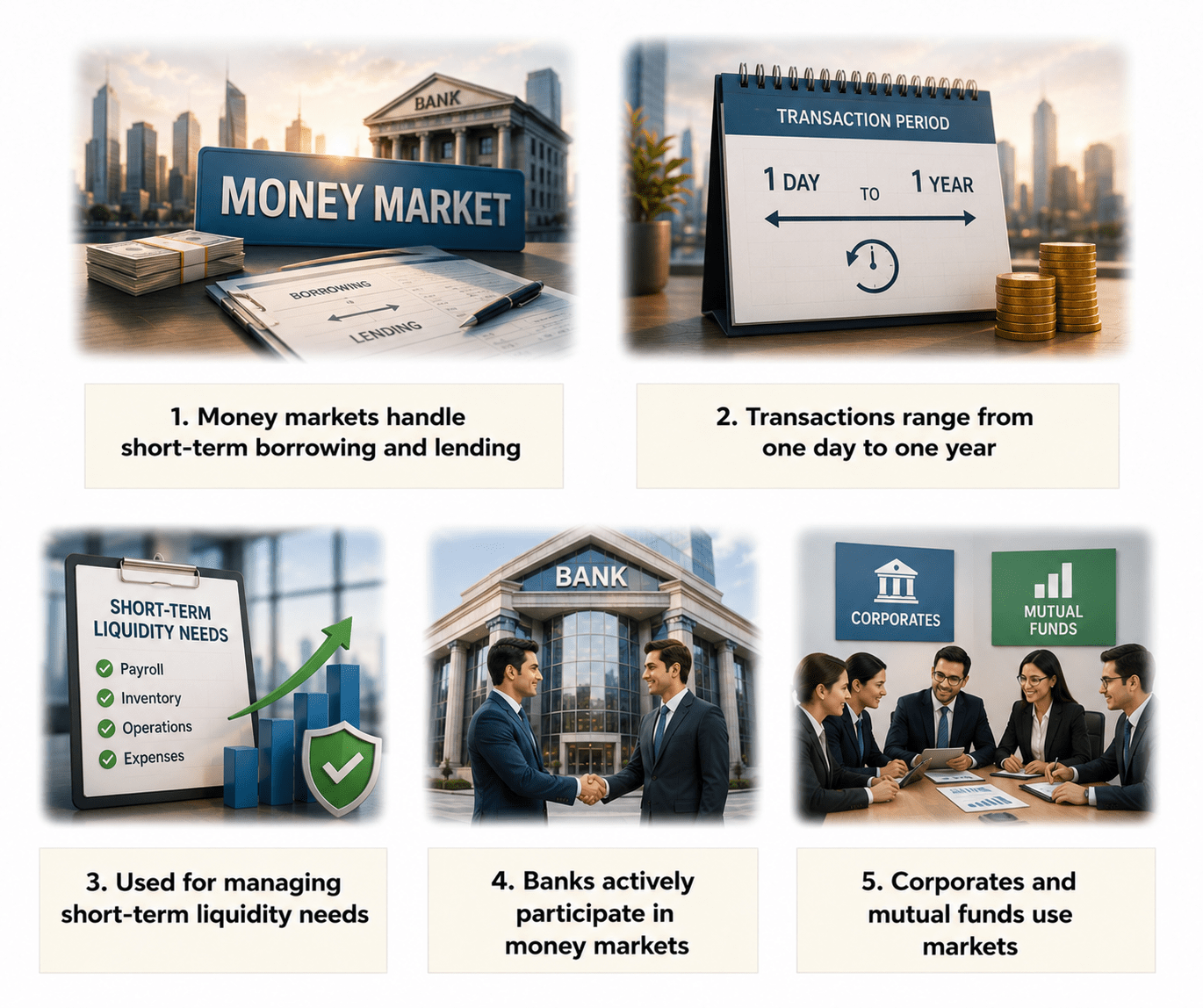
1. Money markets handle short-term borrowing and lending
2. Transactions range from one day to one year
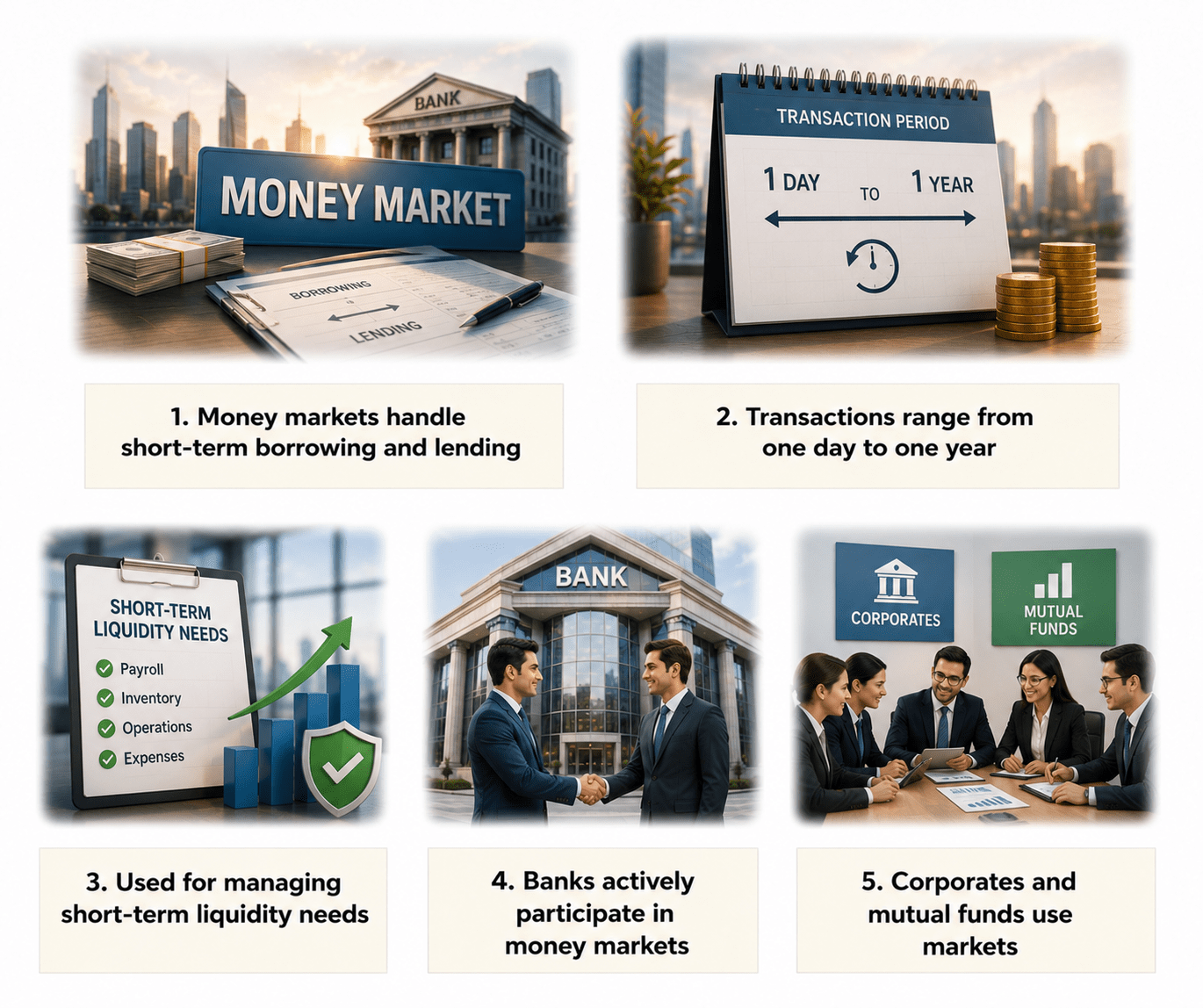
3. Used for managing short-term liquidity needs
4. Banks actively participate in money markets
5. Corporates and mutual funds use markets
Example: Instruments include Treasury Bills (T-Bills) issued by the government, Commercial Papers (CP) issued by corporates, and Certificates of Deposit (CD) issued by banks.
C. Forex Market
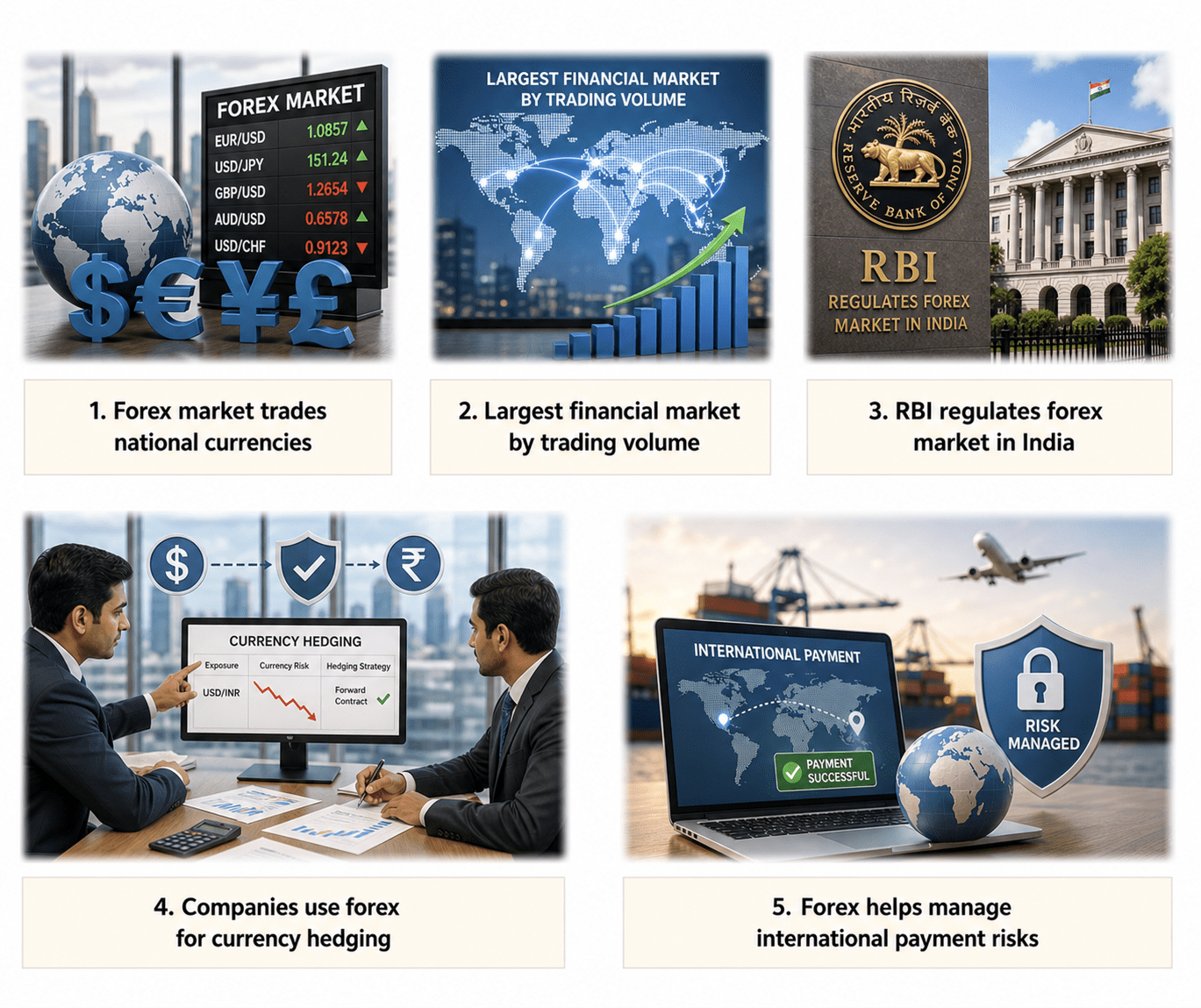
1. Forex market trades national currencies
2. Largest financial market by trading volume
3. RBI regulates forex market in India
4. Companies use forex for currency hedging
5. Forex helps manage international payment risks
Example: An IT company that earns in US dollars uses forex tools to protect itself if the Indian rupee becomes stronger.
D. Derivatives Market
Example: India's NSE is one of the world's largest derivatives exchanges by volume.
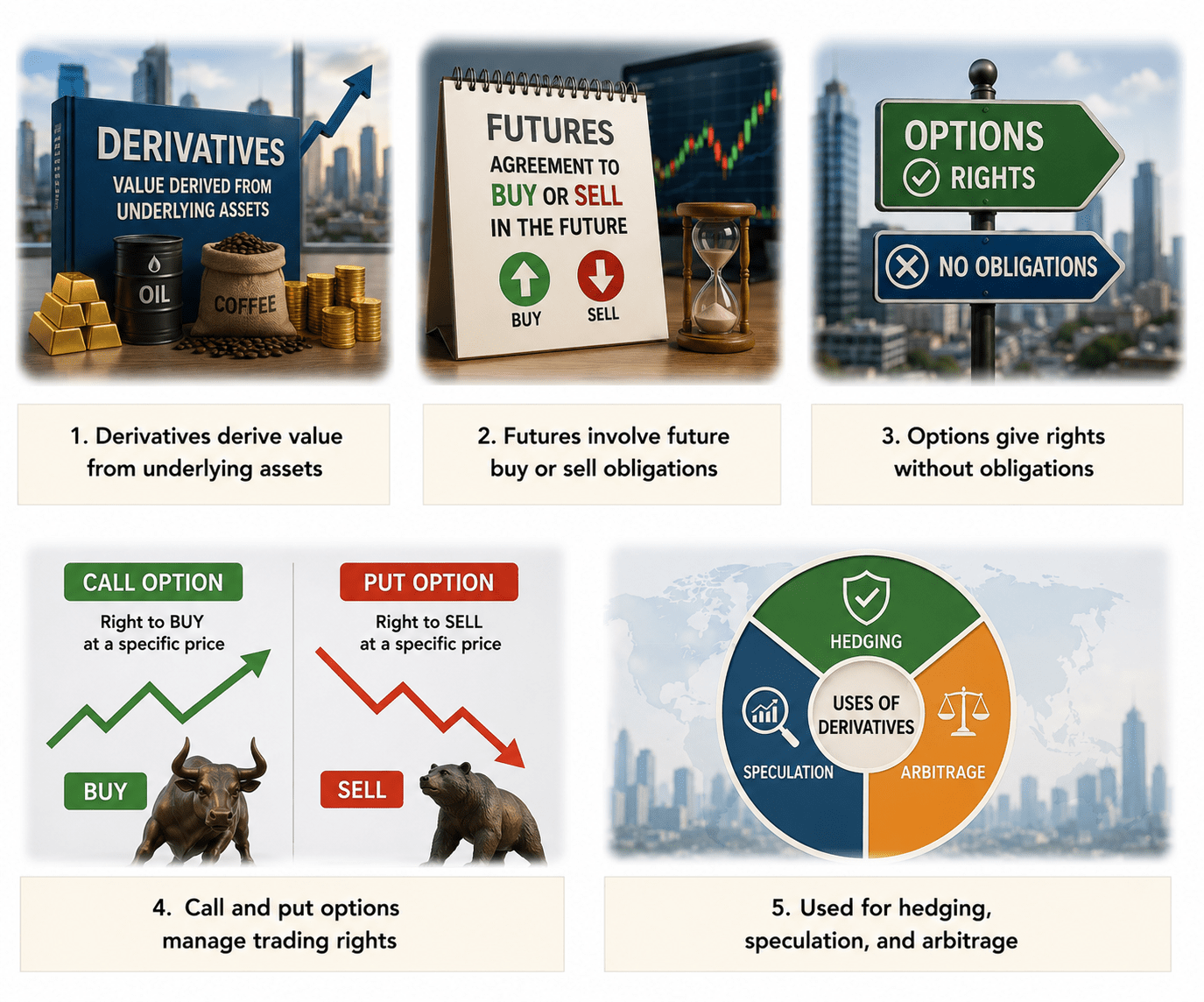
1. Derivatives derive value from underlying assets
2. Futures involve future buy or sell obligations
3. Options give rights without obligations
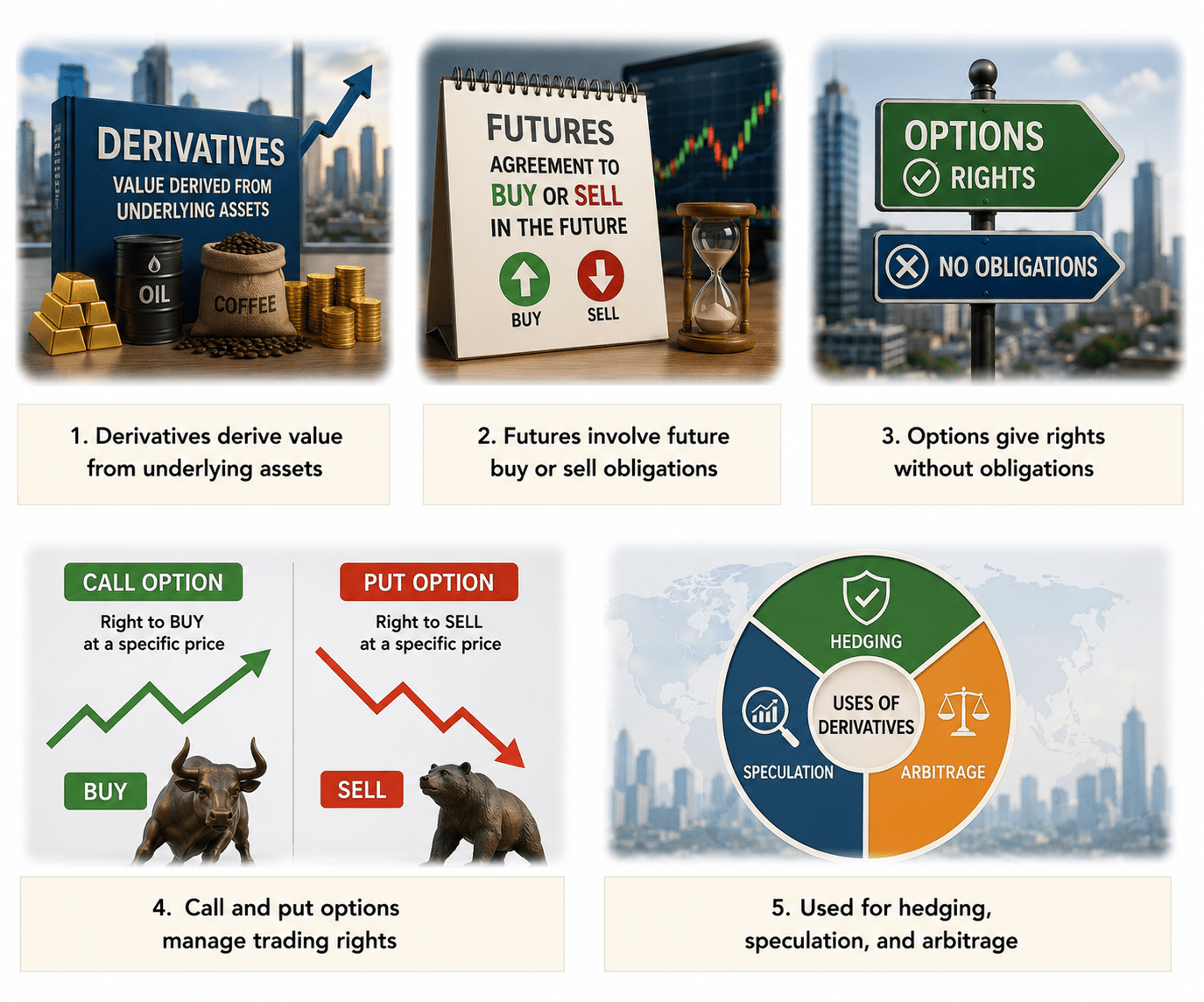
4. Call and put options manage trading rights
5. Used for hedging, speculation, and arbitrage
E. Commodity Market
Example: Agricultural products (wheat, cotton), metals (gold, silver), and energy (crude oil, natural gas).
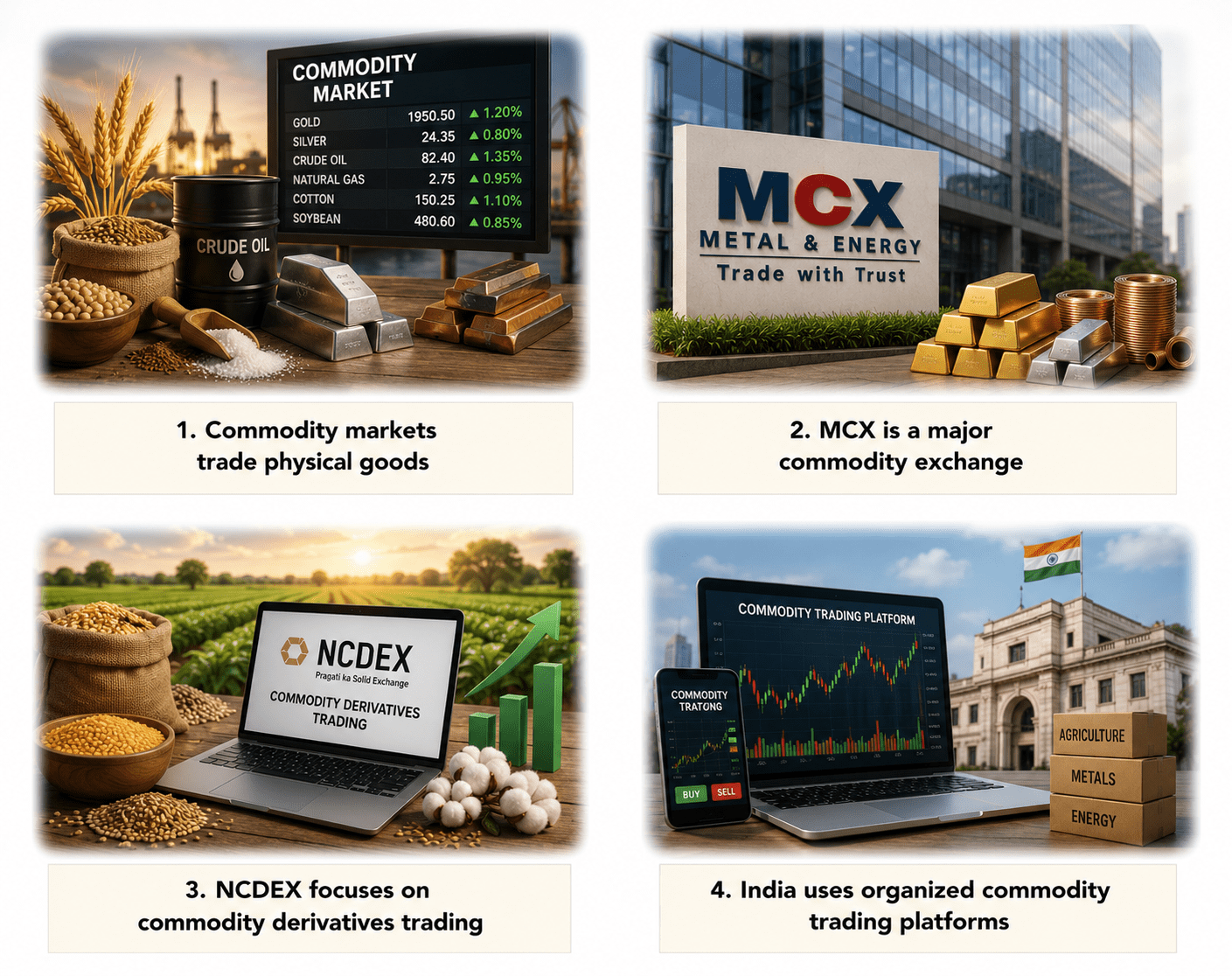
1. Commodity markets trade physical goods
2. MCX is a major commodity exchange
3. NCDEX focuses on commodity derivatives trading
4. India uses organized commodity trading platforms
Quick Summary
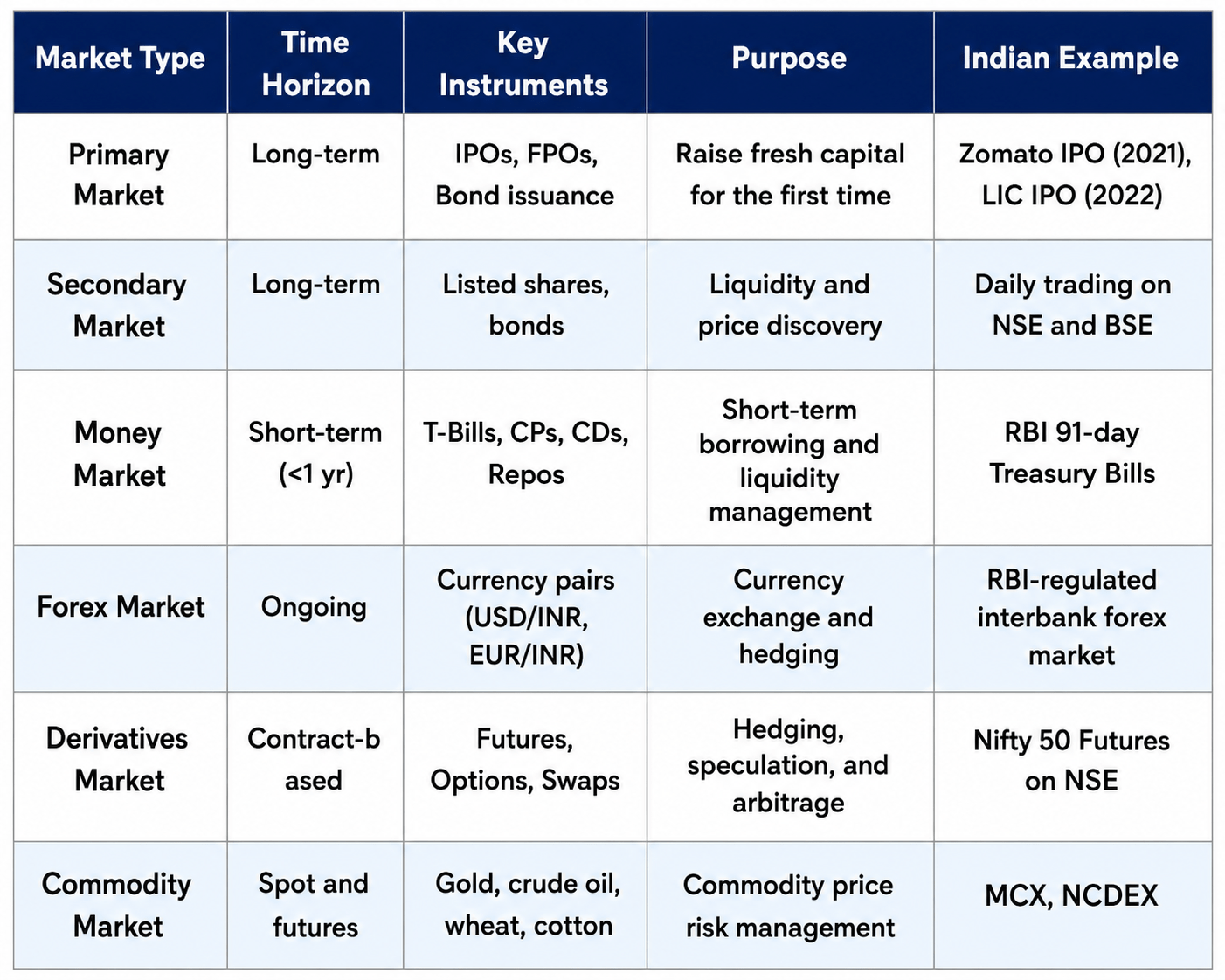
Quick Summary
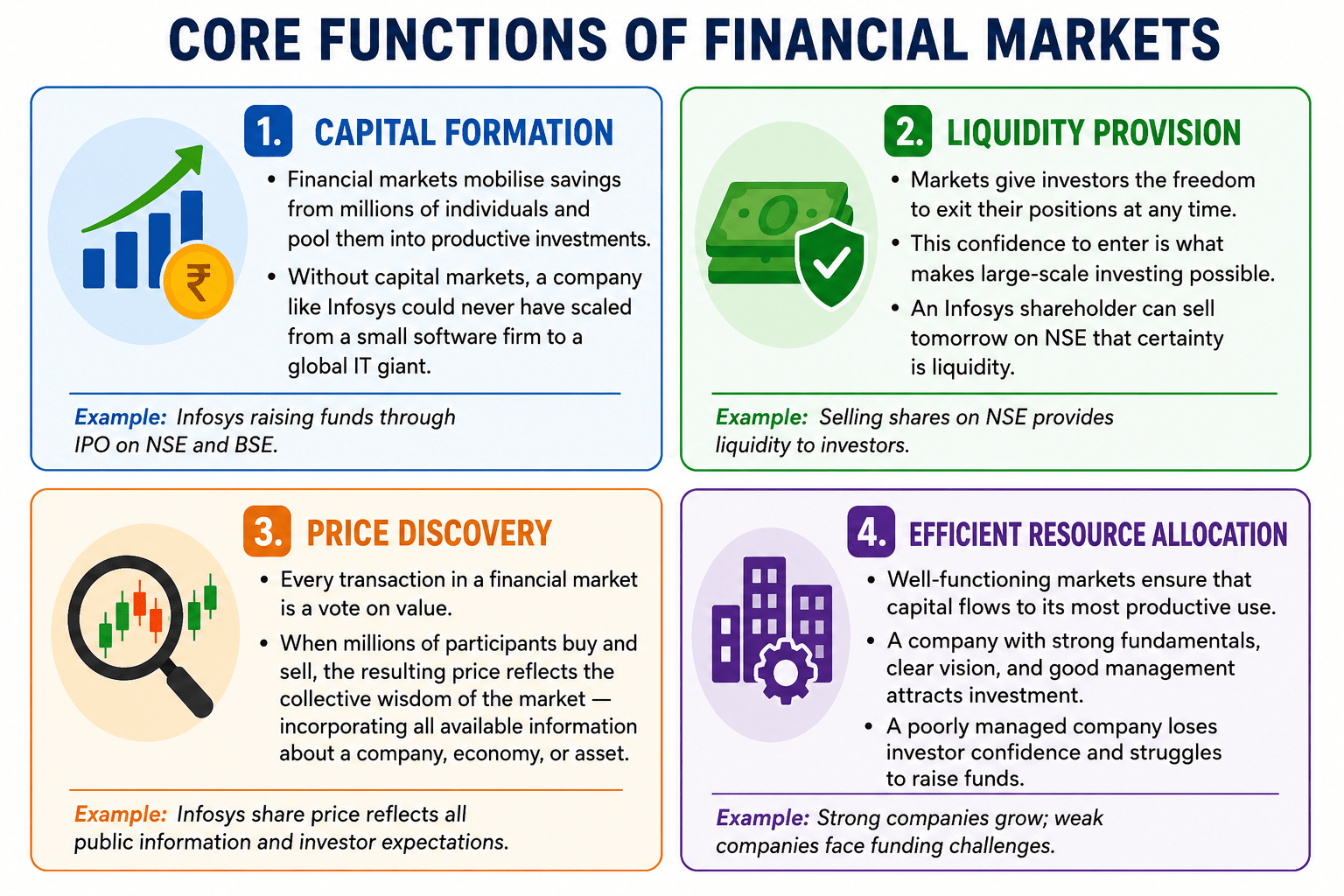
Four Core Functions of Financial Markets
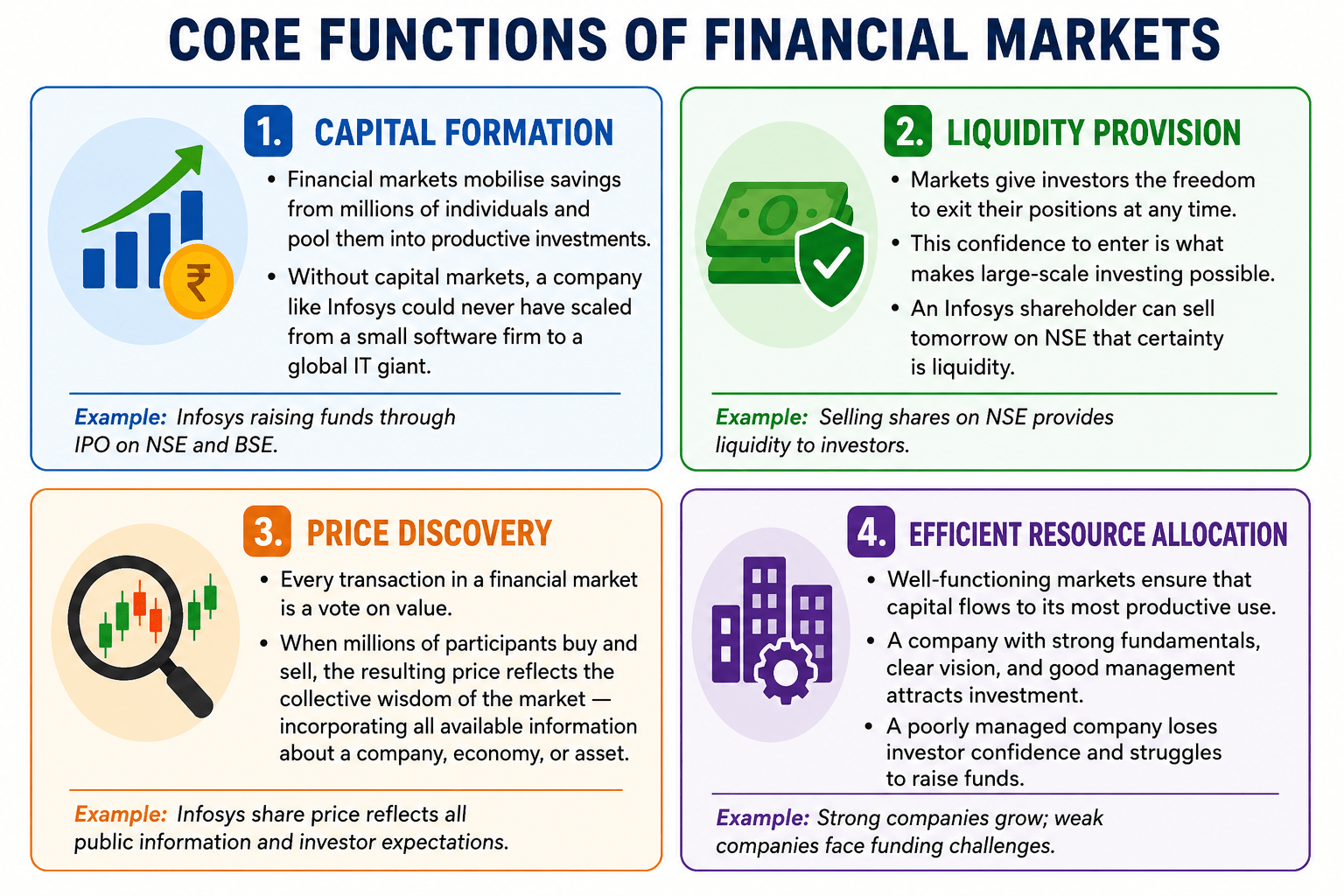
Quick Summary
Part B: Financial Institutions
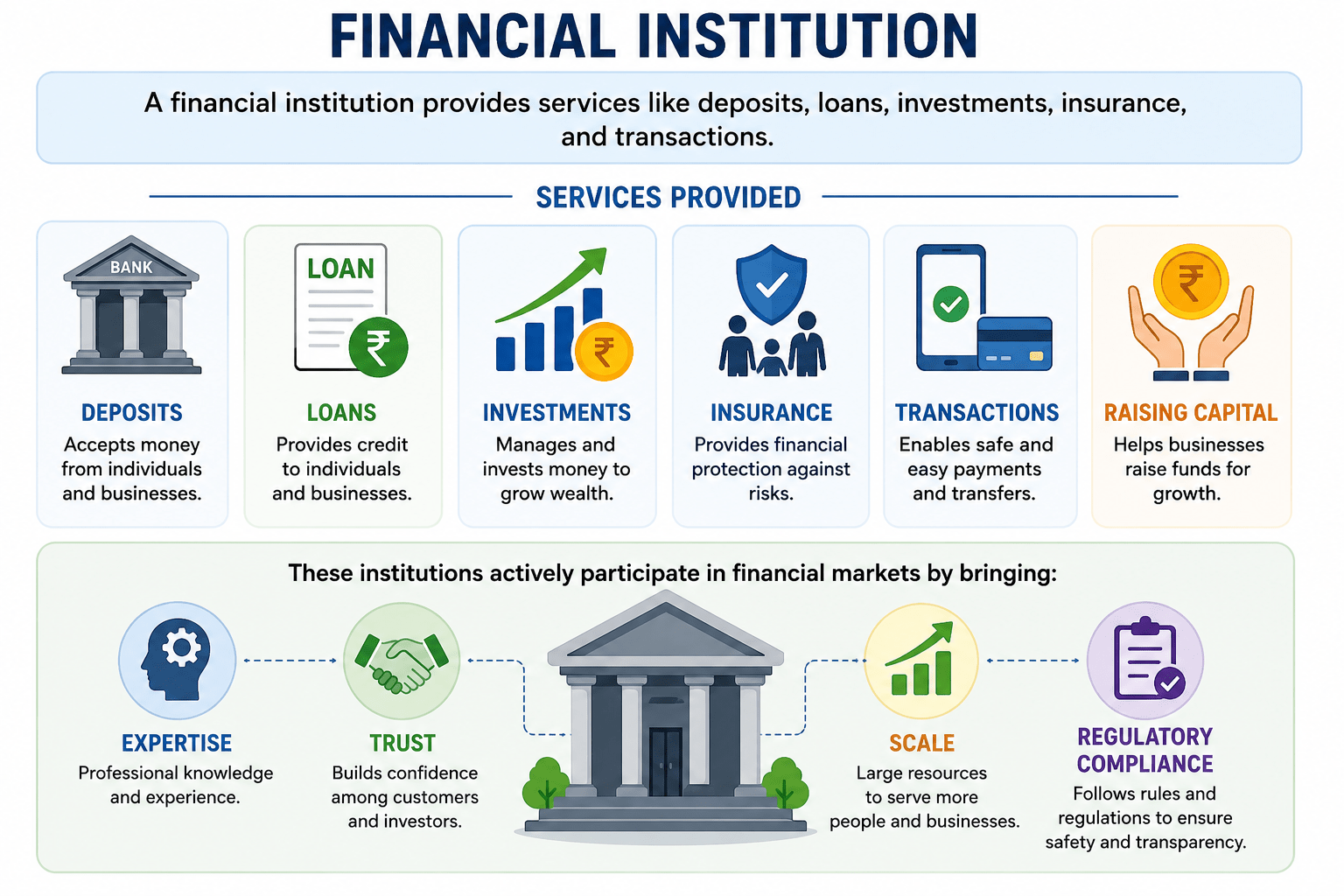
A financial institution is an organisation that provides financial services including:-
This Institutions actively participate in financial markets by bringing:-

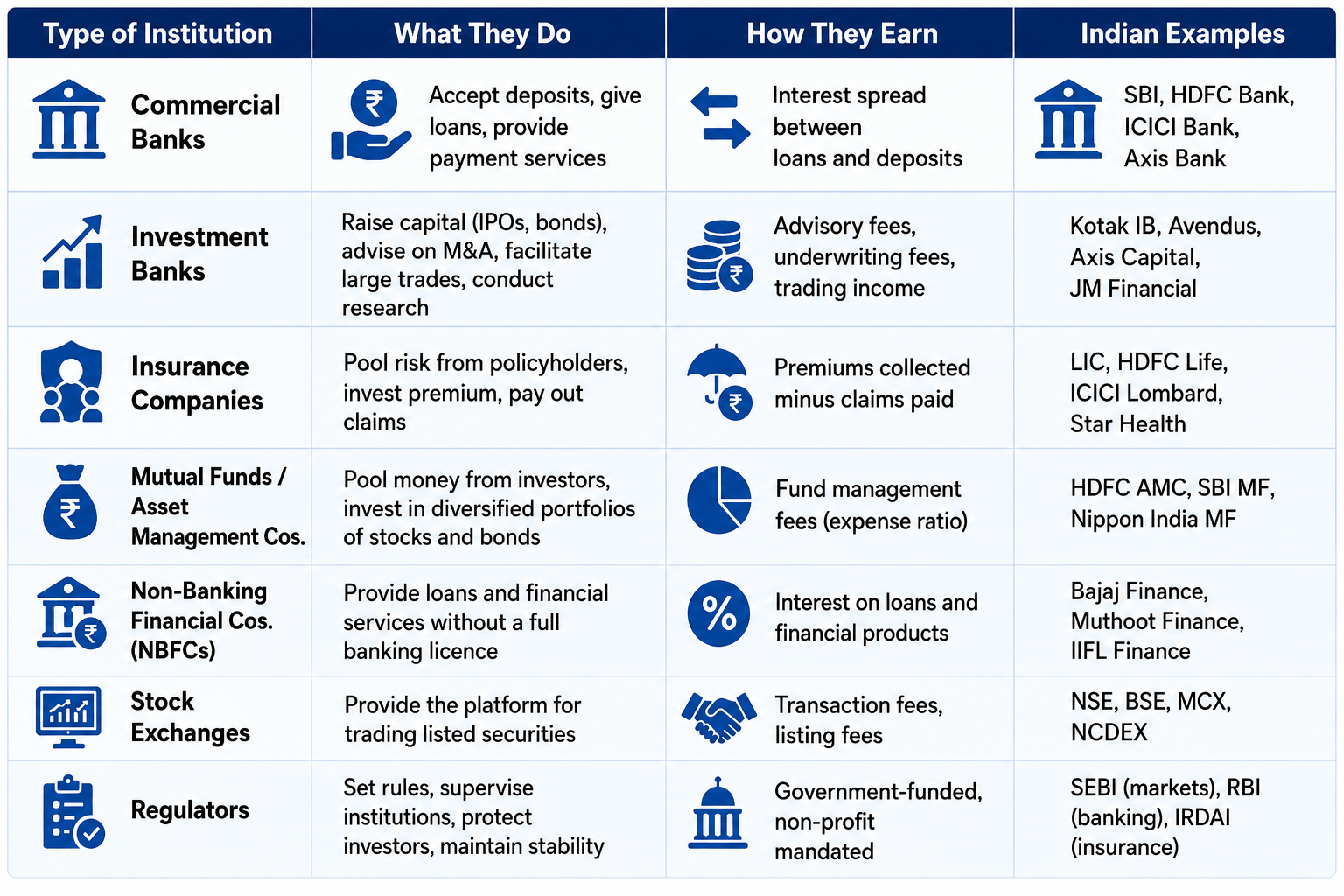
Types of Financial Institutions
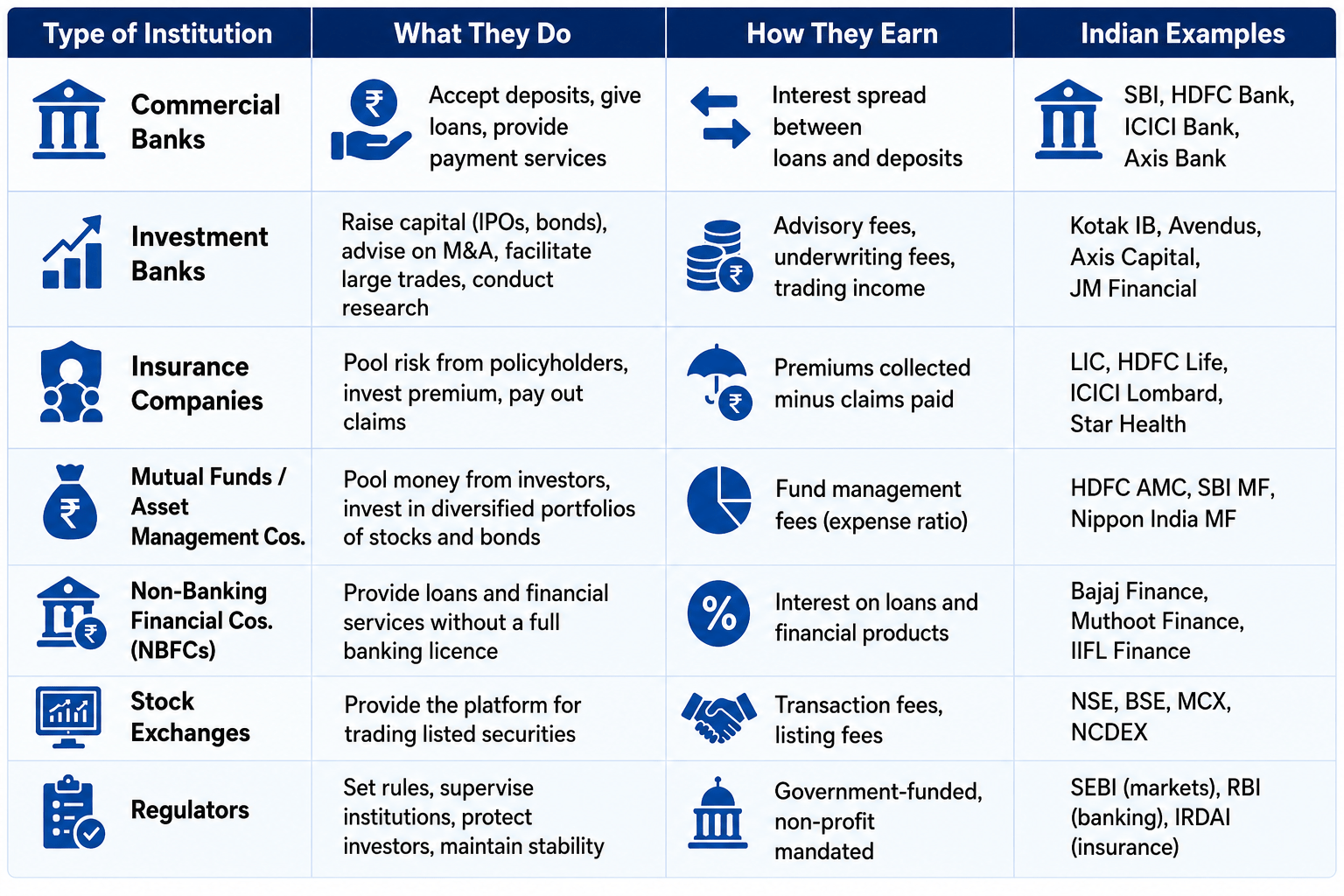
Types of Financial Institutions
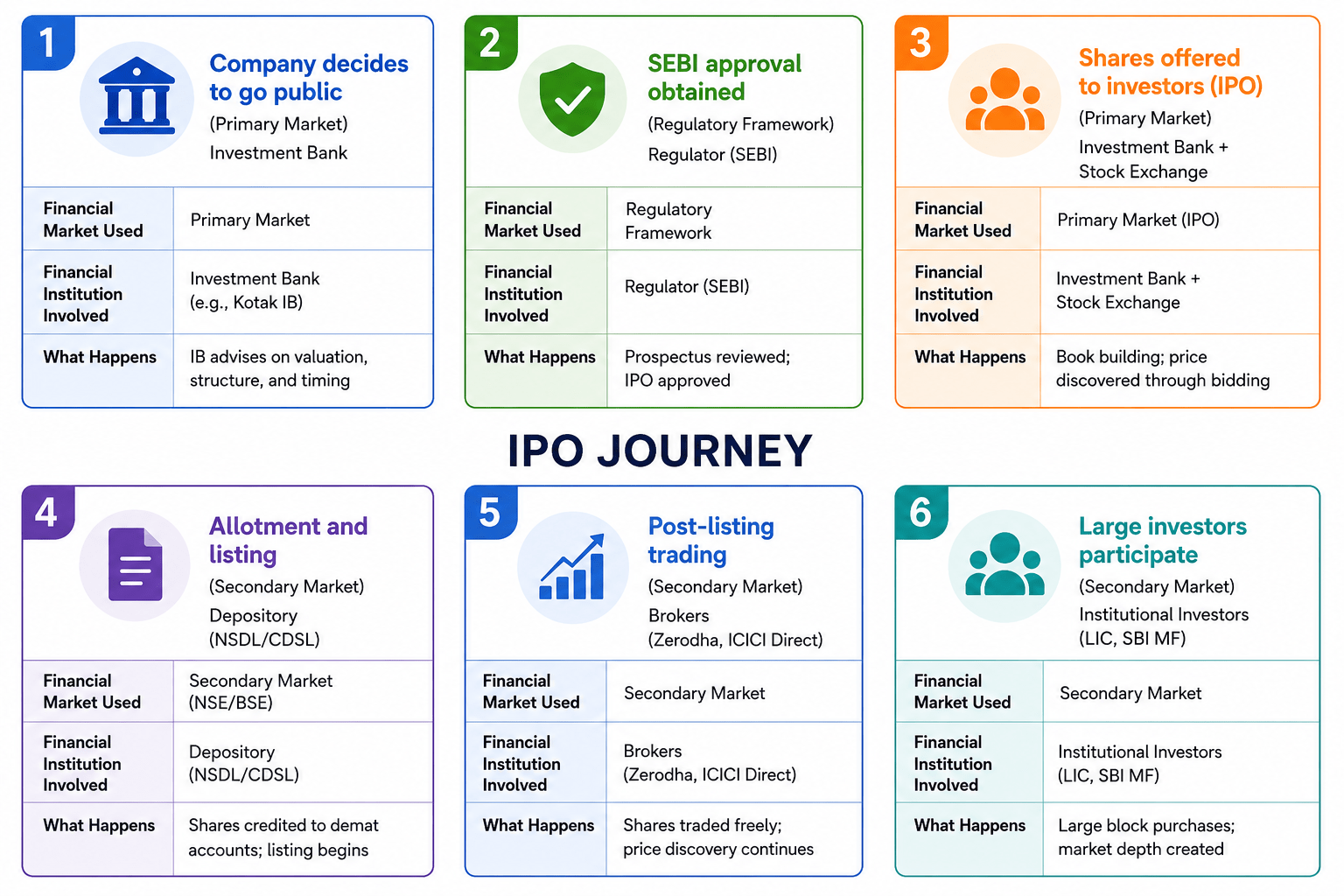
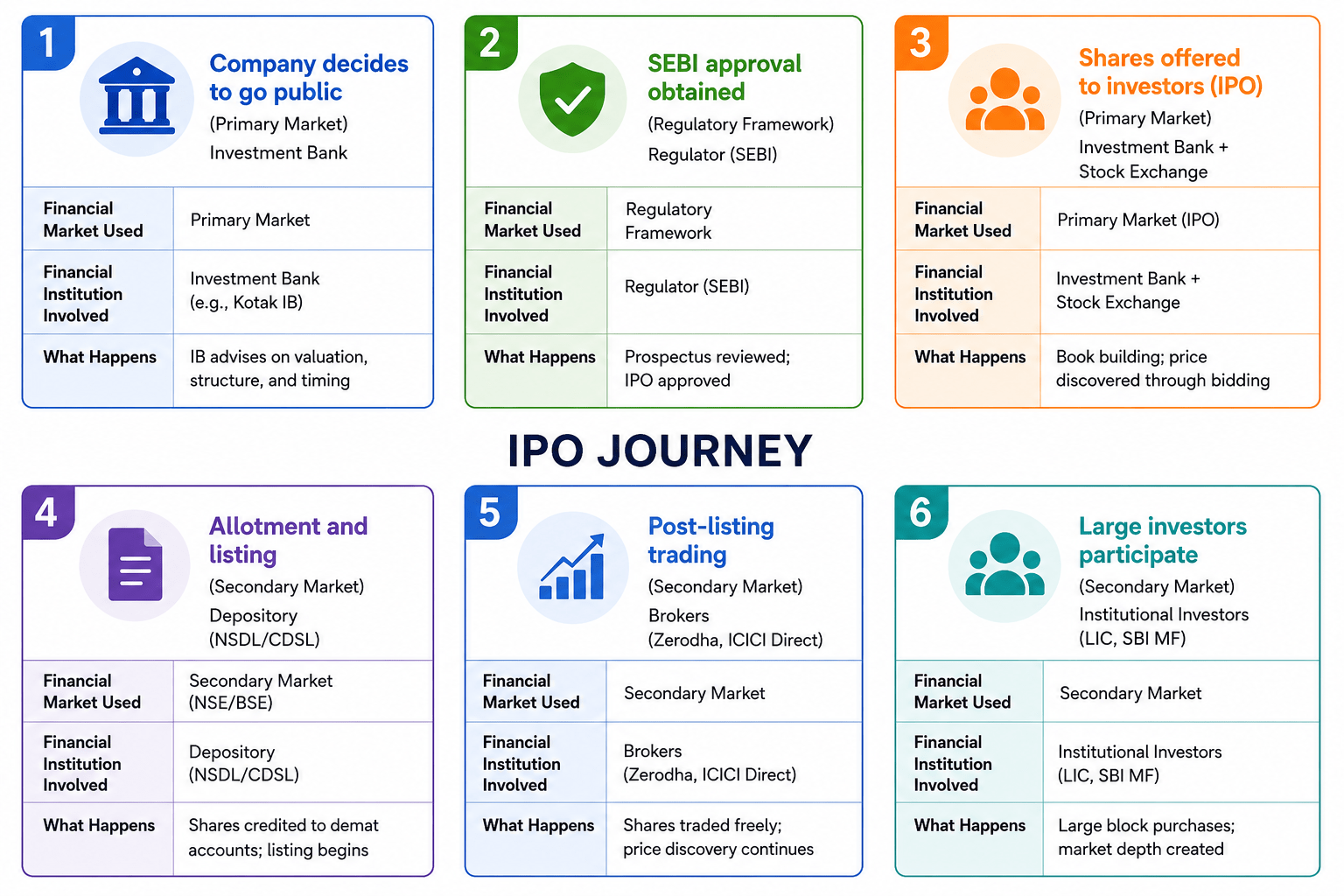
How Financial Markets and Financial Institutions Work Together
The most important insight is that financial markets and financial institutions are not separate systems. They are two sides of the same coin. Consider a single IPO transaction to see how they interlock:
Summary
5
Markets and institutions support economic growth
4
Institutions support liquidity and price discovery
3
Markets include capital, forex, and commodities
2
Institutions create products and join markets
1
Financial markets drive capital flow and efficiency.
Quiz
Which of the following is a SHORT-TERM financial market instrument?
A. Corporate Bonds (5-year maturity)
B. Equity Shares listed on NSE
C. Treasury Bills (91-day maturity)
D. Preference Shares issued via an IPO

Quiz-Answer
Which of the following is a SHORT-TERM financial market instrument?
A. Corporate Bonds (5-year maturity)
B. Equity Shares listed on NSE
C. Treasury Bills (91-day maturity)
D. Preference Shares issued via an IPO