Emotional Intelligence Technique


Emotional Intelligence Fundamentals

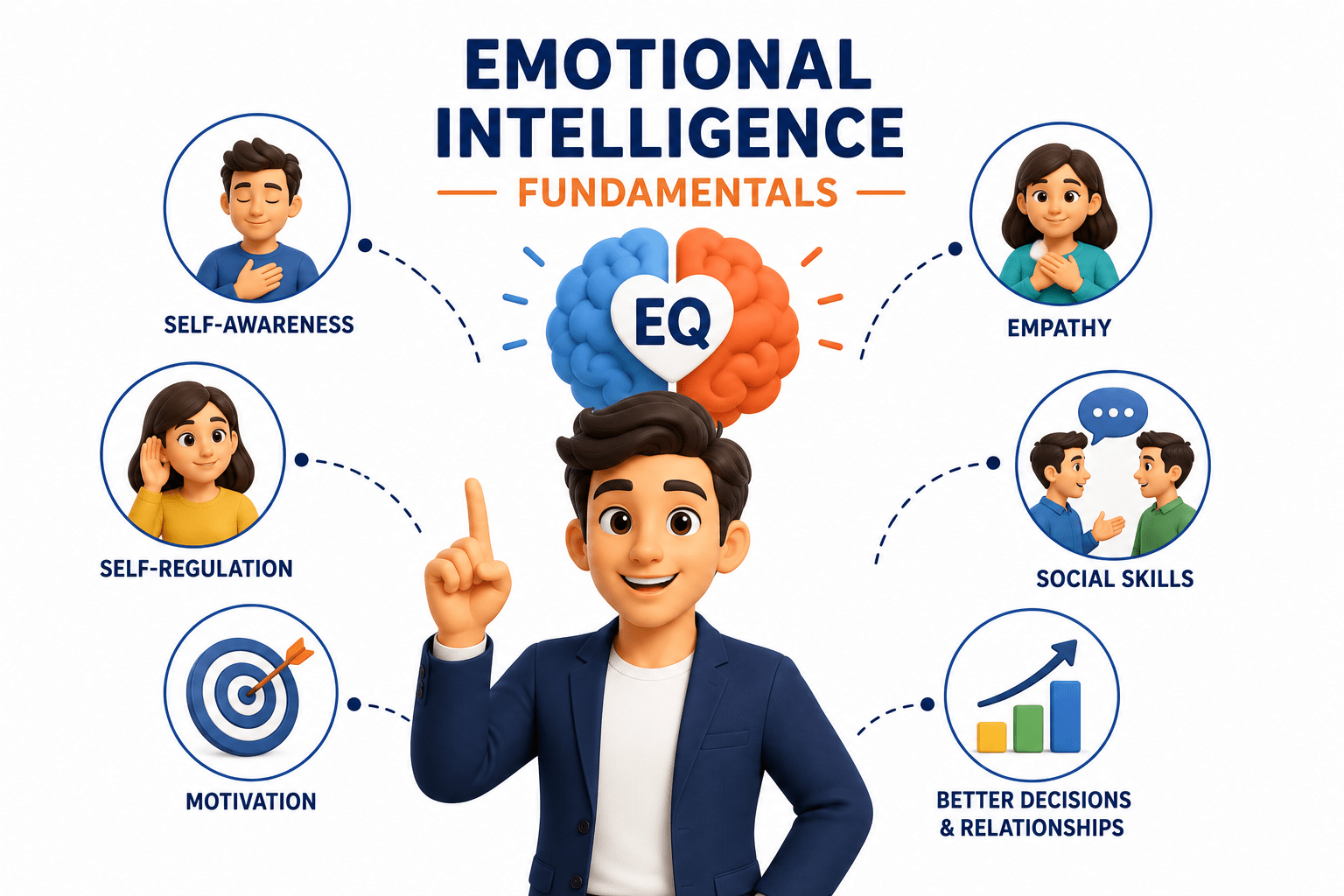

Learning Outcome
5
Apply EI in interviews and workplace situations
4
Manage emotions under pressure
3
Differentiate reacting vs responding
2
Handle feedback professionally
1
Understand Emotional Intelligence basics
The air conditioner was cold… but the candidate’s hands were sweating.
The room was silent… but his mind was racing with thoughts.

In that silent interview room,
The real challenge wasn’t the questions…
And that’s where Emotional Intelligence becomes your real strength.
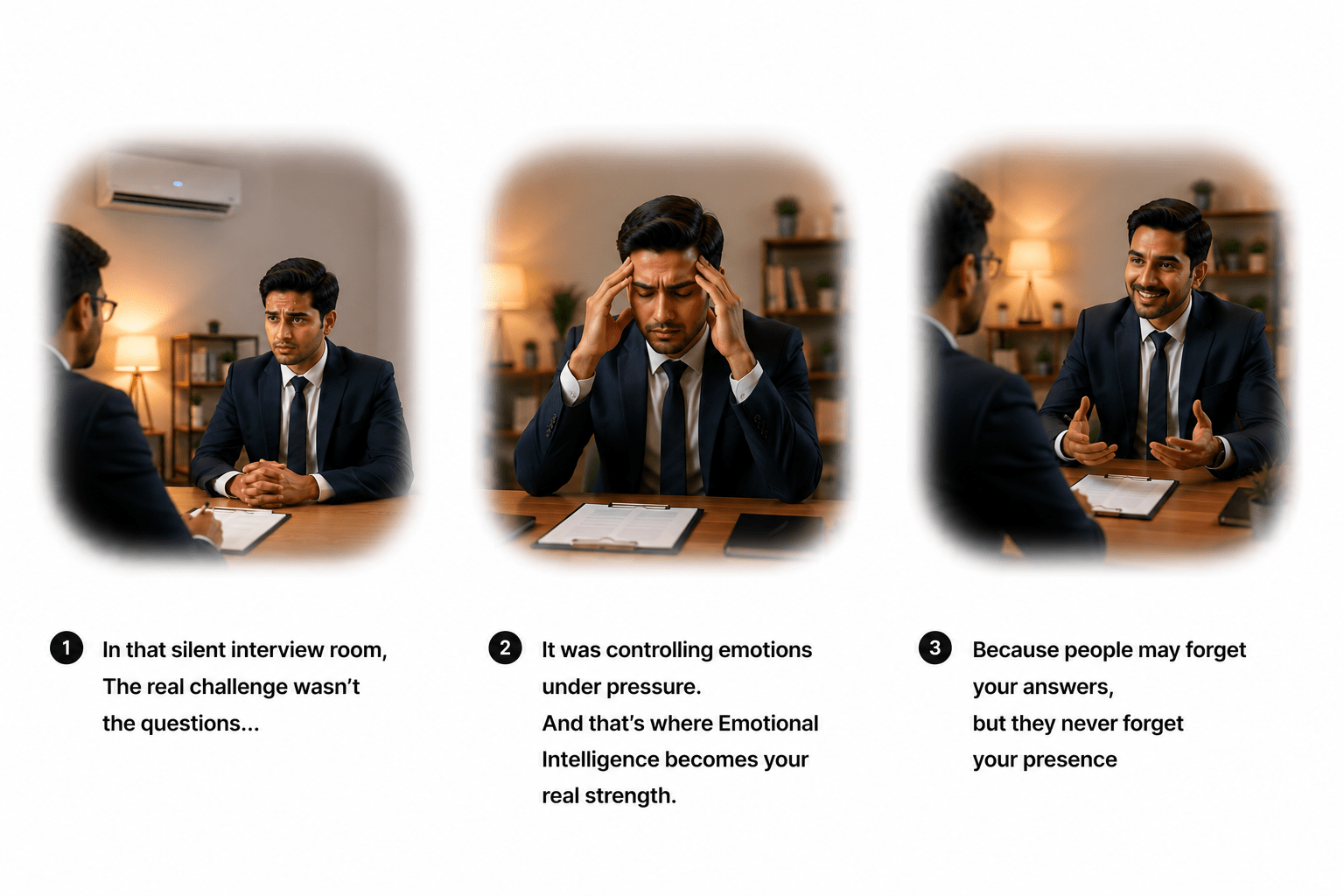
It was controlling emotions under pressure.
Because people may forget your answers,
but they never forget your presence
Why Emotional Intelligence Matters
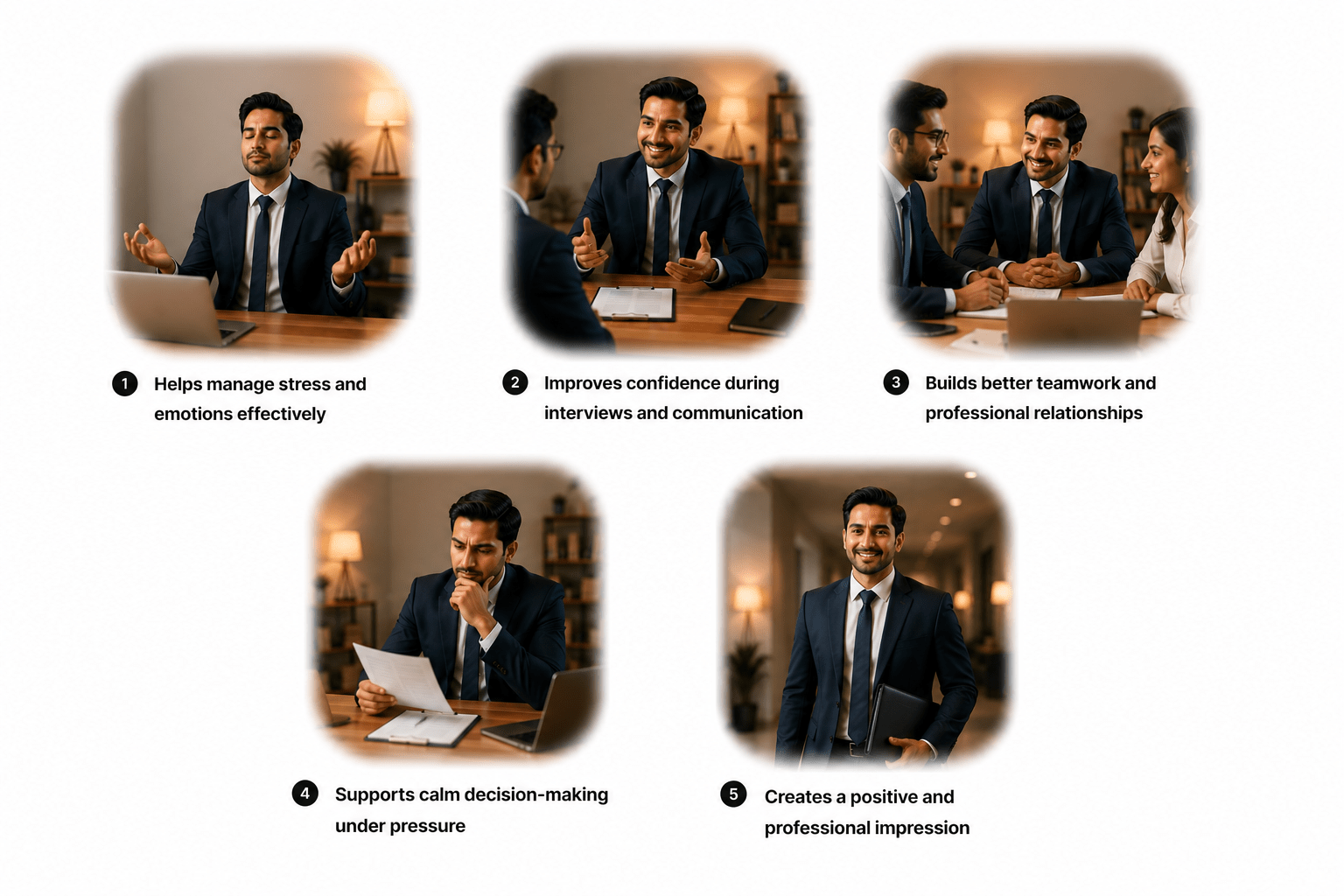
1. Helps manage stress and emotions effectively
2. Improves confidence during interviews and communication
3. Builds better teamwork and professional relationships
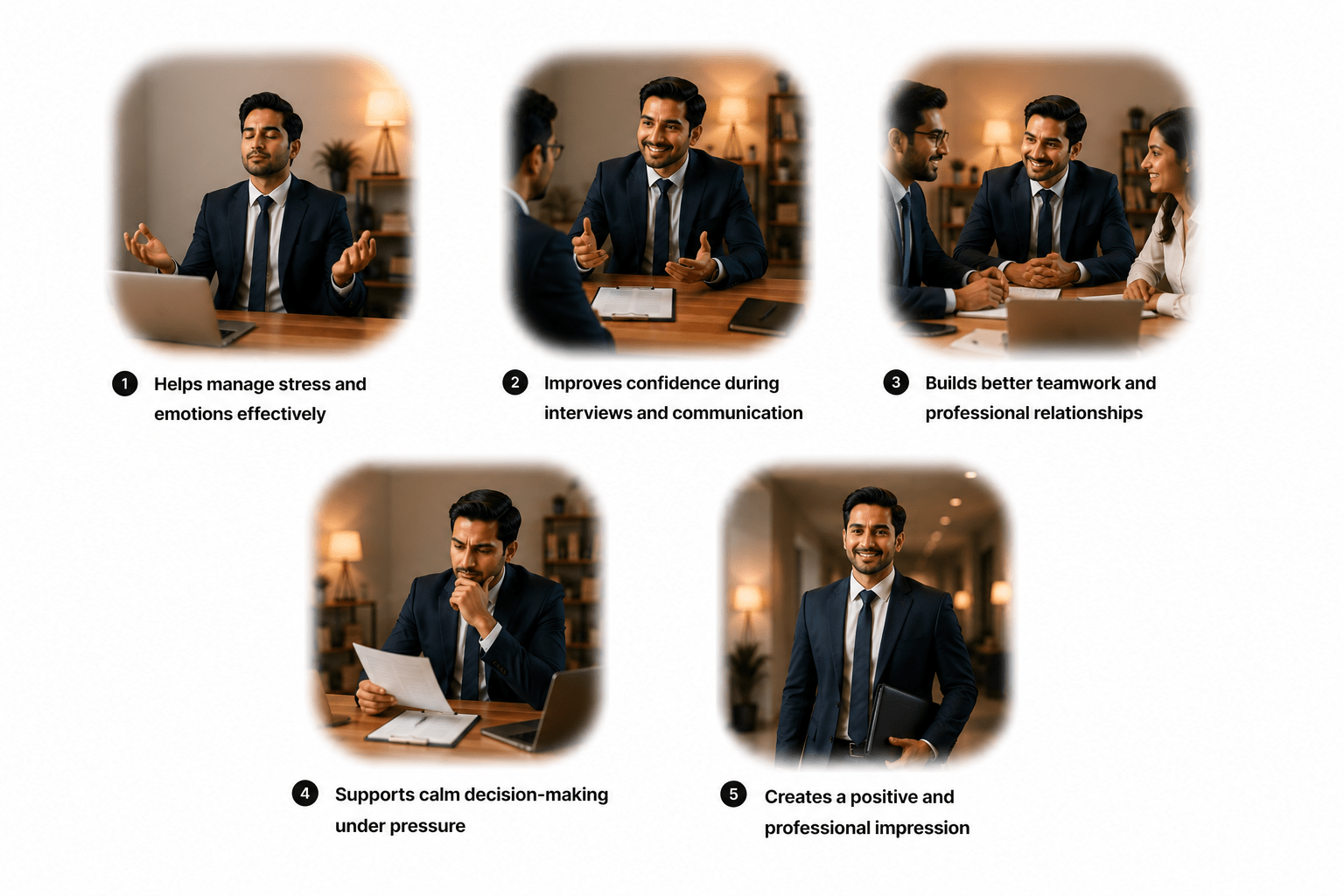
4. Supports calm decision-making under pressure
5. Creates a positive and professional impression
What is Emotional Intelligence?
Emotional Intelligence is the ability to understand and manage your emotions while dealing positively with others.
This includes the ability to:
Example: Getting nervous in an interview but still staying calm and answering confidently.
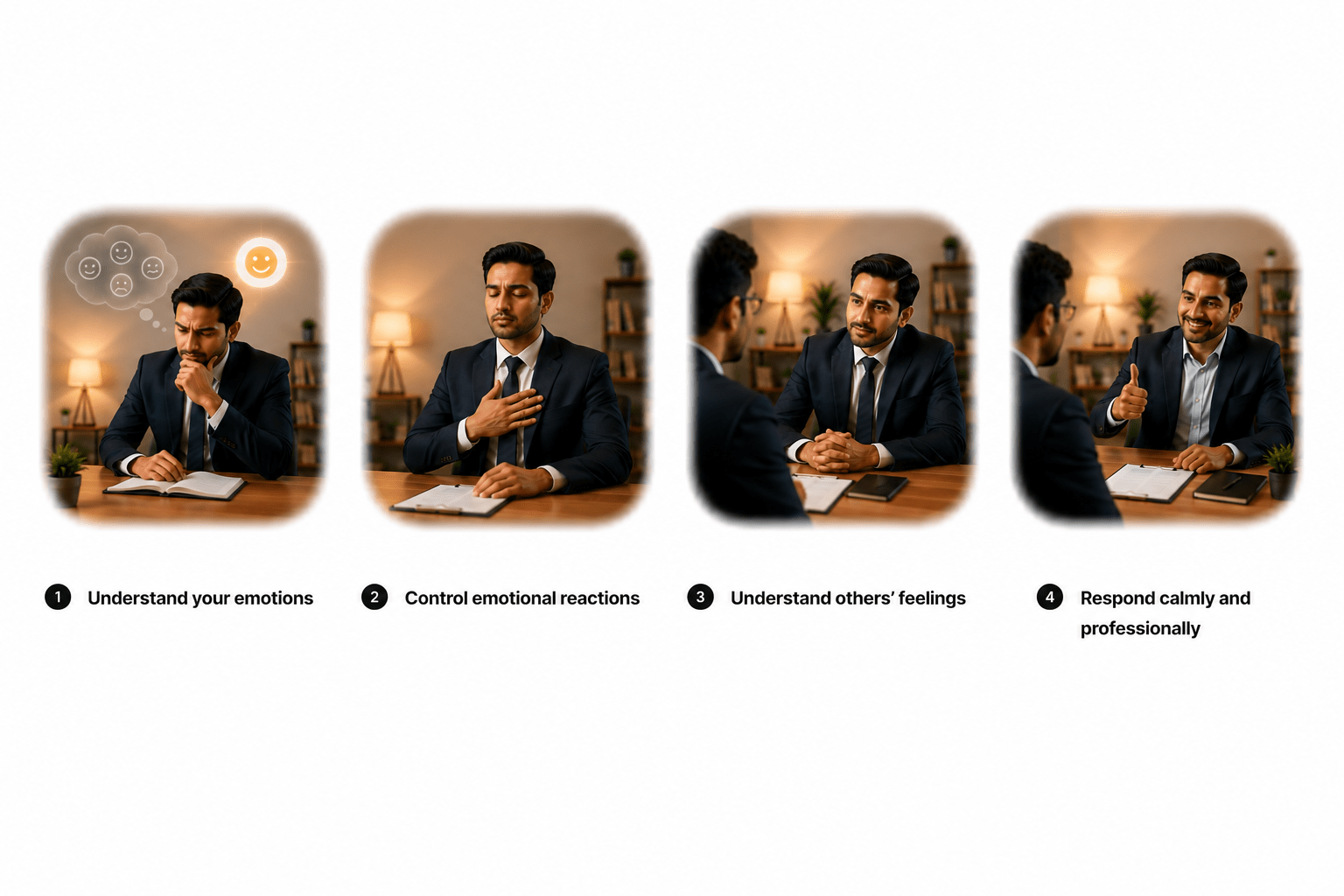
1.Understand your emotions
2.Control emotional reactions
3.Understand others’ feelings
4.Respond calmly and professionally
What is Handling Criticism & Feedback
The ability to accept feedback positively, learn from it, and improve without reacting emotionally.
Positive Handling of Feedback includes -
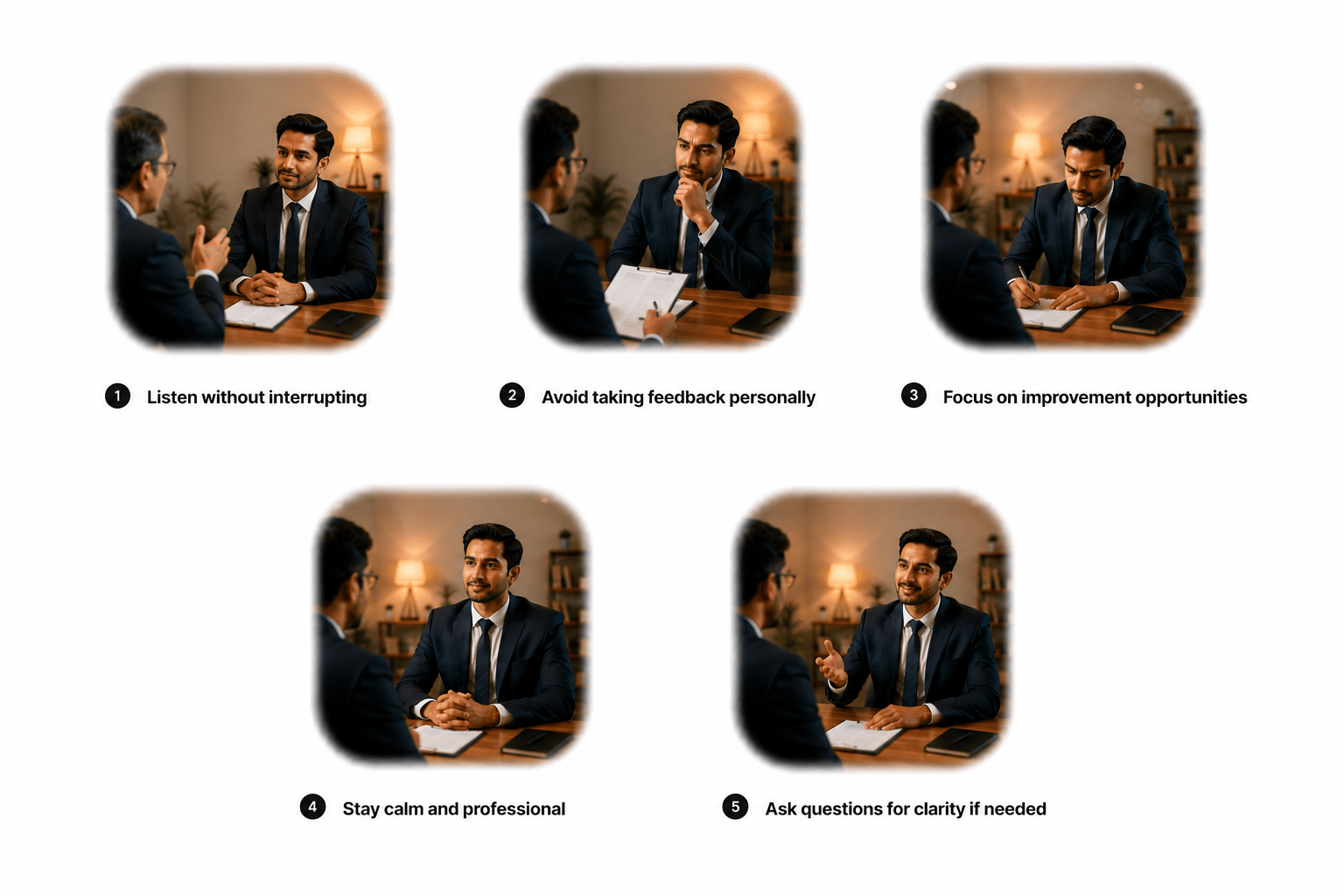
1.Listen without interrupting
2.Avoid taking feedback personally
3.Focus on improvement opportunities
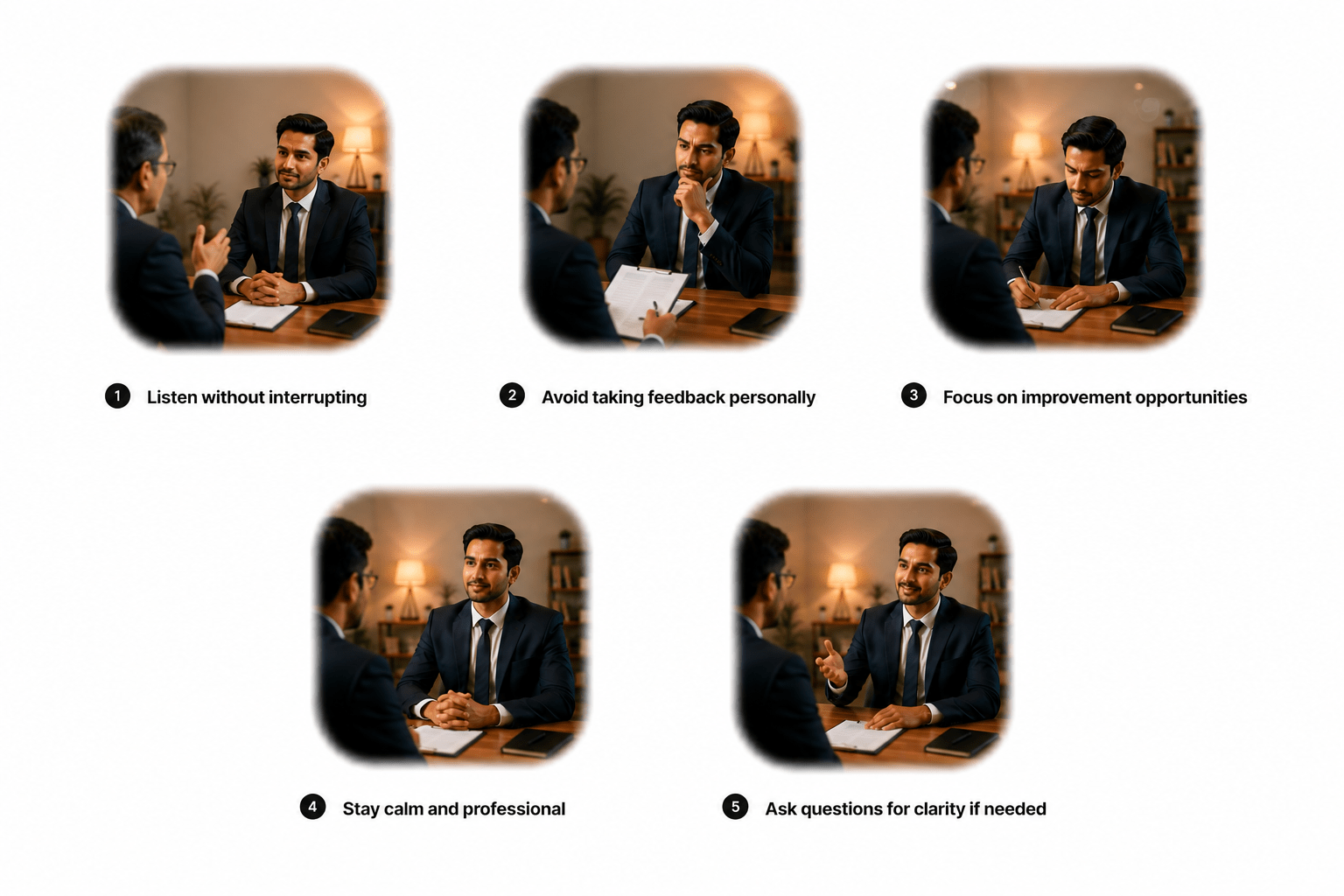
4.Stay calm and professional
5.Ask questions for clarity if needed
Avoid
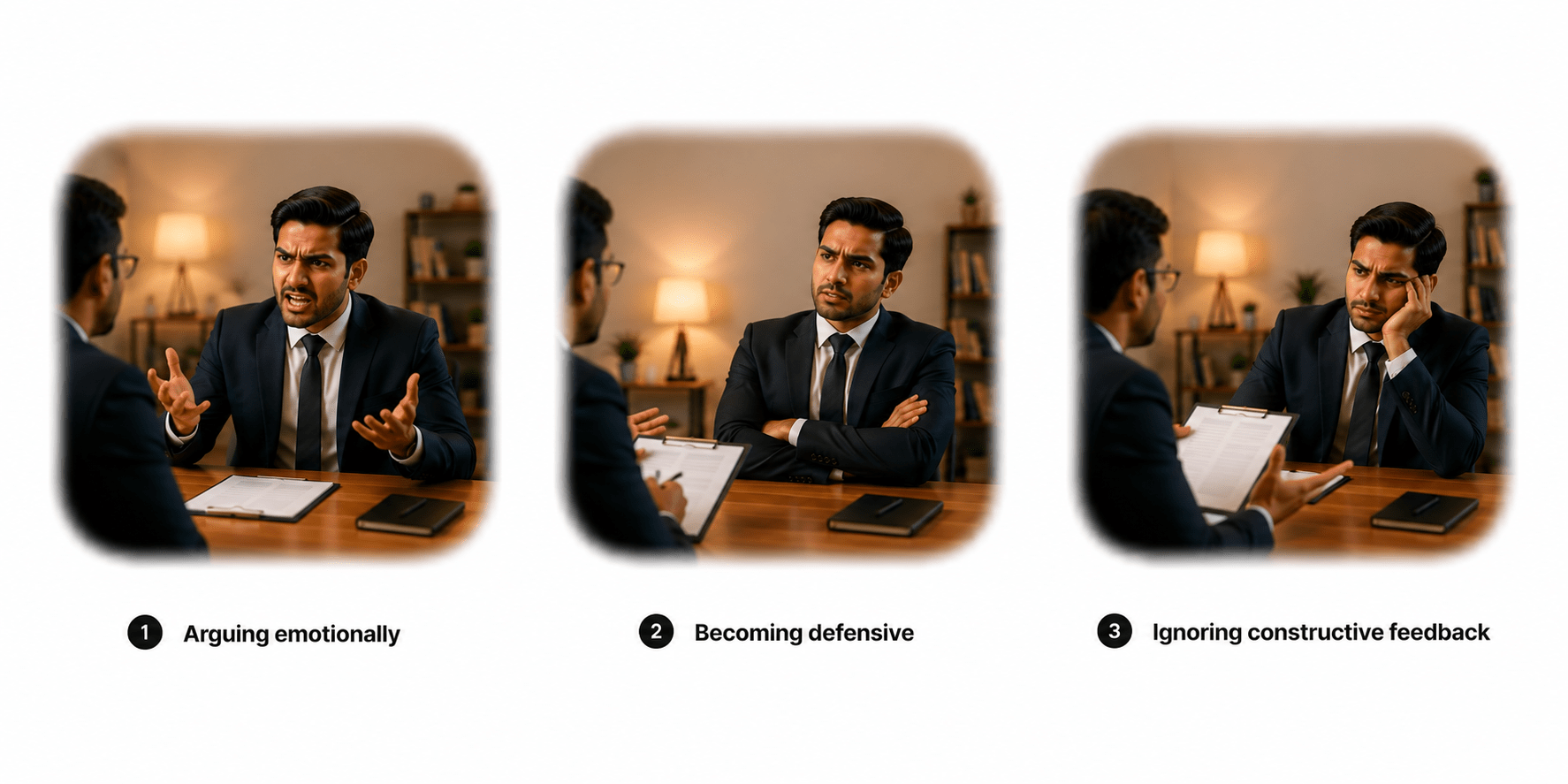
1.Arguing emotionally
2.Becoming defensive
3.Ignoring constructive feedback
What is Responding vs Reacting ?
Reacting is replying quickly with emotions.
Responding is staying calm and replying after thinking.
Example:

Responding → Listening calmly and learning from it.
Reacting → Getting upset after feedback.
Key Message
“Pause. Think. Then respond.”
How to Build Emotional Intelligence ?
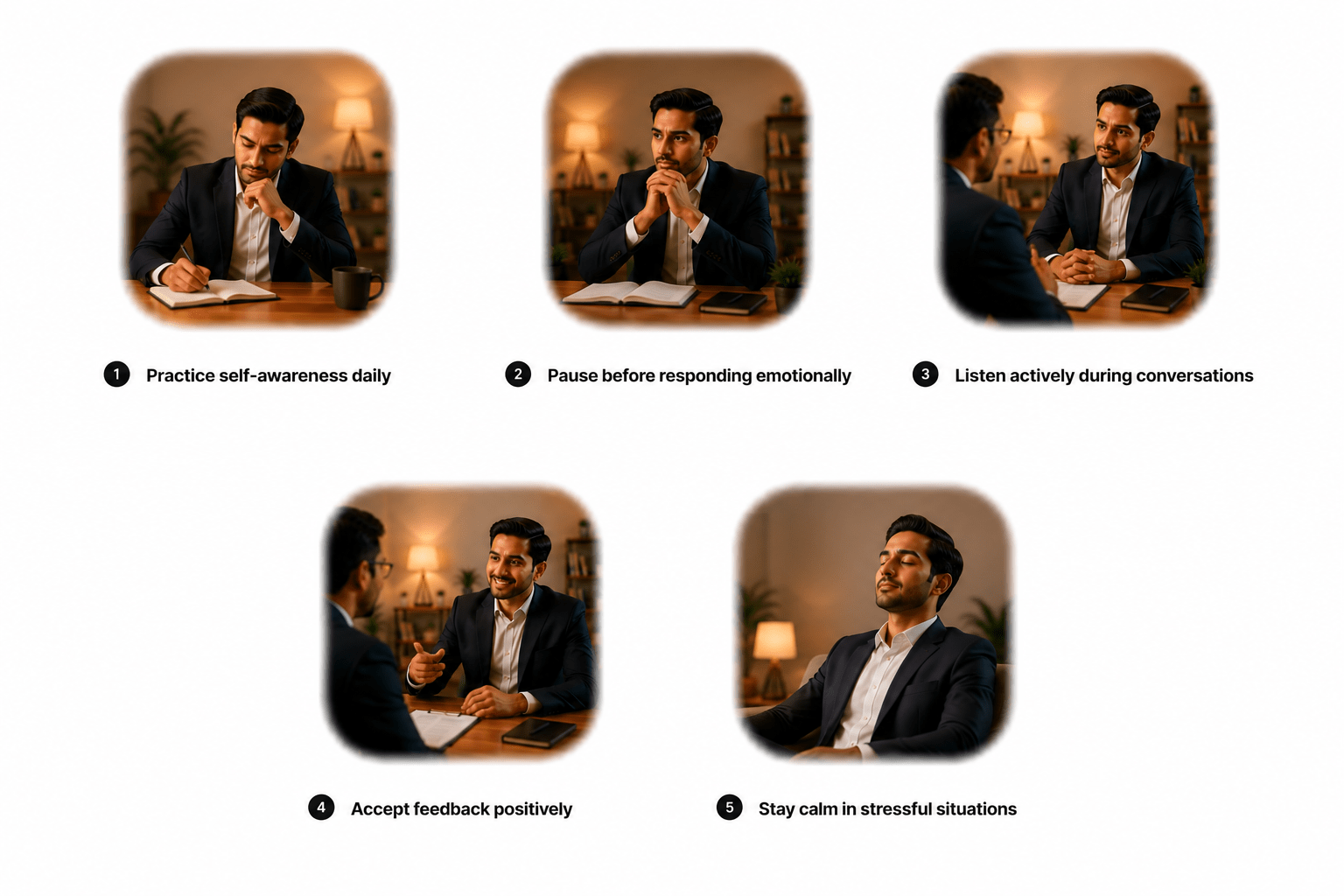
1. Practice self-awareness daily
2. Pause before responding emotionally
3. Listen actively during conversations
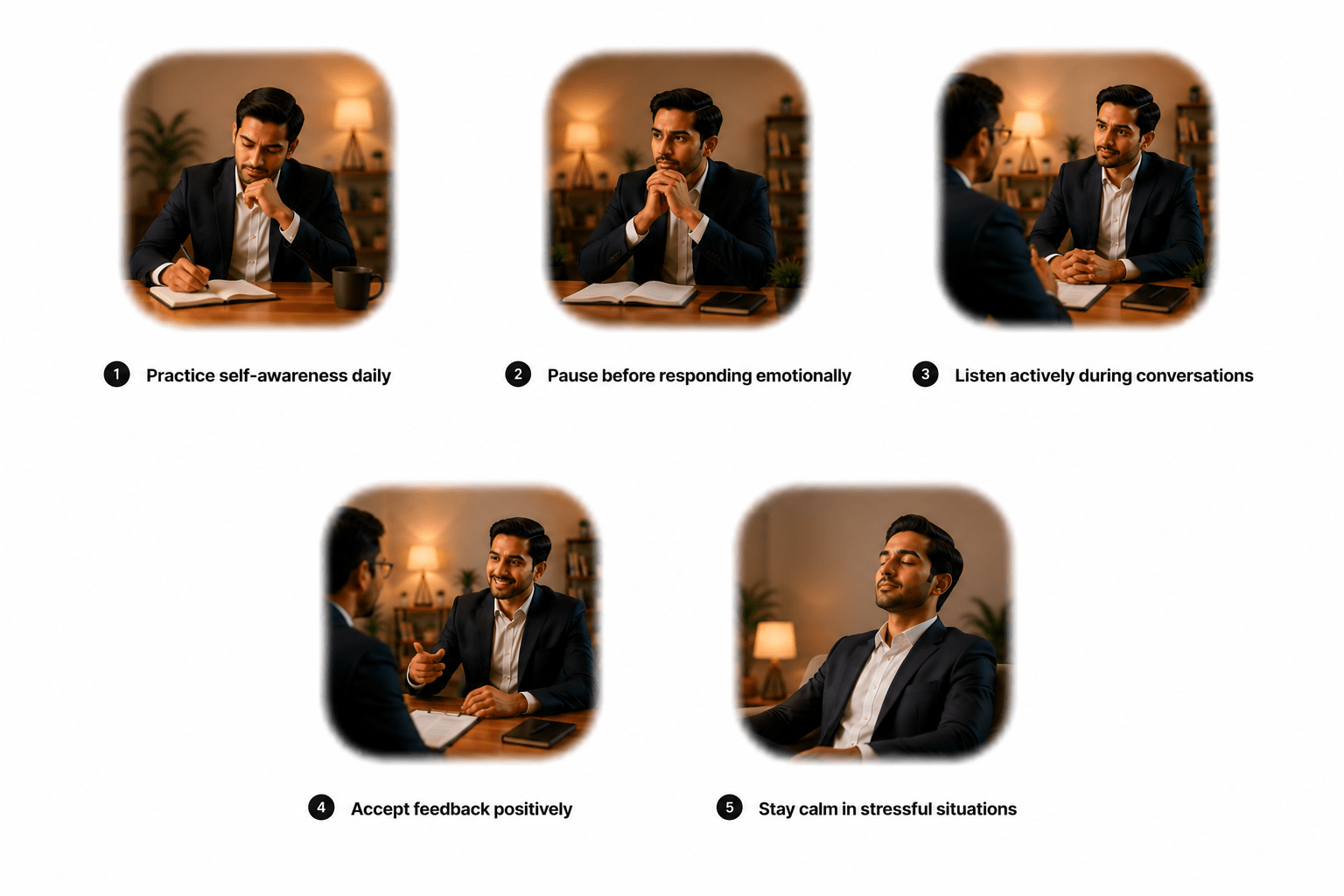
4. Accept feedback positively
5. Stay calm in stressful situations
Simple Technique
STOP → THINK → RESPOND
Real-Life Application
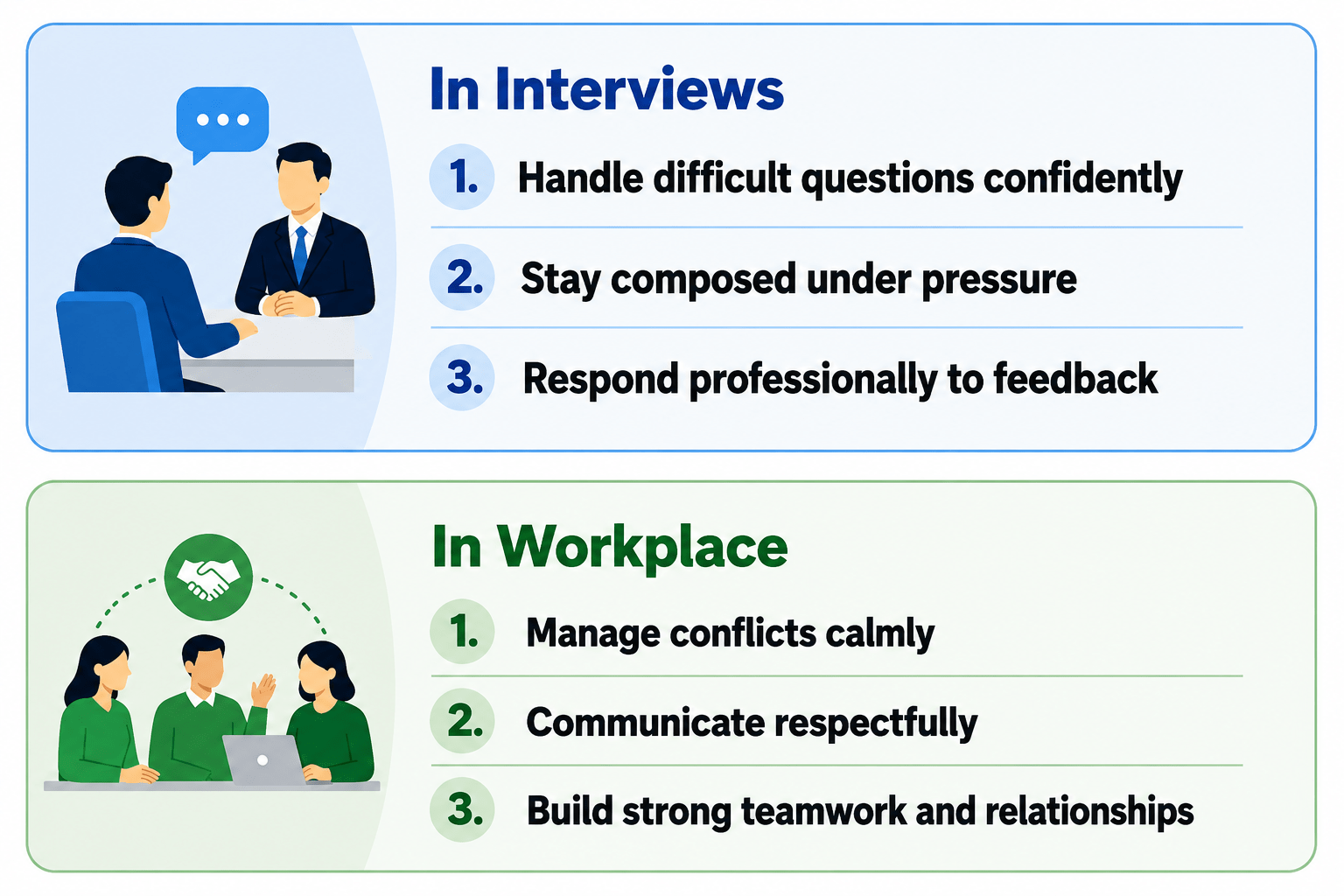
Summary
5
Emotional Intelligence drives interview and workplace success.
4
Respond calmly instead of reacting emotionally.
3
Feedback should be handled positively.
2
Self-awareness improves confidence and communication.
1
Emotional Intelligence helps control emotions effectively.
Quiz
How should criticism and feedback be handled?
A. Defensively
B. Emotionally
C. Positively and professionally
D. By ignoring it

Quiz-Answer
How should criticism and feedback be handled?
A. Defensively
B. Emotionally
C. Positively and professionally
D. By ignoring it