Forex Market


FX spot structure


Learning Outcome
5
Recognize safe and efficient Spot FX settlements
4
Understand T+0, T+1 & T+2 settlements
3
Learn the Spot FX transaction flow
2
Identify key FX market participants.
1
Understand the FX Spot Structure.
FX Spot Structure
FX Spot Structure refers to the complete system — the people involved, the steps followed, and the timing rules — that makes a spot currency deal happen smoothly and safely, from the moment two parties agree on a rate to the moment the money actually changes hands.

Just like a food delivery app has a structure
you order
restaurant cooks
delivery rider picks up
food reaches you in 30 minutes)




the FX Spot Market has its own structure
you ask for a rate
bank quotes a price
deal is confirmed
money is exchanged within 2 days

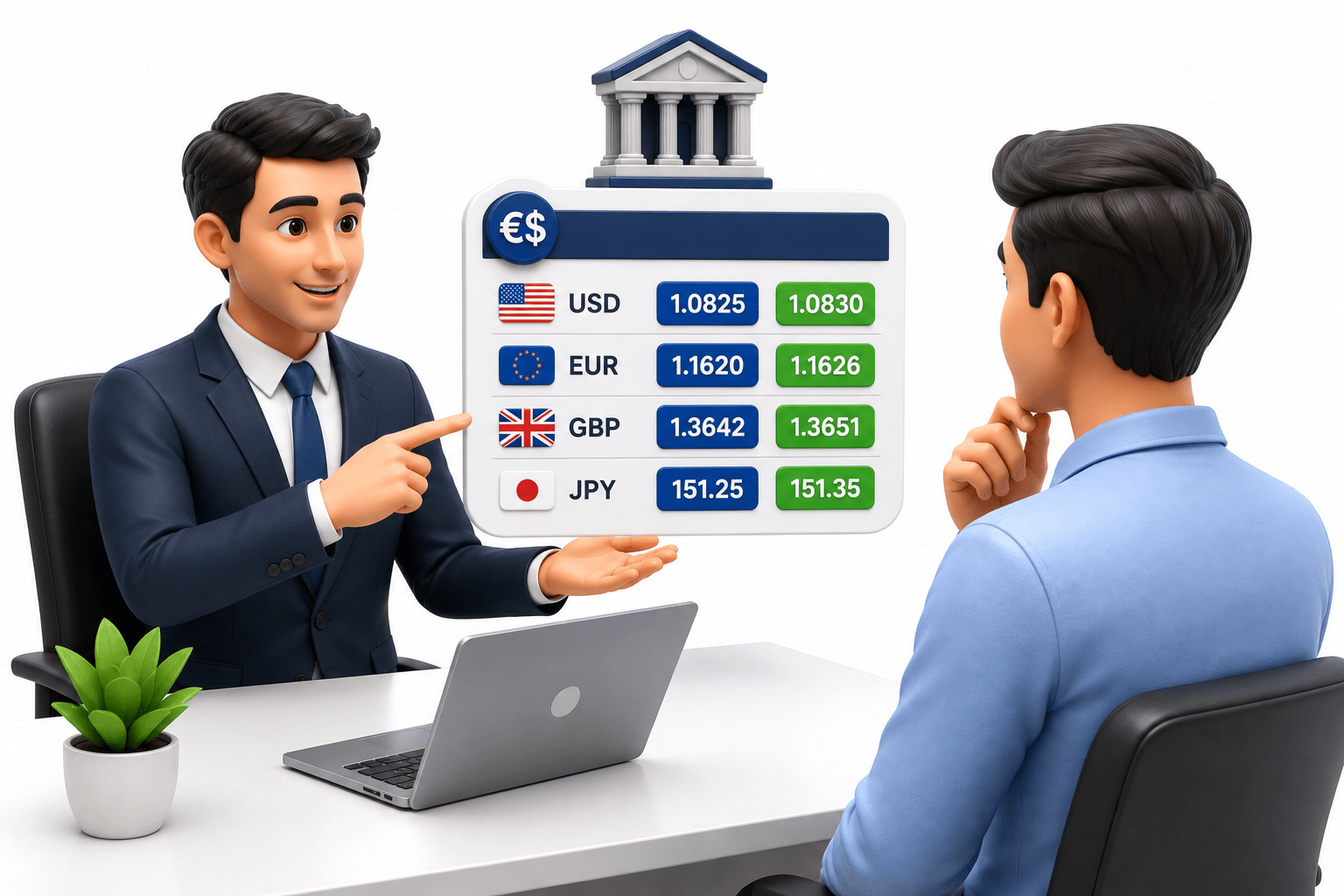


Participants

Transaction Flow
Need Arises
A company or individual needs to buy or sell a foreign currency (e.g., an importer needs USD to pay a supplier).


Rate Quote
The customer approaches a bank, which quotes the current spot exchange rate (e.g., ₹83.20 per USD).


Deal Confirmation
Both parties agree on the rate and amount — this is called 'striking the deal.' The trade date is recorded (called T, or Trade Date).


Documentation
The deal details (amount, rate, parties, settlement date) are confirmed electronically or in writing


Settlement
On the agreed settlement date (usually T+2), both parties exchange the actual currencies through their banks.


Confirmation & Reconciliation
Both banks confirm that the money has been received and the books are updated — the deal is now complete.


Settlement Timing
T+0 (Cash/Ready)
Settled the very same day — used only for urgent, same-day needs.
T+1 (Tom)
Settled the next working day after the deal
T+2 (Spot)
The standard and most common settlement — money changes hands 2 working days after the trade. This is the global default for most currency pairs, including USD/INR.

Importance of Spot Structure
Backbone of global trade
Every import-export payment ultimately depends on the spot market to convert currencies.
Sets the base rate
he spot rate is the starting point used to calculate Forward FX rates too.
Most liquid markets in the world
Trillions of dollars are traded daily, making it easy to buy or sell currency anytime.



Helps smoothly
Companies can quickly get the currency they need without long delays.

Reflects the economy's health
Spot exchange rates (like USD/INR) are watched closely as an indicator of a country's economic strength

Summary
5
Enables secure global currency exchange
4
Settlement usually occurs within T+2 days
3
Spot trades follow a fixed deal-to-settlement flow
2
Banks, corporates, and central banks participate
1
FX Spot Structure defines spot trade execution.
Quiz
Who regulates and monitors forex activities in India
A. SEBI
B. RBI
C. NSE
D. IRDAI

Quiz-Answer
Who regulates and monitors forex activities in India
A. SEBI
B. RBI
C. NSE
D. IRDAI