






















Content ITV PRO
This is Itvedant Content department
DynamoDB Unveiled: Key Insights
Learning Outcome
5
Learn how to create tables using table format and JSON format
4
Understand DynamoDB implementation use cases
3
Understand DynamoDB table classes
2
Learn about read consistency
1
Understand what Amazon DynamoDB is
Earlier, we learned that
Online Shopping Cart Example
Imagine an online store
Thousands of users add items to carts at the same time
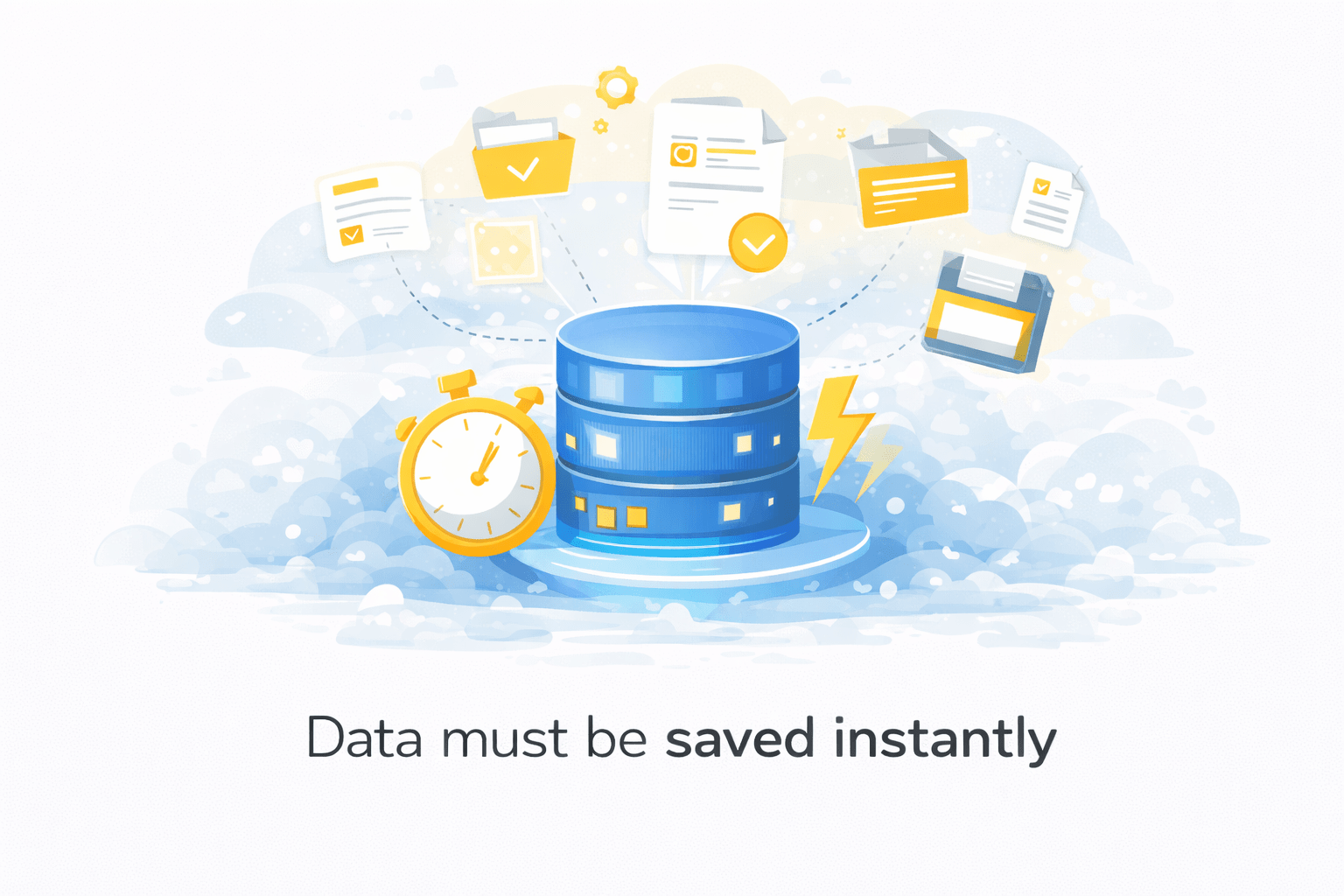
Data must be saved instantly
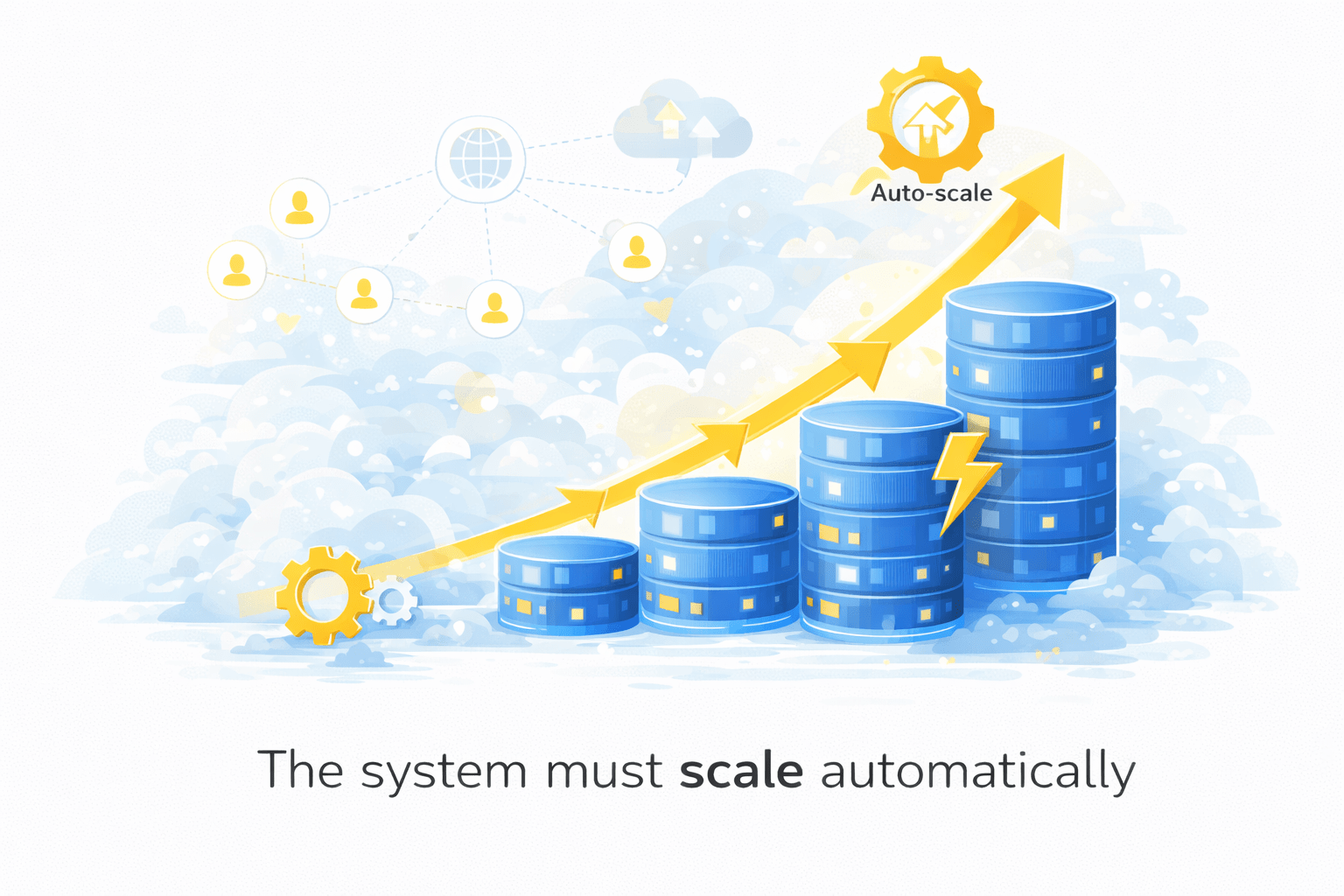
The system must scale automatically
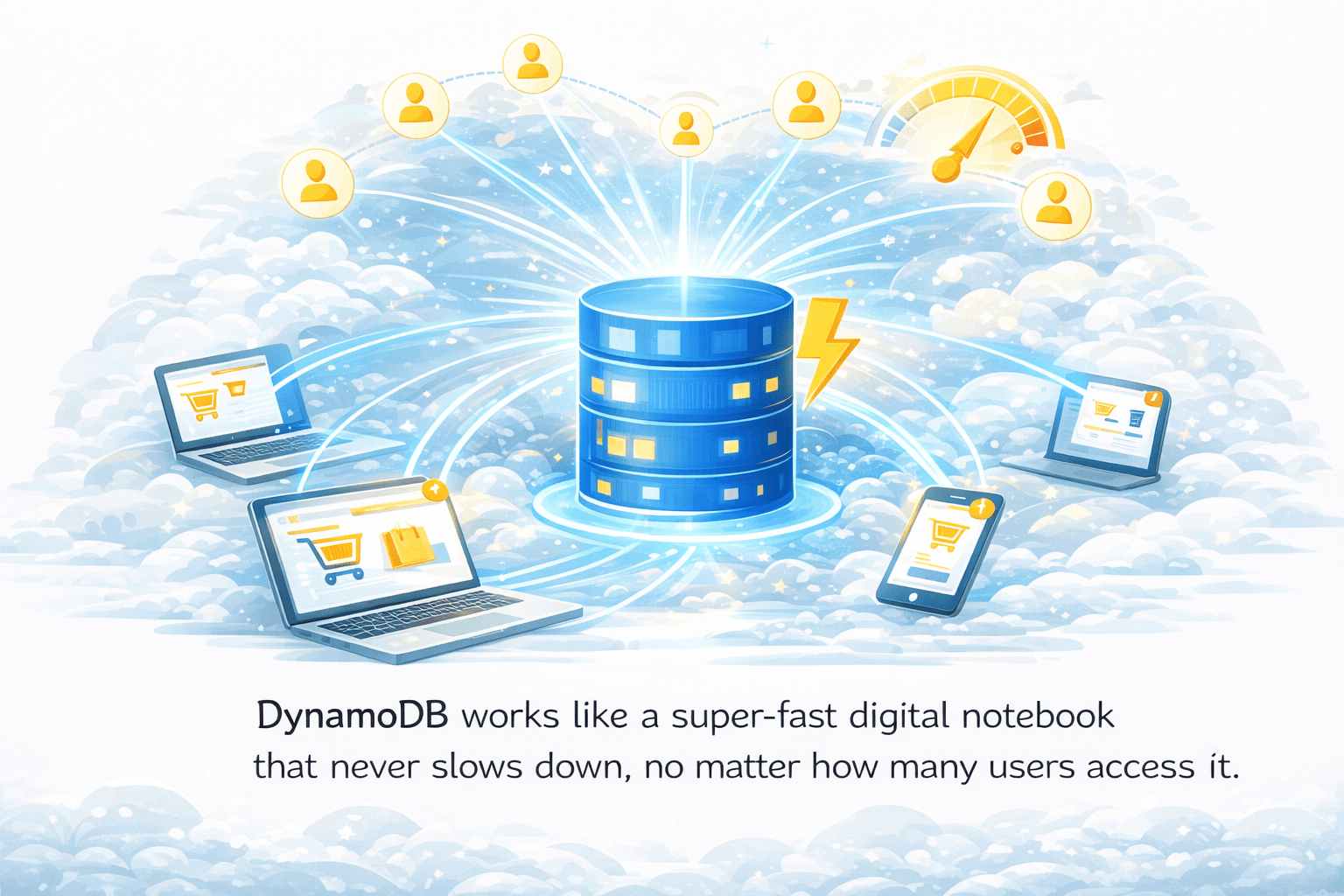
DynamoDB works like a super-fast digital notebook that never slows down, no matter how many users access it.
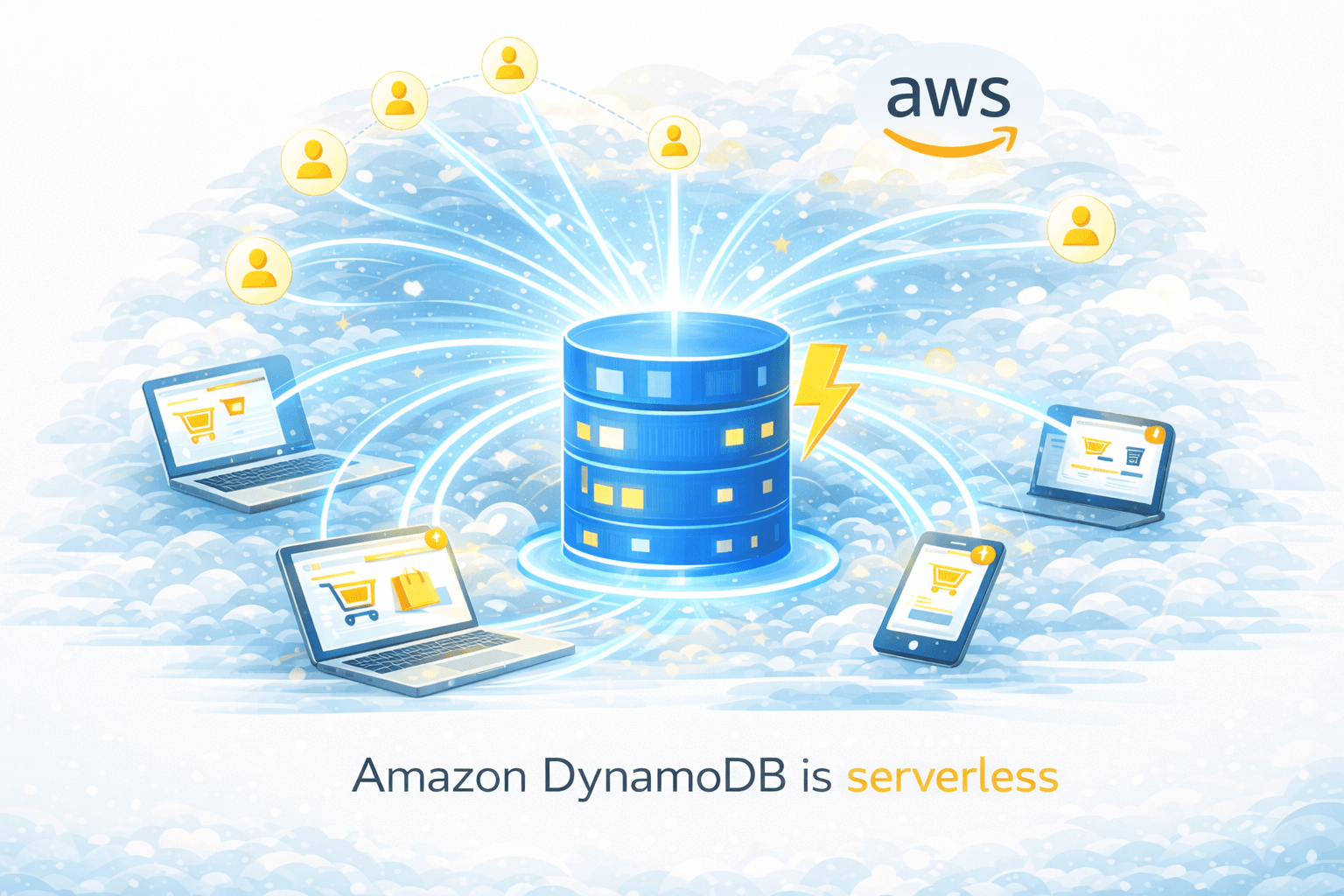
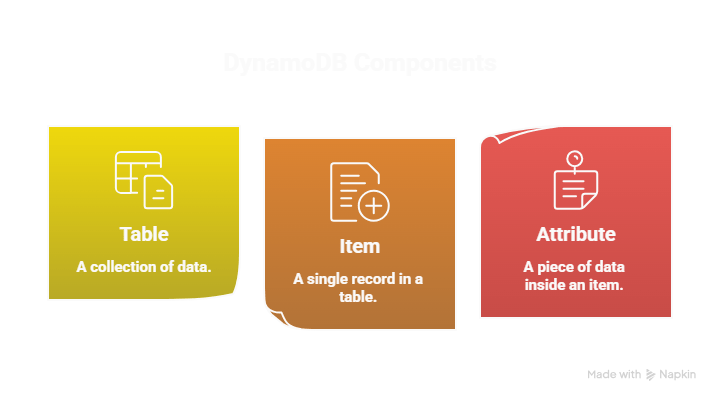
Amazon DynamoDB is a fully managed, serverless NoSQL key-value and document database
Extremely fast performance
Automatically scales
No servers to manage
Highly available and durable
Example
DynamoDB is ideal for gaming apps, IoT, mobile apps, and real-time systems
DynamoDB is serverless
which means
No patching or maintenance
Pay only for what you use
AWS manages everything behind the scenes
Eventually Consistent Reads
Default option
Data may take a short time to update
Strongly Consistent Reads
Always returns latest data
Slightly slower
Costs more
DynamoDB Table Classes
Default option
High performance
High performance
Standard-Infrequent Access (Standard-IA)
Lower cost for storage
Same performance when accessed
.pem file
Used mainly on Linux and Mac systems
.ppk file
Used mainly on Windows (PuTTY tool)
Key pair acts like a digital lock and key.
By default keypair save in .PEM format
Security Group
What it Security Group
A virtual firewall for EC2
Controls incoming and outgoing traffic
Why it is needed
Protects EC2 from unauthorized access
Ensures only allowed traffic reaches the server
Privacy-Enhanced Mail (PEM)
Privacy-Enhanced Mail (PEM) is a security mechanism for email that provides confidentiality, authentication, and integrity using encryption and digital signatures.
What PEM Do
Encrypts email content to keep it private
Uses digital certificates to verify sender identity
Prevents tampering with messages
Security Group Rules
Inbound Rules
Control traffic coming into EC2
Outbound Rules
Control traffic going out from EC2
Rules are defined using ports and protocols.
Placement Groups
What is placement Group
Logical grouping of EC2 instances
Helps control how instances are placed in AWS data centers
Why it is needed
Improve performance or reliability
Control network behavior between instances
Why Placement Groups Matter
Helps with low-latency communication
Useful for performance-sensitive workloads
Optional feature, not mandatory for beginners
Placement groups control where instances sit logically
EBS is persistent block-level storage used with EC2 instances. It stores data such as the operating system, applications, and files, and the data remains available even when the instance is stopped
Example of Amazon EBS
An EC2 instance runs a web application
EBS Store
operating system
application files
database data
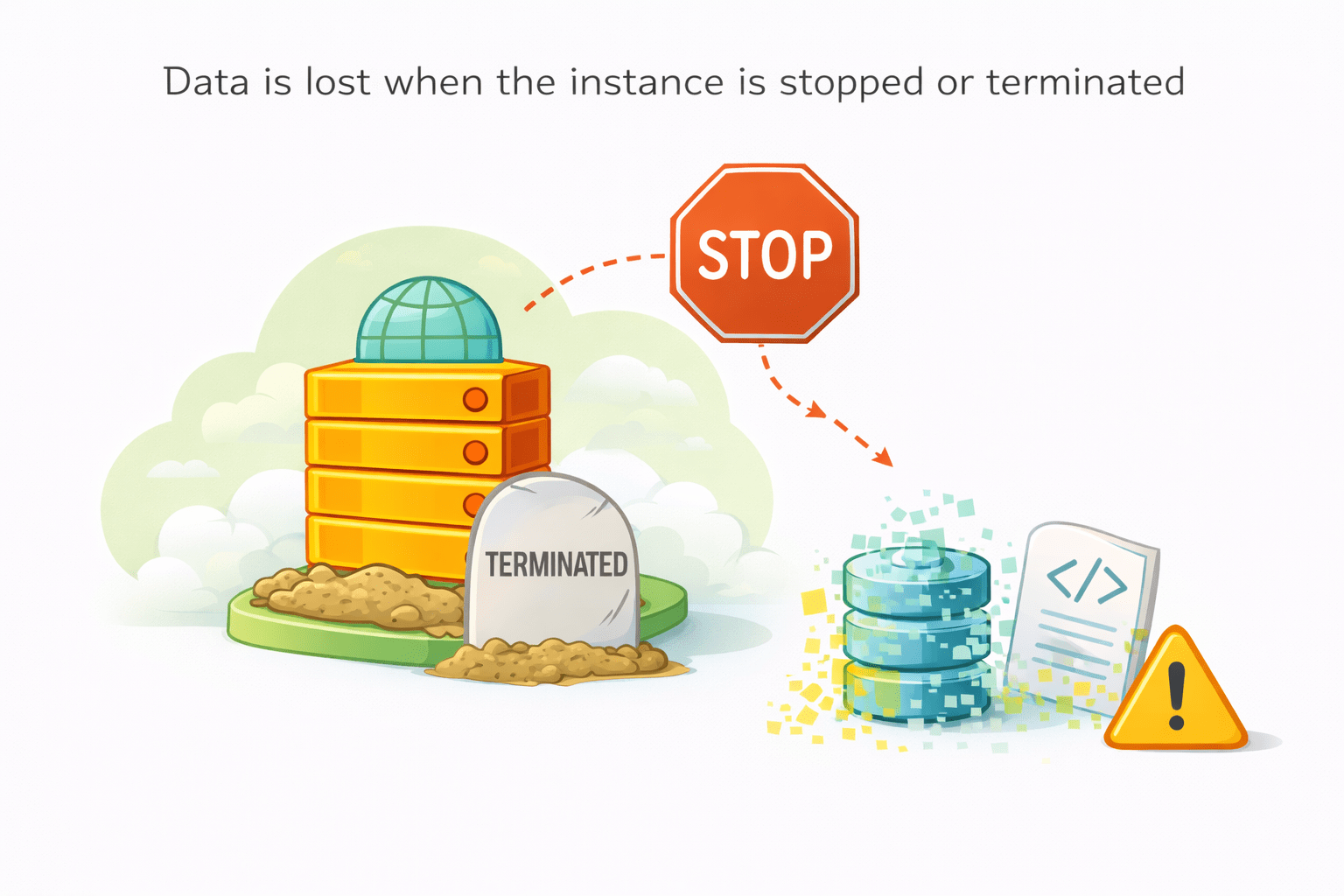
EC2 Instance Store provides temporary (ephemeral) block-level storage that is physically attached to the host machine of an EC2 instance
Data is lost when the instance is stopped or terminated
Offers very high I/O performance
Suitable for temporary data like cache, buffers, or scratch data
4
Placement groups manage instance placement
3
Key pair provides secure login
2
AMI decides operating system
1
EC2 launch involves multiple configuration steps
Quiz
What is the main purpose of an AMI?
A. Store data
B. Provide operating system
C. Control traffic
D. Manage billing
Quiz-Answer
What is the main purpose of an AMI?
A. Store data
B. Provide operating system
C. Control traffic
D. Manage billing
C. FROM
Which Dockerfile instruction defines the base image?
A. RUN
B. CMD
D. COPY
By Content ITV