Fund Operation & NAV


Fund Trade Processing


Learning Outcome
5
Explain NAV and settlement timelines.
4
Understand AMC and RTA roles.
3
Describe transaction processing steps.
2
Understand Purchase, Redemption, and Switch.
1
Explain fund trade processing.
Purchase

An investor invests money in a mutual fund scheme and receives units based on the applicable NAV. It can be a new investment or an additional investment in an existing folio.
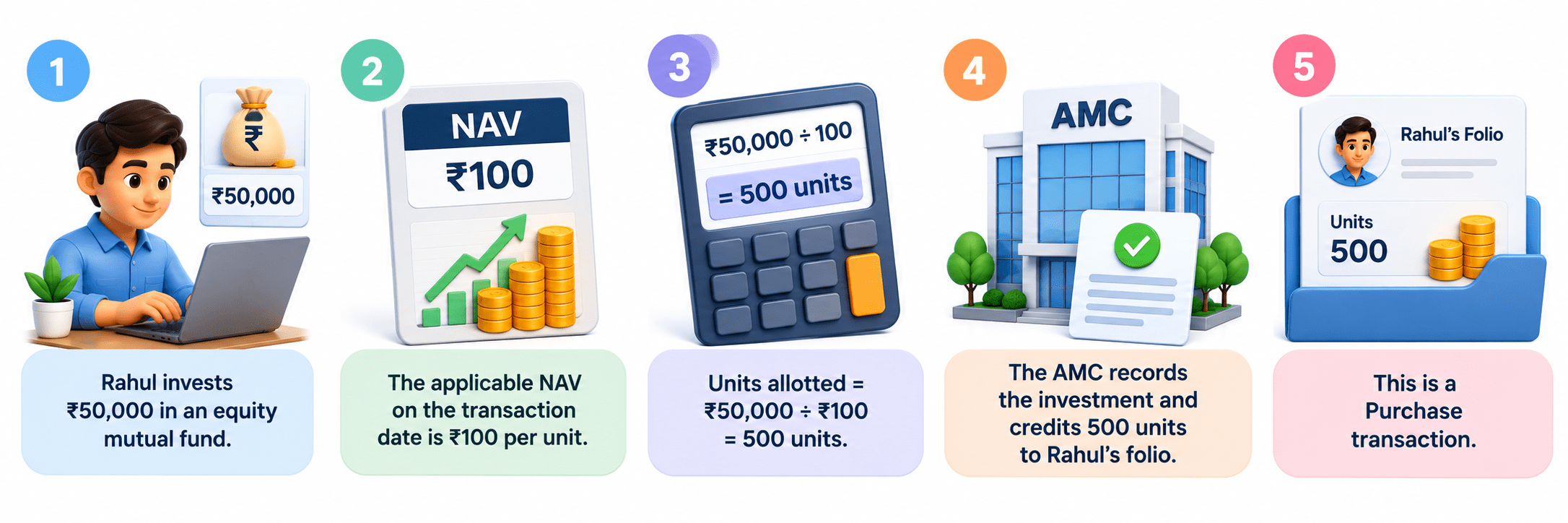
Example:
Redemption

An investor sells their mutual fund units back to the scheme. The units are cancelled, and the investor receives the value of those units based on the applicable NAV in their bank account.
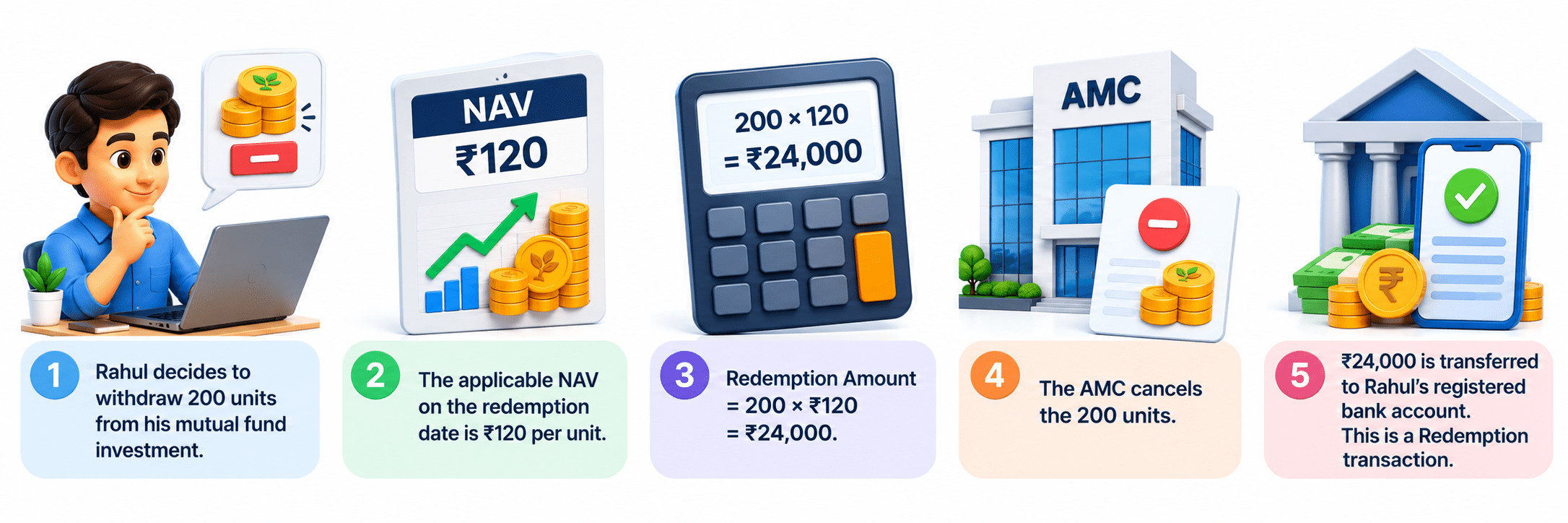
Example:
Switch

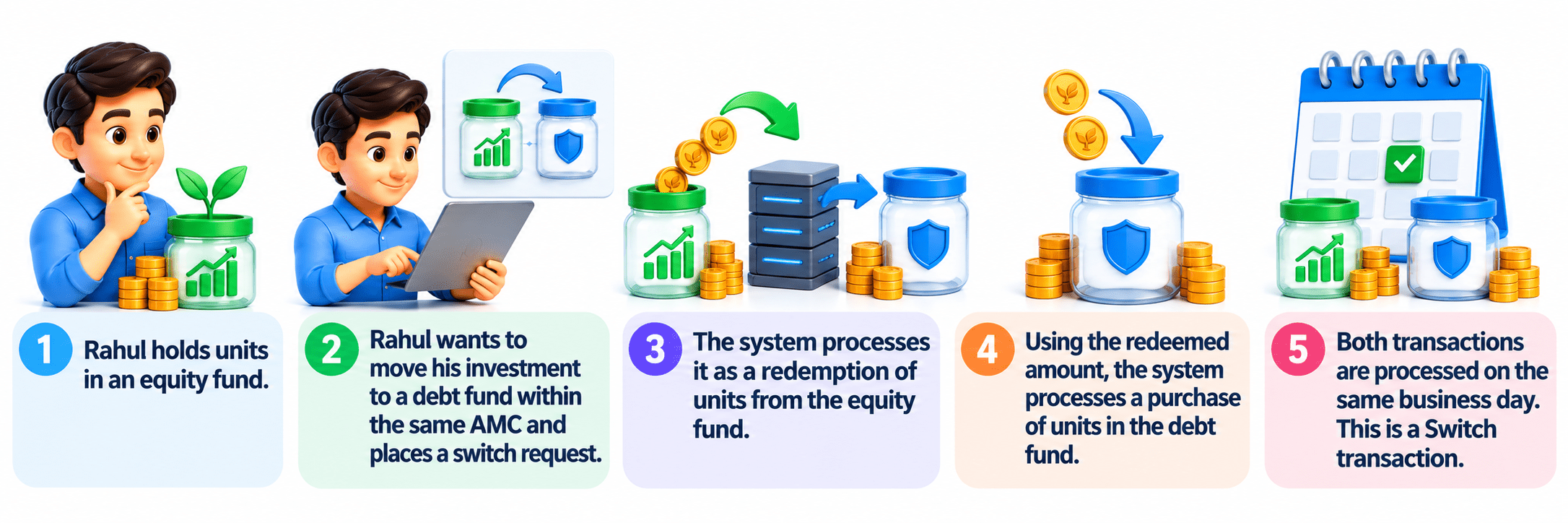
A switch allows an investor to move their investment from one scheme to another within the same AMC. It is processed as a redemption from the existing scheme and a purchase into the new scheme on the same business day.
Example:
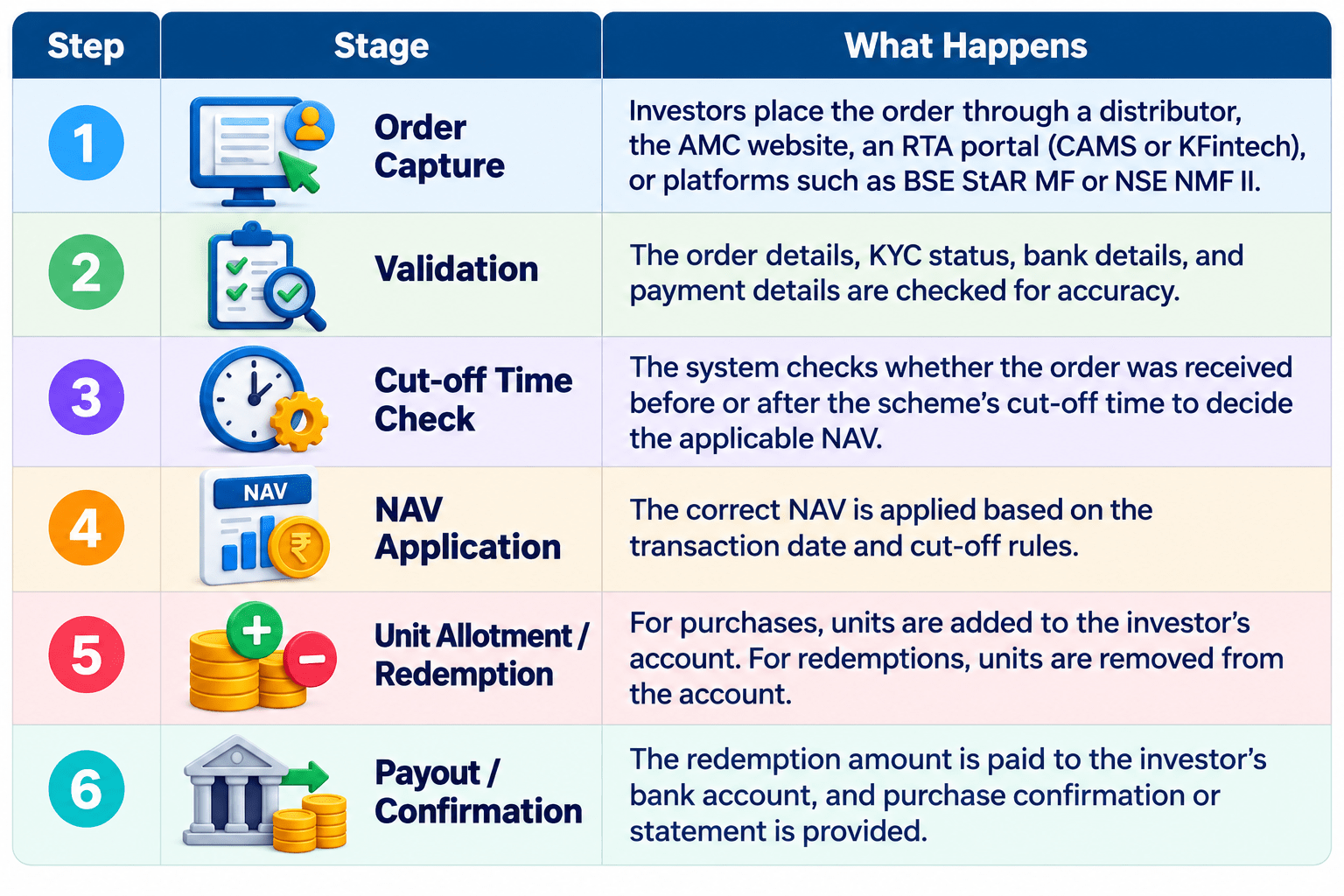
Trade Processing Steps
Every purchase, redemption, or switch transaction follows a series of common steps before it is completed.
Settlement Process
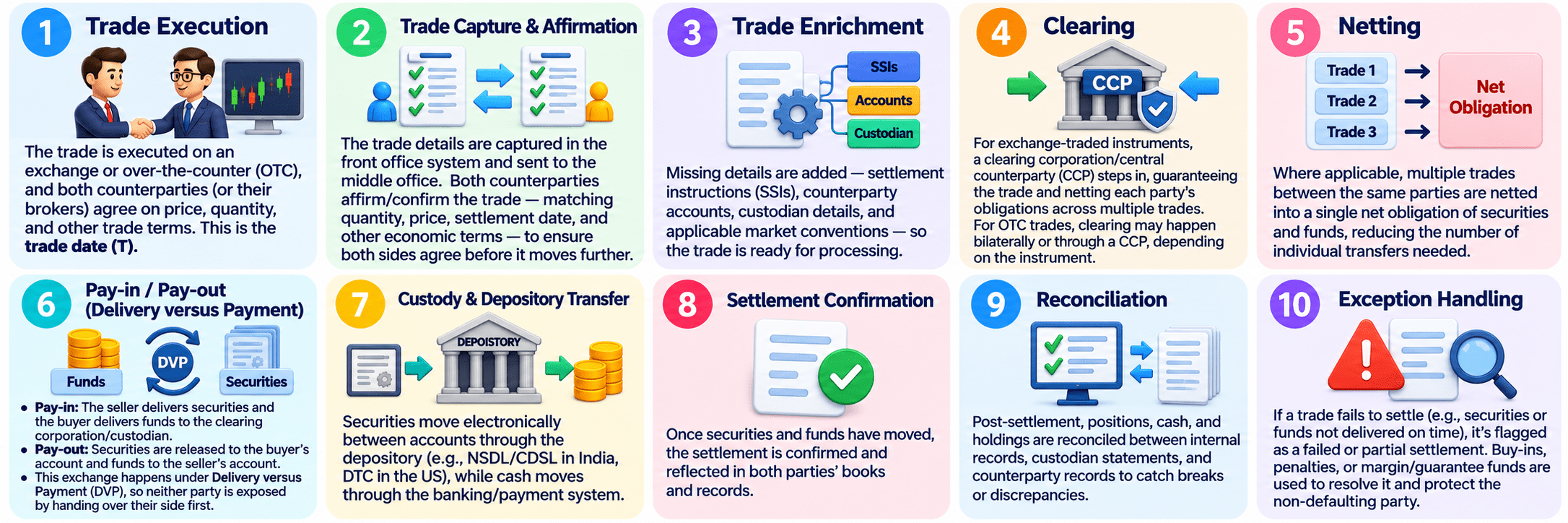
Settlement Process
Settlement Process
Settlement Process
Typical settlement cycles: T+1 for equities in India, T+1/T+2 for many global equity markets, T+0 to T+2 for money market instruments, and negotiated/longer cycles for OTC derivatives and bonds depending on the instrument and market.

Summary
5
AMC and RTA ensure accurate, timely processing.
4
Switch: Move investment between schemes.
3
Redemption: Sell units and receive money.
2
Purchase: Invest money and receive units.
1
Process trades from order to settlement.
Quiz
Which entity directly processes mutual fund transactions along with the AMC?
A. Stock Exchange
B. Clearing Corporation
C. Registrar and Transfer Agent (RTA)
D. Depository Participant

Quiz-Answer
Which entity directly processes mutual fund transactions along with the AMC?
A. Stock Exchange
B. Clearing Corporation
C. Registrar and Transfer Agent (RTA)
D. Depository Participant