

Escalation workflow
Reconcilation & Exception Handling
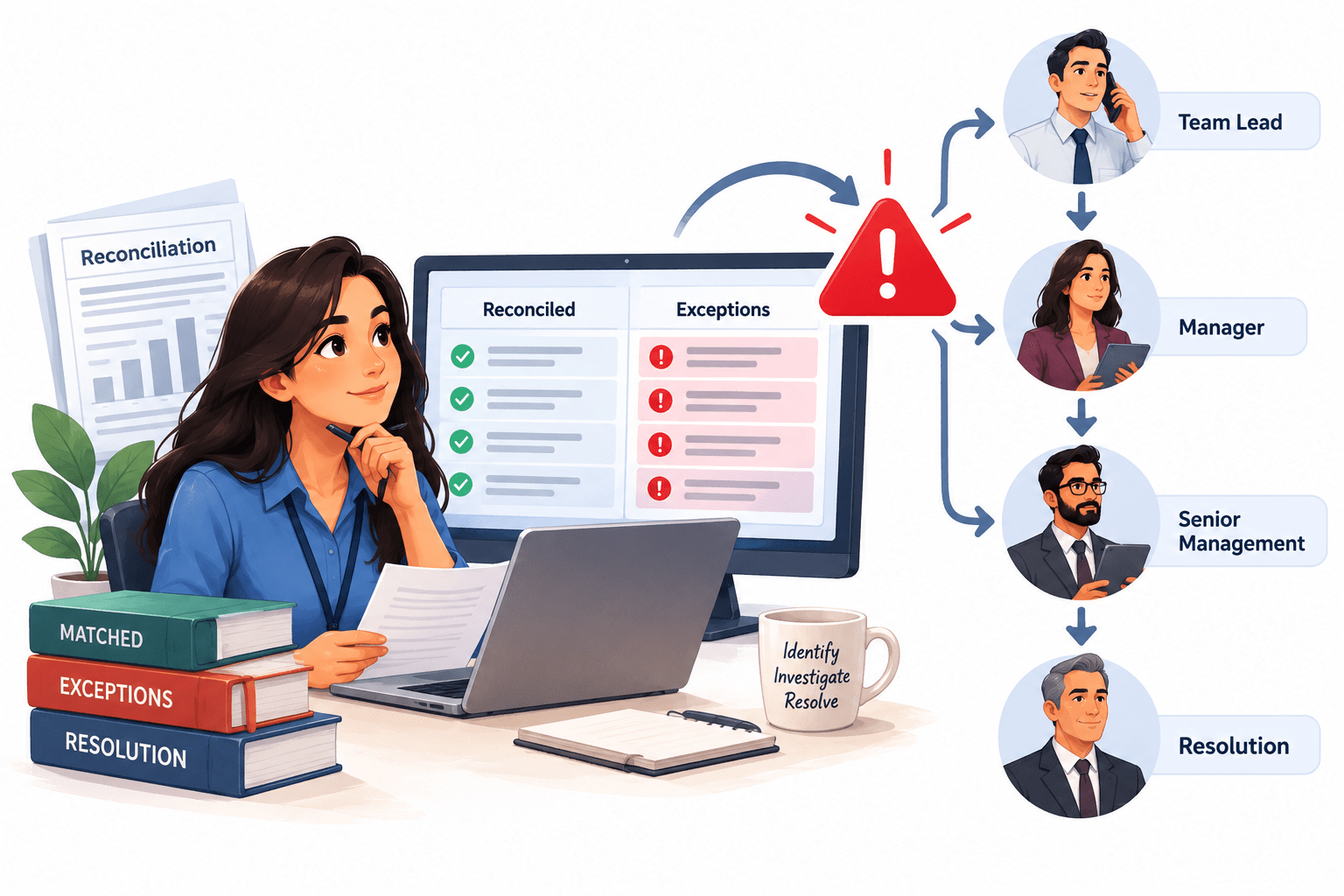

Learning Outcome
5
Understand documentation and approval.
4
Distinguish resolution from closure.
3
Understand escalation levels and responsibilities.
2
Identify pre-escalation steps.
1
Explain the purpose of escalation.
Investigation Before Escalation
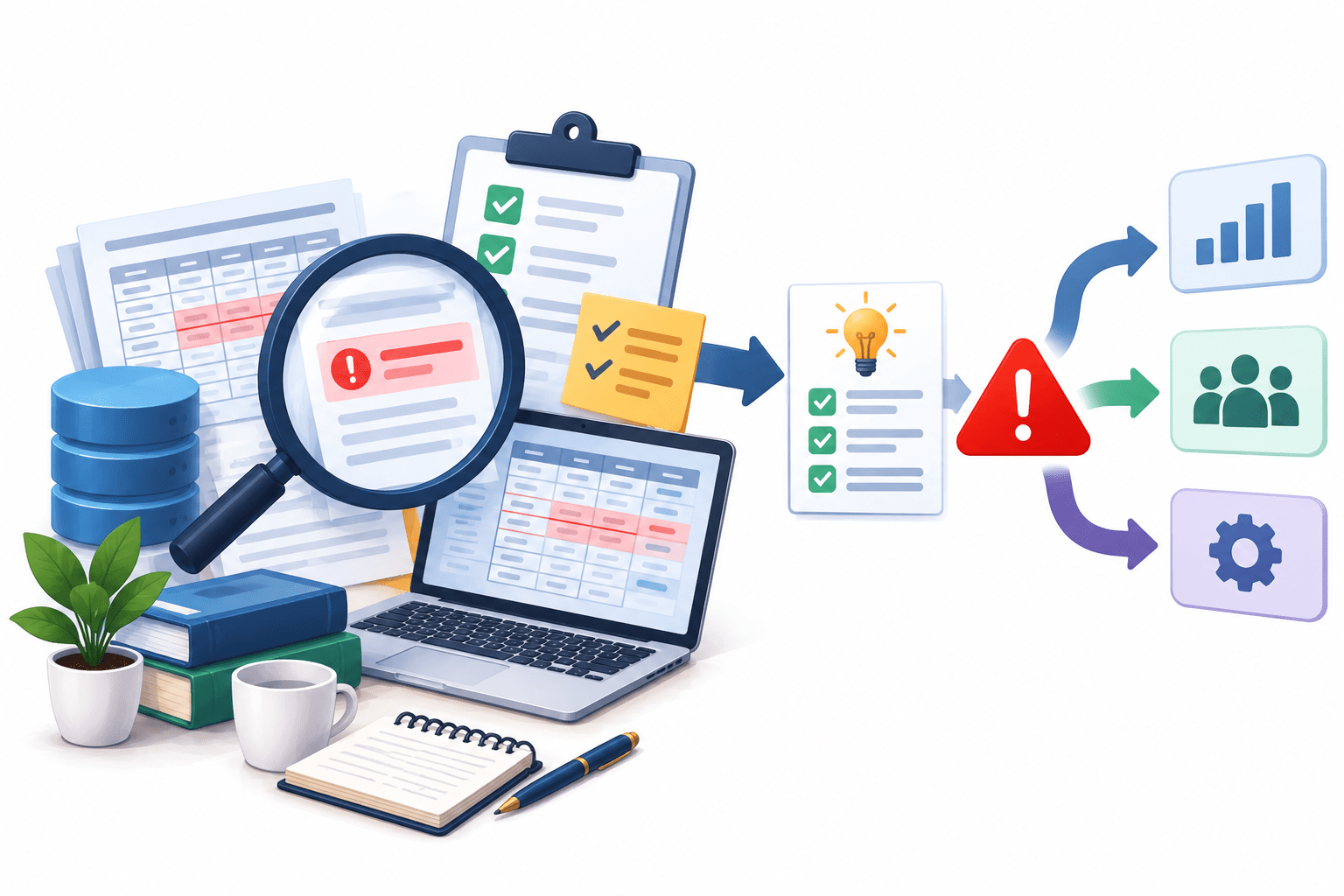
Before a reconciliation break is escalated, it is first investigated to determine whether it can be resolved at the current level. The usual steps are:

1. Record the break
Document the break as soon as it is identified, including the date, amount, account, and any other relevant details.
2. Investigate the cause
Review the transaction by checking supporting documents, settlement instructions, system records, and the transaction trail to identify the reason for the break.
3. Assess the age of the break
Check how long the break has remained unresolved. Most organizations expect normal breaks to be resolved within a defined timeframe, such as the same day or the next business day.
4. Assess the impact
Evaluate the size, financial value, and potential risk of the break. High-value or high-risk breaks may require immediate attention even if they are newly identified.
5. Decide whether to escalate
If the break cannot be resolved within the expected time or exceeds the organization's risk or value threshold, it is escalated to the appropriate authority for further action.
Why is this investigation important?
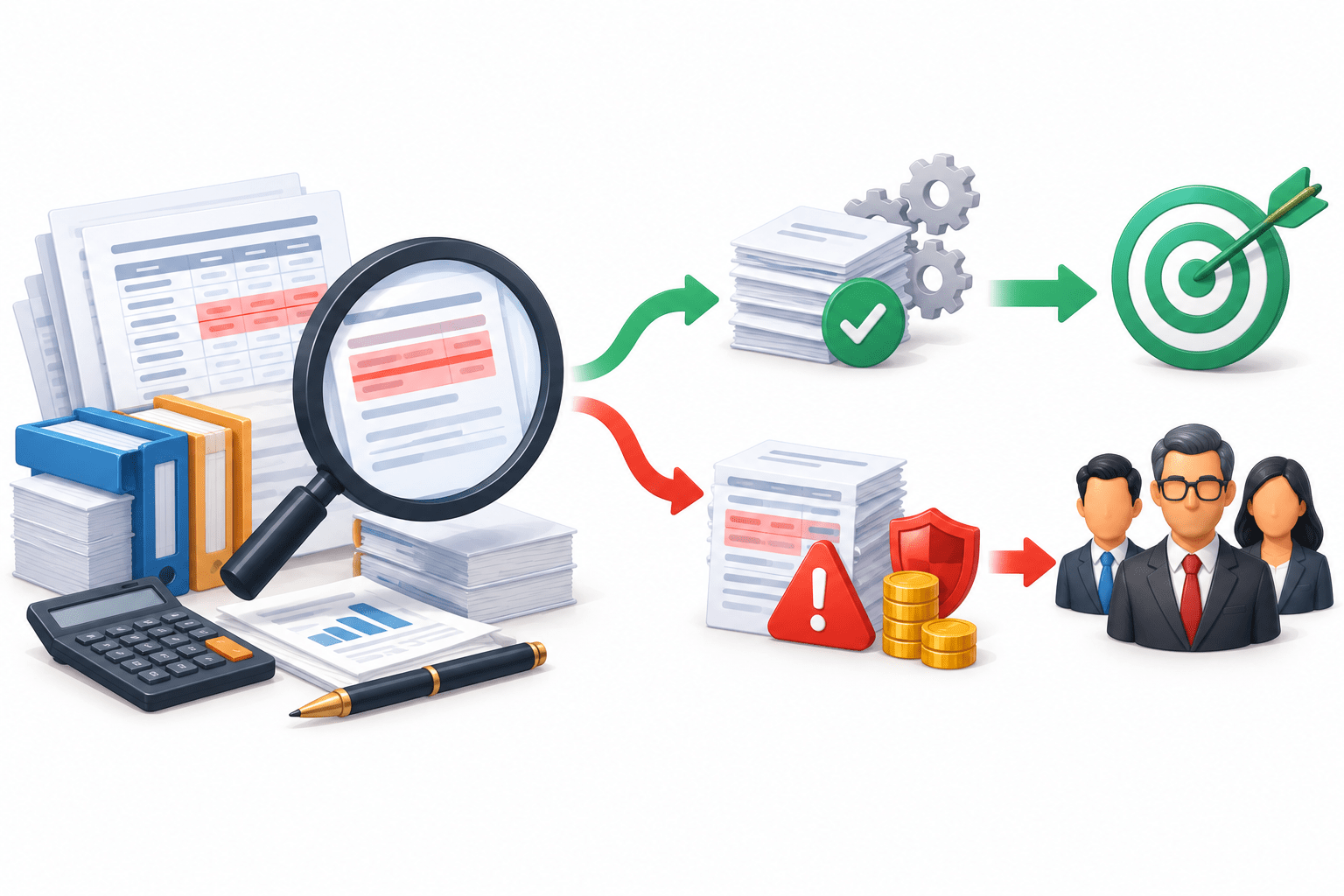
Investigating a break before escalation ensures that only unresolved, high-value, or high-risk breaks are escalated. This helps the team to resolve routine breaks efficiently while ensuring that significant issues receive timely attention from senior personnel.
Escalation Levels
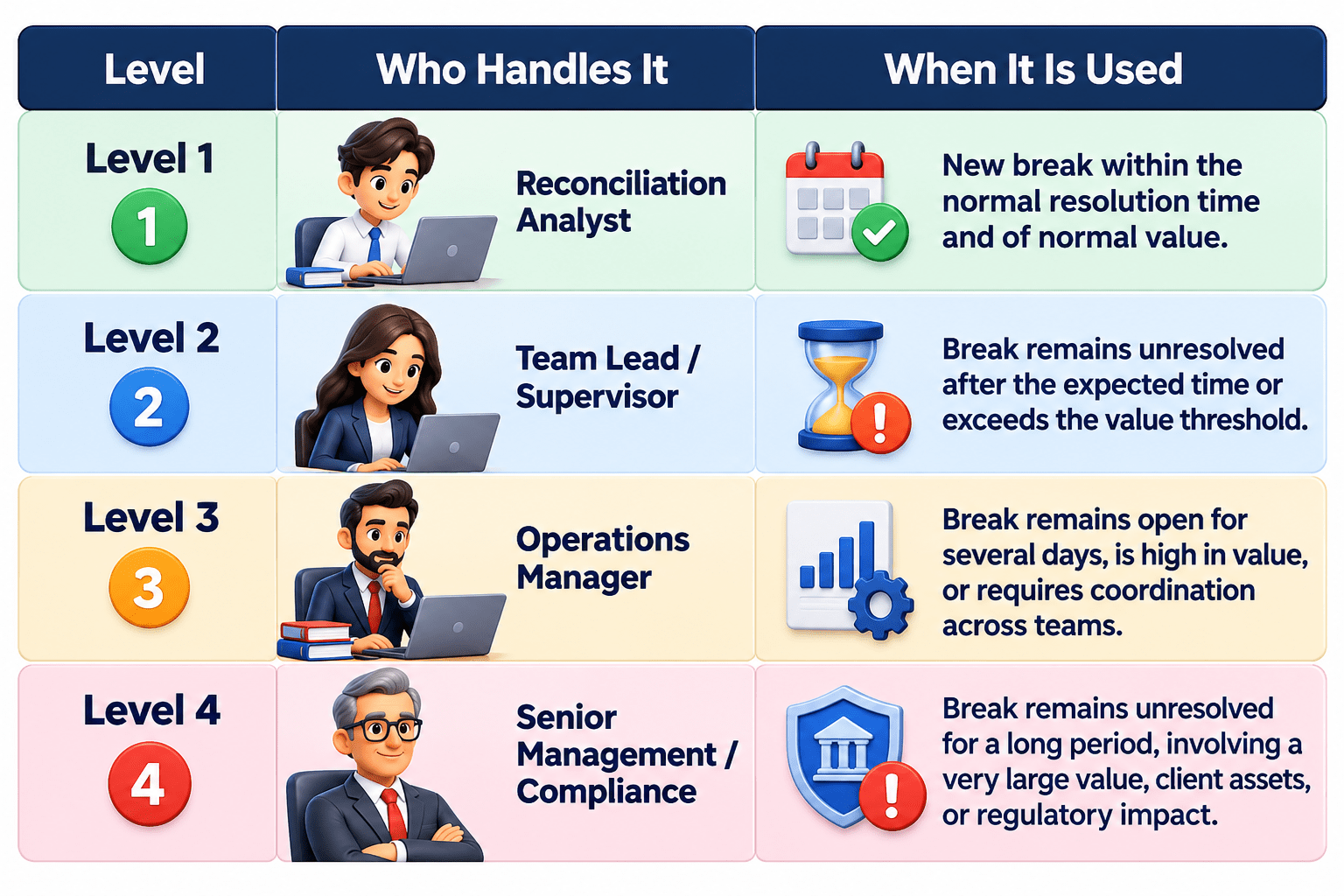
Not every reconciliation break requires senior management's attention. Most organizations follow a structured escalation hierarchy, where a break is assigned to different levels based on how long it has remained unresolved (age) or how significant it is (value or risk).


Level 1 – Reconciliation Analyst
The reconciliation analyst handles the break as soon as it is identified. Most routine or low-value breaks are investigated and resolved at this level within the normal resolution time.
Level 2 – Team Lead / Supervisor
If the break remains unresolved beyond the expected timeframe or exceeds the predefined value threshold, it is escalated to the Team Lead or Supervisor for further investigation and guidance.
Level 3 – Operations Manager
If the break remains open for several days, involves a high-value transaction, or requires coordination with multiple teams, it is escalated to the Operations Manager.
Level 4 – Senior Management / Compliance
If the break remains unresolved for an extended period, involves a very large financial value, affects client assets, or has regulatory implications, it is escalated to Senior Management or the Compliance team for immediate attention.
Escalation Levels
Resolution and Closure
However, fixing the problem is not the final step. The break must also be closed properly. This means recording what caused the break, what action was taken to fix it, and who resolved it. A senior person then reviews the details and approves the closure. Only after this is the break marked as closed in the system.

Once a reconciliation break reaches the appropriate person, the next step is to resolve it. This means fixing the actual problem. For example, correcting an incorrect entry, recording a missed corporate action, or updating the wrong settlement instruction.
Difference Between Resolution and Closure

Closed –
The resolution has been documented, reviewed, and approved, creating a complete record of the break.
Resolved –
The problem has been fixed, and the records now match.
A reconciliation break should never be marked as closed just because the records match. Proper documentation and approval ensure there is a clear record of how the break was handled, which is useful for future reference, audits, and regulatory reviews.
Summary
5
Proper escalation ensures control and accountability.
4
Resolve, document, approve, and close the break.
3
Escalate to the appropriate authority.
2
Escalation depends on age, value, and risk.
1
Investigate the break before escalation.
Quiz
Which factor is commonly considered before escalating a reconciliation break?
A. Employee designation only
B. Break age, value, and risk
C. Office working hours
D. Number of trades executed

Quiz-Answer
Which factor is commonly considered before escalating a reconciliation break?
A. Employee designation only
B. Break age, value, and risk
C. Office working hours
D. Number of trades executed