Mike Nason
Open Scholarship & Publishing Librarian | UNB Libraries
Open Scholarly Infrastructure Advisor | Public Knowledge Project
2026 Edition, version 1.0
This new tri-agency policy and you
Camposantoblog. (2016, February 9). Firewatch Launch Wallpaper. Tumblr. Retrieved March 9, 2026, from https://blog.camposanto.com/post/138965082204/firewatch-launch-wallpaper-when-we-redid-the
Introductions
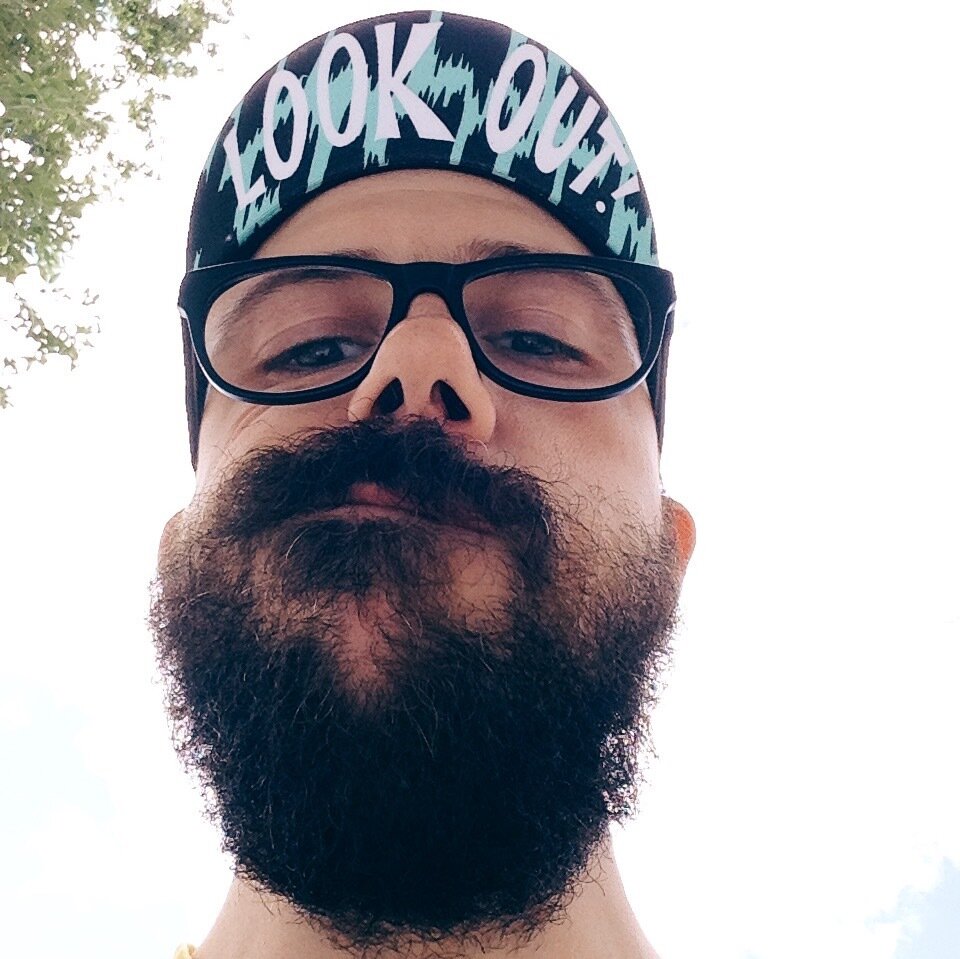
It's me, Mike! Hello! I hope you're well, despite [gestures broadly] this haunting late-stage of capitalism and the wailing, violent death throes of modern western empires.
I'm your Open Scholarship & Publishing Librarian.
I continue to work, primarily, in a field referred to by some as "Scholarly Communications".
Introductions
My job is about helping researchers make the results of their work as accessible to the public (or, relevant research communities) as they need them to be, whether that's due to funding mandates, personal interest, or a sort of proactive capitulation.
I am here to help you. It's, like, specifically built into the CBA (16c.02).
It is what librarians are for.
research data management
tri-agency oa requirements
open access publishing
scholar profiles
repositories
digital publishing
open educational resources
open infrastructure
persistent identifiers
scholarly publishing
scholarly communications
academic integrity
bad-faith publishers
This deck is more or less intended for a UNB audience and has some references to local solutions.
If you aren't at UNB, you're very likely at a school that has its own solutions. Talk to a librarian about them. Or someone at your research office. Or a librarian.
Talk to a librarian.
As of October 5th, 2026, there's a new open access policy for folks with funding from the tri-agency.
It's different than the last one.
Significantly Different.
Plz RDY Up. Don't freak out.
Implications // What to do about the policy. Paths to open access. Some real talk about potential complications. Some measure of assurance that everything [at least in this specific context, but definitely not in many others] will be fine.
This policy is going to be more work for you. It will require you to jump through some hoops you've likely never even thought about before.
Meeting this policy is going to require some intention and/or attention, on your part.
The Policy // We'll go over the policy, step-by-step, and break down the details. There will be some blending of the policy itself with the Guidance & FAQ document provided by the Tri-Agency.
What's in this deck?
What's in this deck?
Here's our own little webpage for this. It mostly just directs you back to the policy itself. //
Tri-Agency OA Policy Primer
This is our institutional repository, UNB Scholar. I'm going to be talking about this a lot and you are going to need it to be compliant so please throw a bookmark this way. //
Here's the new policy //
Tri-Agency Open Access Policy on Publications (2026)
Here's the Guidance & FAQ //
Guidance and Frequently Asked Questions (2026 Tri-Agency Open Access Policy on Publications)
Here's the previous policy //
Tri-Agency Open Access Policy on Publications (2014)
Please read these, at a minimum.
Don't skim them.
Don't have your favourite sycophantic chatbot of choice summarize them for you (it is my sincere hope that you don't have a favourite sycophantic chatbot of choice).
Here's the new policy //
Tri-Agency Open Access Policy on Publications (2026)
Here's the Guidance & FAQ //
Guidance and Frequently Asked Questions (2026 Tri-Agency Open Access Policy on Publications)
This document is, in particular, really good. That's because it runs you through what the Tri-Agency is expecting you to do, specifically. It's a little annoying to read, but very useful!
Here's the new policy //
Tri-Agency Open Access Policy on Publications (2026)
Here's the Guidance & FAQ //
Guidance and Frequently Asked Questions (2026 Tri-Agency Open Access Policy on Publications)
The Policy
"The objective of this policy is to improve access to the results of agency-funded research, and to increase the dissemination and exchange of research results."
Objective
This is definitely true. But what's also true is that there is a new emphasis on improving persistent access to the results of research even if they are somehow restricted, removed for political reasons, or otherwise made a bargaining chip in a trade war.
There is a digital sovereignty element to this new policy that goes beyond the public knowledge = public good framing of the prior policy. Elbows up, or whatever.
(all emphasis mine)
"This policy applies to all peer-reviewed research articles resulting from work supported, in whole or in part, by the Agencies’ grants and Chair awards, including those administered by the Tri-agency Institutional Programs Secretariat (TIPS).
This policy does not apply to student and postdoctoral awards and fellowships; nevertheless, students and postdoctoral fellows are encouraged to comply via no-cost routes where possible."
Scope
Ok! This is important. The policy only applies to peer-reviewed research articles. We're not talking about other types of publications (eg. monographs, patents... etc).
It also does not apply to students.
(all emphasis mine)
"This Policy applies to all grants and Chairholder awards awarded on or after January 1, 2027.
The Tri-Agency Open Access Policy on Publications (2015) will remain in effect on all grants awarded between May 1, 2015 and December 31, 2026."
Effective Date
If you are working on publications stemming from grant money that are either in the midst of peer review or not yet submitted, you are only bound to the previous 2015 policy.
You don't need to worry about this immediately. But, if you're applying for funding now, you should be ready.
(all emphasis mine)
"By accepting agency funds, researchers accept the terms and conditions as set out in the Agencies’ policies, agreements, and guidelines."
Monitoring & Compliance
If you take the [public] money, you are obligated to meet the requirements.
If it makes you feel any better at all, in some other countries they also require a level of reporting and due diligence that well exceeds this. This is what asking nicely looks like.
We have terms for those who take federal money and don't fulfill mandated public service in kind:
robber barons and landlords.
(all emphasis mine)
"The Agencies will monitor compliance with the Policy. In the event of an alleged breach of the Policy, the Agencies may take steps outlined in the Tri-Agency Framework: Responsible Conduct of Research or other actions deemed necessary to address the allegation. Failure to fulfill the requirements of the Tri-Agency Open Access Policy on Publications may result in corrective actions that could negatively impact an individual’s eligibility for future funding."
Monitoring & Compliance
A lot of people have said things to me like, "ok, but are they really going to know I did this?" My answer is usually something like, "compliance in good faith will absolutely curtail a future where you, instead, have to fill out a universe of paperwork to prove you did it. Do you have time for another universe of paper work?"
Again, in the UK, failure to meet requirements like this deletes funding for whole projects. This is asking nicely.
(all emphasis mine)
"By accepting agency funds, researchers accept the terms and conditions as set out in the Agencies’ policies, agreements, and guidelines."
"Failure to fulfill the requirements of the Tri-Agency Open Access Policy on Publications may result in corrective actions that could negatively impact an individual’s eligibility for future funding."
Monitoring & Compliance
The Tri-Agency is actively working on better methods for compliance tracking.
This might not seem especially toothsome for you thus far. You are, however, gambling.
Again, if you take the [public] money, you are obligated to meet the requirements.
(all emphasis mine)
- The main policy requirement (immediate OA and repository deposit).
- Two requirements that facilitate this as a practical process (open copyright licenses and rights retention).
- One requirement to facilitate compliance tracking (funding metadata).
The requirements for this policy can be broken down into three chunks. I'm going to address them in an order that is different than they appear in the policy proper, because I think at least two of the requirements are basically dependencies for the crux of the whole policy.
Requirements
- "Ensure the peer-reviewed research article is immediately and freely available in a Canadian institutional repository or made available through a trusted Canadian platform at the time of publication, even where the article is freely available on the publisher’s website. The version may be either the AM or the VoR. The article must be immediately available with no embargo period, under an open license."
REQUIREMENTS I: Immediate OA/Deposit
Immediate OA is new for this policy. It means you can't work around the more common 12-month embargo periods. It doesn't mean, necessarily, you'll have to pay an APC for open access. But it does mean you'll have to think about this earlier in the research cycle (eg. when applying).
You'll notice also that having published open access isn't enough here. A copy of that work must also exist in an institutional repository.
(some emphasis mine)
- "Ensure the peer-reviewed research article is immediately and freely available in a Canadian institutional repository or made available through a trusted Canadian platform at the time of publication, even where the article is freely available on the publisher’s website. The version may be either the AM or the VoR. The article must be immediately available with no embargo period, under an open license."
The VoR is the "Version of Record" and refers to the "final" published version of a work as published in a journal.
The AM is the "accepted manuscript". It's the version of the work that's after peer review but before copyediting and layout. These usually are in your email outbox or the versions you upload to a submission system towards the end of revisions in peer review.
REQUIREMENTS I: Immediate OA/Deposit
(some emphasis mine)
- "Ensure the peer-reviewed research article is immediately and freely available in a Canadian institutional repository or made available through a trusted Canadian platform at the time of publication, even where the article is freely available on the publisher’s website. The version may be either the AM or the VoR. The article must be immediately available with no embargo period, under an open license."
So, the obligation here is to deposit one of these two acceptable versions of the work into UNB Scholar.
A preprint is not an acceptable version, but feel free to submit those to us all you like. A preprint is different than an accepted manuscript.
You have to do this regardless of where you've published the work and how open it already is.
REQUIREMENTS I: Immediate OA/Deposit
(some emphasis mine)
You're probably asking a lot of questions. You might even be a little mad. We'll talk about this more in the "implications" section of the deck.
Most vitally, what I need you to know is that the other two big elements of the policy are meant to help facilitate this. They are absolutely not perfect, and we can talk about that too.
Just remember that we (the library, me, the royal we) are here to help you figure this out. And, supposedly, so are the Tri-Agencies.
REQUIREMENTS I: Immediate OA/Deposit
(some emphasis mine)
- Retain sufficient rights and apply an open license, such as a Creative Commons (CC) license, to the Accepted Manuscript (AM) and/or Version of Record (VoR) used to comply with the Policy. The Agencies strongly encourage authors to use the least restrictive license (preferably, CC-BY), wherever possible;
In order to share some version of this work, you're going to need to have retained some of your rights. This is potentially news to you, but typically a publishing agreement/contract specifically stipulates that the publisher takes your copyright.
By opting for/requesting an open license, you're ensuring that you'll be able to deposit a peer-reviewed copy of the work in a repository.
REQUIREMENTS II: Open LIcense
(some emphasis mine)
"You must retain your rights over your peer-reviewed research articles resulting from work supported by an agency grant or Chair award.
You must apply an open license to the Version of Record (VoR), where publisher agreements allow, or the accepted manuscript (AM).
An open license grants free access and permission to the public to use the manuscript under copyright law, including any conditions governing that use."
REQUIREMENTS II: Open License (FAQ)
(this text is lifted directly from the faq)
"The most common types of open licenses are Creative Commons (CC) licenses. The Agencies strongly encourage authors to use the least restrictive license (that is, CC-BY) wherever possible. Credit to the original creator remains required under a CC-BY license. If needed, you may opt for a more restrictive license (for example, CC-BY-ND, CC-BY-NC) and remain compliant with the Policy."
- Inform the publisher of the author’s obligations and rights under the Tri-Agency Open Access Policy on Publications (2026) when submitting an article for publication;
REQUIREMENTS III: "RIghts Retention"
I suspect many of you will read this and make a face. This is going to be very new for us, although some schools (and countries) with rights retention policies have been doing this for a minute.
Essentially, what this means is that during the submission phase, the corresponding author will have to specifically tell the journal (who will then inform the publisher), that the author(s) want(s) to retain their rights.
(some emphasis mine)
“To whom it may concern,
This work has been funded, in whole or in part, by [AGENCY NAME (AGENCY ACRONYM)]. As set out in the Tri-Agency Open Access Policy on Publications (2026), the funded author(s) must ensure that the version of record (VoR) or the accepted manuscript (AM) is made public/OA immediately at the time of publication, with no embargo period, under an open license in a Canadian institutional repository or be made available through a trusted Canadian platform. Therefore, the author(s) has applied a [OPEN LICENSE TYPE] to the accepted manuscript version arising from this submission. The Agencies have published a letter to publishers informing them of this requirement”.
For [AGENCY NAME], identify the agency(ies) funding your grant or Chair. For [OPEN LICENSE TYPE], identify the type of open license you wish to apply.
"You must communicate obligations under the Policy to the publisher or journal when submitting your manuscript.
To facilitate this process, you may attach the following text to your article submission (for example, in a cover letter or as a separate document):"
REQUIREMENTS III: "Rights Retention" (FAQ)
(this text is lifted directly from the faq)
- "Acknowledge Agency contributions in the peer-reviewed research article, quoting the funder name and funding reference number (such as the FRN or Application Number) and any applicable persistent identifiers (PIDs);"
REQUIREMENTS IV: Funding Metadata
When submitting a manuscript to a publisher, or possibly (depending) some time after the work is accepted, you'll be asked to provide metadata about your funder. This is usually something like an auto-completing form for the funder name, and a grant ID or DOI that identifies the specific grant.
The TL;DR here is that if you're funded, corresponding authors should be recording this in submission metadata.
(some emphasis mine)
So, this new policy puts a lot of onus on researchers to pay specific attention to:
- where they publish
- how they interact with publishers/journals
- where they deposit the open copies of their work
- how they'll get to the point where they have something they can deposit
Right,
Right,
But, also...
the Tri-Agency will/can help:
"In cases where the journal and/or publisher questions authors about them retaining rights over the content of their article and making the AM or VoR open access in a repository at the time of publication, authors should contact the agency that funded the research to determine the author’s options to comply with the Policy."
But, also...
This is going to be both a bit of a lift (in the way that facilitating OA like this can take real time) and an appeal for cultural change. Many researchers are reticent to push back against publishers in this way.
This policy requires it.
And!
And!
this is going to be a bit of an adjustment period for funded researchers in canada. A good one, probably, ultimately. but also, probably, not an especially pleasant one at first.
Implications
I'm going to try to walk you though what you'll need to know and think about chronologically, from the initial grant application through to repository deposit.
You do have some agency here. What I'd like to do is illuminate the branching paths.
You should be putting thought into where you may intend to publish while you're writing the grant.
- if you think you're going to publish in a place that definitely has an APC you'll have to pay, make sure you've included this in your grant application.
- if you plan on publishing in Diamond OA journal that doesn't have APCs, you won't have to worry.
- at minimum, check early to see if any of your potential submission choices will require paying an APC.
From the FAQ // "With respect to journal articles that are published immediately open access (OA) in journals that charge article processing charges (APCs), these charges remain an eligible cost under the Tri-Agency Guide on Financial Administration (TAGFA). We respect the author’s right to publish and communicate the results of their agency-funded research using the dissemination avenues of their choice, within the mandate of the Policy. We encourage the consideration of no-cost options, such as publishing in a diamond OA journal."
Grant Application
The research office can help you with grant application wording if you need to account for potential APCs.
You might also be eligible for an APC Waiver or Discount through our library- and consortially-negotiated agreements with publishers. Seeing the publisher name here is not enough, you do have to check supported titles in the additional documentation.
Grant Application
Because publishers typically ask you to pay these fees after the article is accepted (and after months have passed since you submitted it, which will definitely disincentivize withdrawing your article and submitting it elsewhere), you do not want to be surprised by an APC you didn't see coming. This happens all the time.
Please, plan ahead.
If we're being honest, most journals have some path to open access these days. The parts we're most concerned about here are:
- will a journal's path to OA cost money?
- will a journal let you retain copyright or otherwise facilitate an open license?
- will a journal that doesn't let you retain copyright or otherwise facilitate an open license balk if you ask for one (maybe not, but they might tinker with your author agreement in a less-than-level way)?
I used to frame this conversation around what was OA and what isn't. Because this policy is principally about facilitating deposit in a repository, we can reframe this a little.
Either way, I very much need to you understand that your choice of journal will have very direct implications for how easy/cheap it is to meet the requirements of this new OA policy.
Journal selection
The policy says "you must ensure that your peer-reviewed research article is freely and immediately available in a Canadian institutional repository or made available through a trusted Canadian platform."
Journal selection
You'll notice they don't much care about what types of OA your journal has. They really just want to get a copy of the work on Canadian Open Scholarly Infrastructure where it will be available to the public.
For our purposes, we'll need to first elaborate on your potential options...
Diamond OA // Diamond OA journals rely on alternative funding sources and are both free to read and free to publish in. They're also very much likely to let you fully retain your copyright.
There's a veritable rainbow of other colour options (I know "diamond" isn't a colour, but I'm not calling it "clear open access") it's possible to read about if you want to lose your mind a little. It is an imperfect world, where people with big hearts are trying to work against corporations with bigger valuations.
Gold OA // If you are paying for Open Access, that's Gold OA. Gold OA typically does result in the application of an open license. It also comes with a hefty price tag. You get the VoR and are likely able to deposit it in your IR.
Green OA // AKA "Self-Archiving", where, instead of the VoR, the publisher supports posting the accepted manuscript to an IR. You probably will have to locate this version of the work. It shouldn't cost money, unless you're publishing with ACS, who are ghouls.
Journal OA Types (reductive)
Realistically, what you need to do is figure out where you're most likely to sit on these sliding scales. If I wanted to be extra spicy about this I could add one for "ethical/moral" friction, but I do want you to keep listening to me.
Journal selection
most labour frictionleast labour frictionmost $$ frictionleast $$ frictiondiamond
diamond
gold
green
ignoring the policy and having to make up for it later
green
gold
The most friction, I suspect, will be the time spent trying to figure out what journal has which options.
I am more than happy to help with this. You can let me know. Or some other librarian.
Talk to a librarian.
Journal selection
Canadian Library Journal Publishing: A Primer - provides a brief introduction to Canadian library publishing and articulates the role of library publishers in disseminating Canadian scholarship and furthering Open Access
Érudit - a Pan-Canadian inter-university consortium that provides a journal dissemination platform
Federal Open Science Repository of Canada (FOSRC) - provides public, web-based access to federally authored scientific articles and publications from participating science-based departments and agencies
Public Knowledge Project - a research and development initiative within Simon Fraser University’s Core Facilities Program that conducts research, develops free/open source software, and works to increase the quality, diversity, and accessibility of scholarly publishing
Scholars Portal Journals – a Canadian national repository of scholarly articles from journals covering every academic discipline, and a Trustworthy Digital Repository (TDR) for long-term preservation
There's one more piece here, and that's the phrase "trusted Canadian platform". There are a wide range of Canadian Diamond OA journals or OA options in Canada, hosted by a number of institutions.
If your work isn't in our repository, it might also be in one of these places. Please read the FAQ document about this for more details.
Did you know libraries had publishing services? We do!
Trusted Canadian Platforms
Let's Review
Let's Review
Let's Review
Let's Review
2. Check to see if there's an APC associated with OA publishing for the journals you've picked.
You'll want to know if an APC is required for open access or if there's an option for Green OA as an alternative.
If there's an APC, you'll want to know if that journal is covered by any agreements we have that might come with a full waiver or, at minimum, a discount.
1. Check journals you know and like and are inclined to publish in.
You will be looking for information on APCs, copyright, and open access policies. These are easy enough to find in "about the journal" or "submission guidelines" or "open access policy" portions of any journal webpage.
Figuring out where to publish
3. If you anticipate having to pay an APC and it looks like we have no waivers or discounts available for a given, specific journal, include the costs of an APC in your grant application.
If you would prefer to not spend your research funding on publishing costs, consider broadening your horizons.
Writing your grant application
5. Additionally, on submission, that same corresponding author should provide all the funding metadata in the submission form. If there's no funding metadata fields on submission, they might not be available until after the work is accepted.
4. One you're at the point where you're submitting your manuscript to a journal, you (or the corresponding author) should be including the template rights retention language you can find in the policy FAQ.
I'd expect this to go in some sort of "note to the editor" or "funding statement" field in a submission platform, or as an email to the journal, depending.
Submitting your article
7. Celebrate not having to look over your shoulder with a worry that your future funding applications will experience difficulties.
You're compliant. You've complied.
6. Once the work is published and presuming you've managed to either;
- retain copyright, or
- procure an open license, and
- have a PDF of the VoR or AM
You may then deposit the work in our institutional repository.
Repository Deposit
I would like to acknowledge that this is all going to take some time and that you don't super have a lot of it. I get it. But if you already have a few potential journals in mind, the time it takes to figure out what your options are for those journals is trivial compared to the frustration you'll feel if you have to scramble to pay an APC you have no funding for.
And, I'll reiterate, the Tri-Agency are saying:
"In cases where the journal and/or publisher questions authors about them retaining rights over the content of their article and making the AM or VoR open access in a repository at the time of publication, authors should contact the agency that funded the research to determine the author’s options to comply with the Policy."
They want to support you if they can.